Clear Sky Science · en
Genetic Improvement of grass pea (Lathyrus sativus L.) through gamma-ray-induced mutagenesis: evaluation of M₄ progenies for yield, agronomic traits, and low ODAP content
A tough crop with a hidden danger
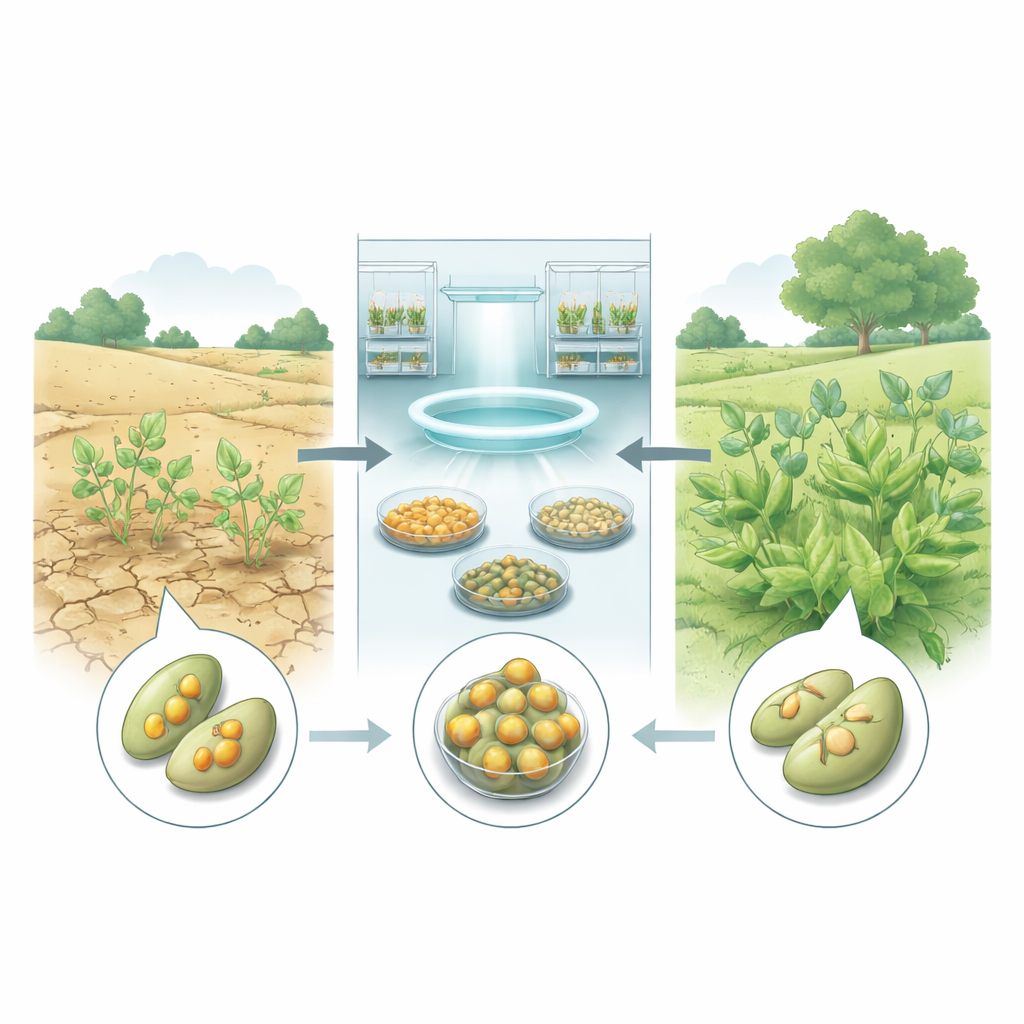
Grass pea is a hardy bean that can keep families fed when other crops fail, especially in drought‑prone regions of Asia and Africa. It is rich in protein and grows reliably in poor soils and harsh weather. Yet this lifesaving crop hides a problem: its seeds contain a natural toxin, called ODAP, that can damage the spinal cord if people eat the peas in large amounts over long periods. This study set out to tackle that dilemma head‑on—can we breed grass pea plants that stay tough and high‑yielding, but carry much less of the dangerous compound?
Why safer grass pea matters
For many smallholder farmers, grass pea is both a food source and an insurance policy. It survives drought, waterlogging, and salty soils better than most other pulses, and it helps restore soil fertility by fixing nitrogen from the air. The crop’s seeds contain up to one‑third protein, along with important minerals, making them a valuable staple in lean years. However, the ODAP toxin has led some governments to restrict or discourage its cultivation, creating a painful trade‑off between food security and health. Traditional varieties often carry too much ODAP, and the plant’s narrow genetic base has made it difficult to breed safer, better‑yielding lines using standard crossing methods alone.
Using radiation to shake up plant genetics
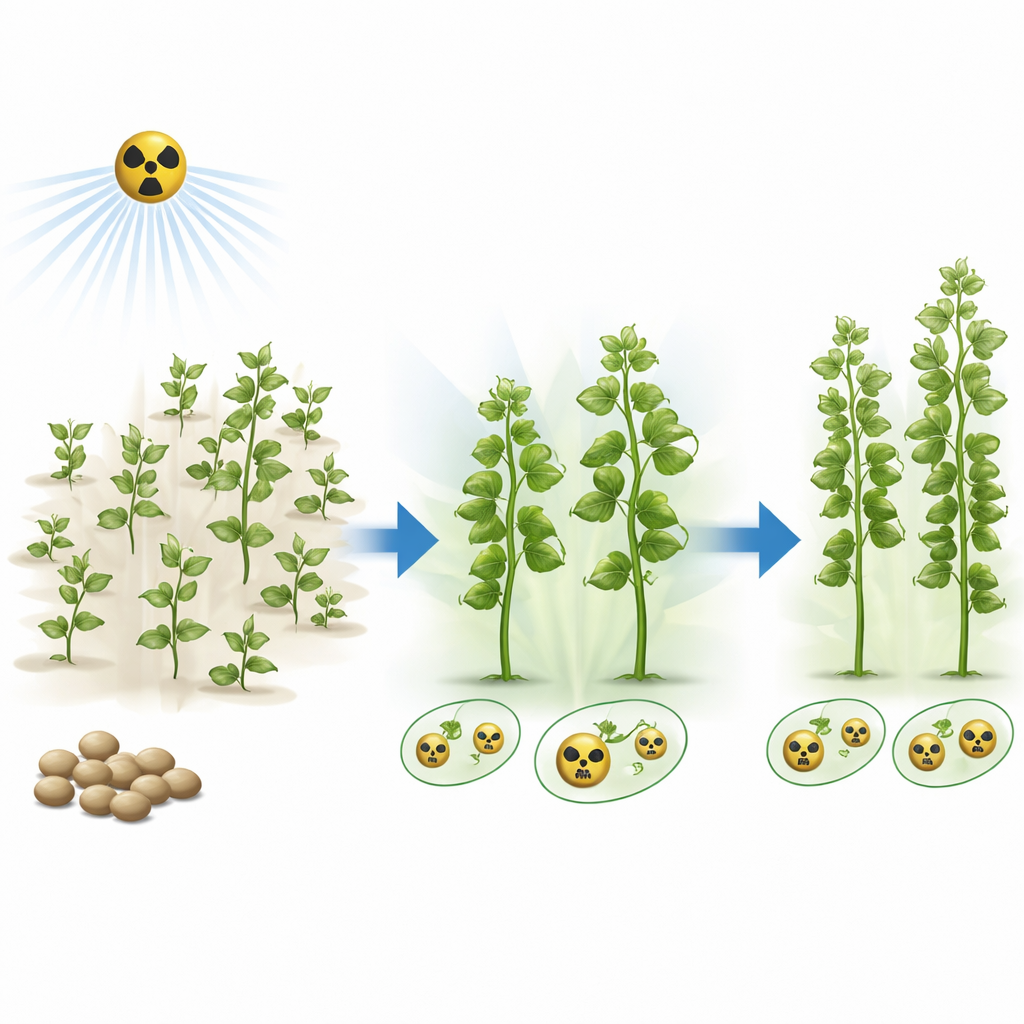
To break out of this breeding dead end, the researchers turned to mutation breeding, a method that uses radiation or chemicals to create new genetic variation. They took seeds from a popular grass pea variety, exposed three batches to different doses of gamma rays, and kept a fourth batch untreated as a control. The treated seeds were grown for several generations, with careful selection of promising plants at each step. By the fourth generation (called M₄), the team had narrowed the population down to 29 distinct mutant lines, which they grew side by side with the original parent variety and a standard check in field plots in central India.
Measuring yield and hidden toxins
From these field trials, the scientists recorded familiar farm traits—how tall the plants grew, how many branches and pods they produced, how heavy the seeds were, and how much each plant yielded. They also measured ODAP levels in the seeds using a laboratory color test that can detect small changes in the compound’s concentration. Statistical tools helped them separate real genetic differences from random environmental noise, estimate how much of the variation would be passed on to the next generation, and see which traits tended to move together. A multivariate analysis allowed them to visualize which mutant lines clustered as high‑yield, which carried lower toxin levels, and which combined both advantages.
New lines that give more food with less risk
The gamma rays did what conventional breeding had struggled to do: they produced a wide spread of new types, some clearly better than the original. Several mutant families showed many more branches and pods per plant, traits that strongly drove higher seed yield and were largely controlled by additive genes—meaning farmers and breeders can reliably select for them. Most strikingly, ten mutant lines outperformed both the parent and the standard check by 48–75 percent in seed yield while at the same time cutting ODAP content by up to about one‑third. One line, for example, produced roughly half again as much seed as the parent but with the lowest toxin level in the trial. The analysis also showed that yield and ODAP can be improved independently, overturning the long‑held fear that safer seeds must come at the cost of productivity.
What this means for farmers and consumers
The study demonstrates that carefully applied radiation breeding can help resolve the long‑standing “yield versus safety” paradox in grass pea. Within just four generations, the team produced stable lines that give significantly more grain while carrying substantially less of the nerve‑damaging compound. These mutants are now ready for testing across different regions and seasons, and can be used as parents in future breeding efforts. If their performance holds up in farmers’ fields, they could allow communities in harsh environments to keep relying on this rugged crop—this time with far greater confidence that it will nourish, rather than harm, those who depend on it.
Citation: Madke, V.S., Manwar, R.M., Nandeshwar, B.C. et al. Genetic Improvement of grass pea (Lathyrus sativus L.) through gamma-ray-induced mutagenesis: evaluation of M₄ progenies for yield, agronomic traits, and low ODAP content. Sci Rep 16, 11453 (2026). https://doi.org/10.1038/s41598-026-41769-9
Keywords: grass pea, mutation breeding, gamma irradiation, crop improvement, food safety