Clear Sky Science · en
A prototype for producing oxygen-rich air using novel magnetic separation cell and magnetic mixed poly(etheresulfone) matrix membranes
Breathing Easier with Smarter Air Filters
Supplying clean, oxygen‑rich air is vital for hospitals, industry, and even cleaner engines, but today’s technologies for separating oxygen from air are often bulky, power‑hungry, and expensive. This study presents a new, compact prototype that can enrich oxygen using a special magnet‑based membrane and a carefully designed metal cell. By taking advantage of the subtle magnetic difference between oxygen and nitrogen, the device boosts oxygen levels in air without relying on large external magnets or complex refrigeration systems.
Why Separating Air Is So Hard
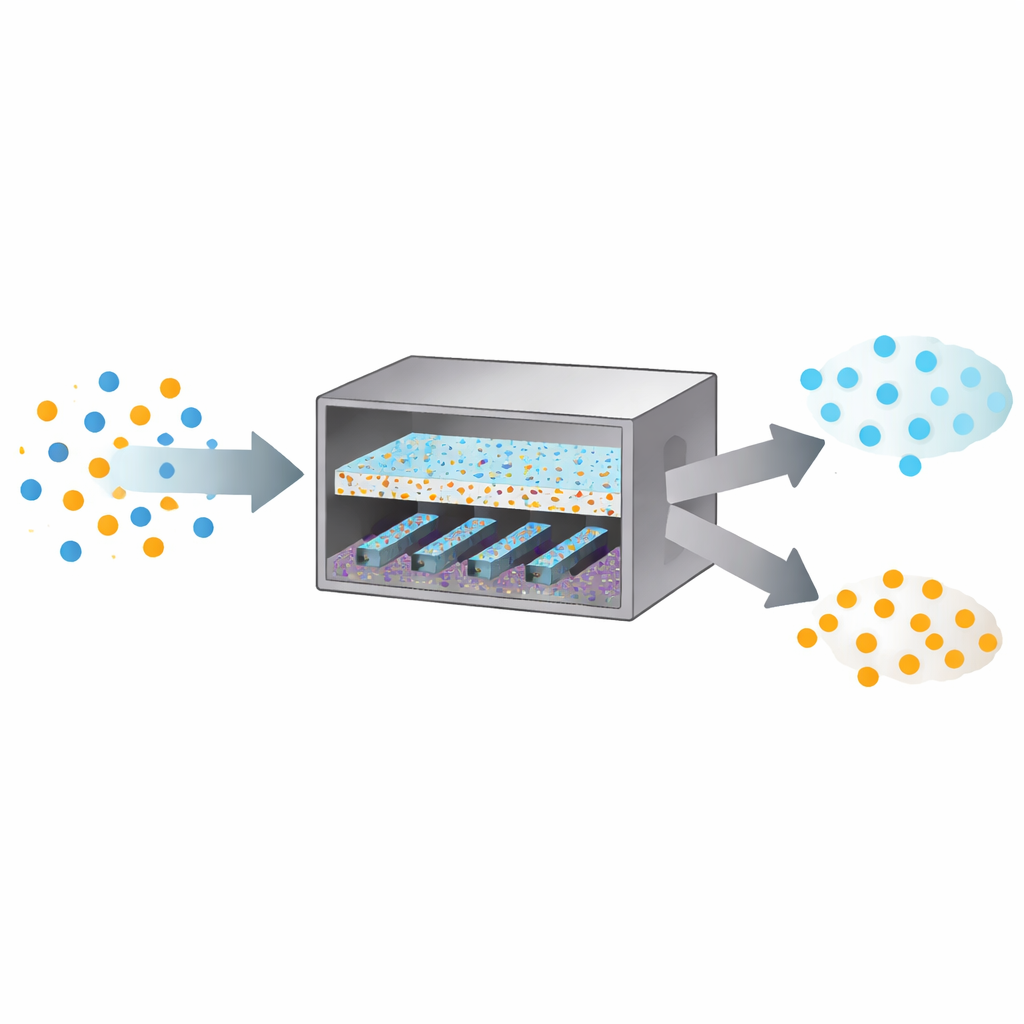
Air is mostly nitrogen, with only about one‑fifth oxygen, and these two gases are almost the same size. Traditional methods to split them—cryogenic distillation and pressure swing adsorption—work well but demand heavy equipment and high energy use. Membrane methods, which push air through thin barriers that favor one gas over another, promise smaller, simpler systems. Yet because oxygen and nitrogen are so similar, most membranes struggle to distinguish between them, so improving separation usually means sacrificing either efficiency or practicality.
Using Magnetism to Nudge Oxygen Aside
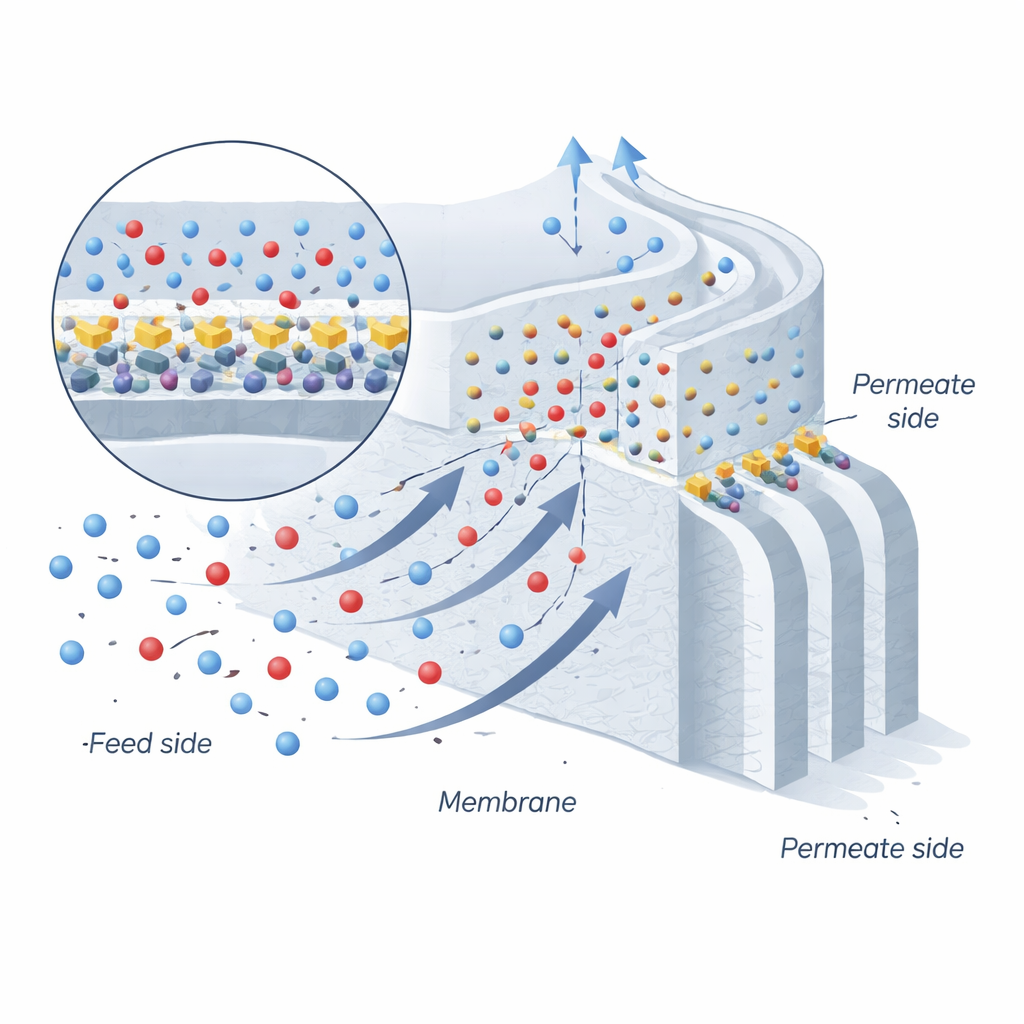
Oxygen is weakly attracted to magnetic fields, while nitrogen is slightly repelled. The researchers harness this contrast by embedding tiny iron‑nickel alloy particles into a polymer called poly(ethersulfone), forming what is known as a mixed matrix membrane. These alloys, made by a simple chemical reduction process, have unusual “starfish” and “necklace” shapes and retain strong magnetization on their own. Because they behave like tiny permanent magnets, the membrane can tug more strongly on oxygen molecules than on nitrogen, gently steering oxygen through the material without any external electromagnets or coils.
Crafting a Smart Membrane and Cell
To make the membrane, the team dissolved the polymer and dispersed a small amount of the magnetic alloy, then cast the mixture into thin sheets. An iron casting knife used during this step acts like a magnet, pulling the alloy particles into aligned rows just beneath the membrane surface and preventing them from sinking. At the same time, a pore‑forming salt increases the number of microscopic voids around the particles, shortening the pathways that gas molecules must travel. These features produce a membrane with higher porosity and roughness than a plain polymer sheet, allowing more oxygen‑rich air to pass through while still keeping nitrogen largely at bay.
A Compact Cell That Boosts Performance
The membrane is mounted inside a custom stainless‑steel flat cell about the size of a small tile. Air enters one side, flows over the membrane, and an oxygen‑enriched stream exits the other. A key innovation lies on the permeate side: four shallow ribs, which were later coated with the same magnetic alloy used in the membrane. These ribs create a second magnetic “pull” zone for oxygen molecules that have crossed the membrane, helping to draw even more oxygen through. Tests with flowing air at moderate pressures showed that simply adding the magnetic coating to the ribs increased the permeability of oxygen‑rich air by 55 percent and raised the oxygen content of the outgoing stream by about 40 percent, compared with an identical cell without the magnetic ribs.
What This Means for Everyday Use
To a non‑specialist, the core message is that this work demonstrates a simpler way to make oxygen‑enriched air: a thin plastic‑like sheet filled with tiny permanent magnets, held in a cleverly shaped metal cell. Instead of large magnets or energy‑intensive cooling systems, the permanent magnet particles and ribbed design quietly guide oxygen out of the air stream. While the degree of enrichment is modest compared with large industrial plants, the gains in performance, low cost materials, and operation without an external magnetic field suggest a practical path toward lighter, more efficient oxygen units for medical devices, cleaner combustion, and other applications where compact, reliable air separation is valuable.
Citation: Nady, N., Rashad, N., Elmarghany, M.R. et al. A prototype for producing oxygen-rich air using novel magnetic separation cell and magnetic mixed poly(etheresulfone) matrix membranes. Sci Rep 16, 9661 (2026). https://doi.org/10.1038/s41598-026-41766-y
Keywords: oxygen enrichment, magnetic membranes, gas separation, mixed matrix membrane, air separation technology