Clear Sky Science · en
AI-enhanced techno-economic and environmental optimization for nearly zero-energy building retrofitting: a case study of university campus
Why Smarter Buildings Matter
Across the world, buildings quietly consume vast amounts of energy, much of it from fossil fuels that drive climate change. In hot regions like the United Arab Emirates, cooling classrooms and offices is especially power-hungry. This study looks at how one university building in Sharjah can be transformed into a much leaner energy user using a mix of better design, solar power, and artificial intelligence. The results offer a practical glimpse of how existing buildings—not just shiny new ones—can move toward nearly zero-energy operation while saving money and cutting climate-warming emissions.
The Problem with Today’s Campuses
The researchers start by setting the stage: buildings account for roughly 40% of global energy use and a large share of carbon emissions. In the UAE, demand is driven heavily by air conditioning, and many older buildings were never designed with efficiency in mind. The case in point is the M9 building at the University of Sharjah, a three-story engineering facility from the late 1990s. An energy audit and detailed computer model show it uses about 1.43 million kilowatt-hours of electricity per year, with its energy use per square meter higher than typical office benchmarks. Nearly 40% of that power goes into aging cooling equipment that runs almost constantly, controlled only by manual thermostats rather than automated schedules.
Simple Fixes Before High-Tech Upgrades
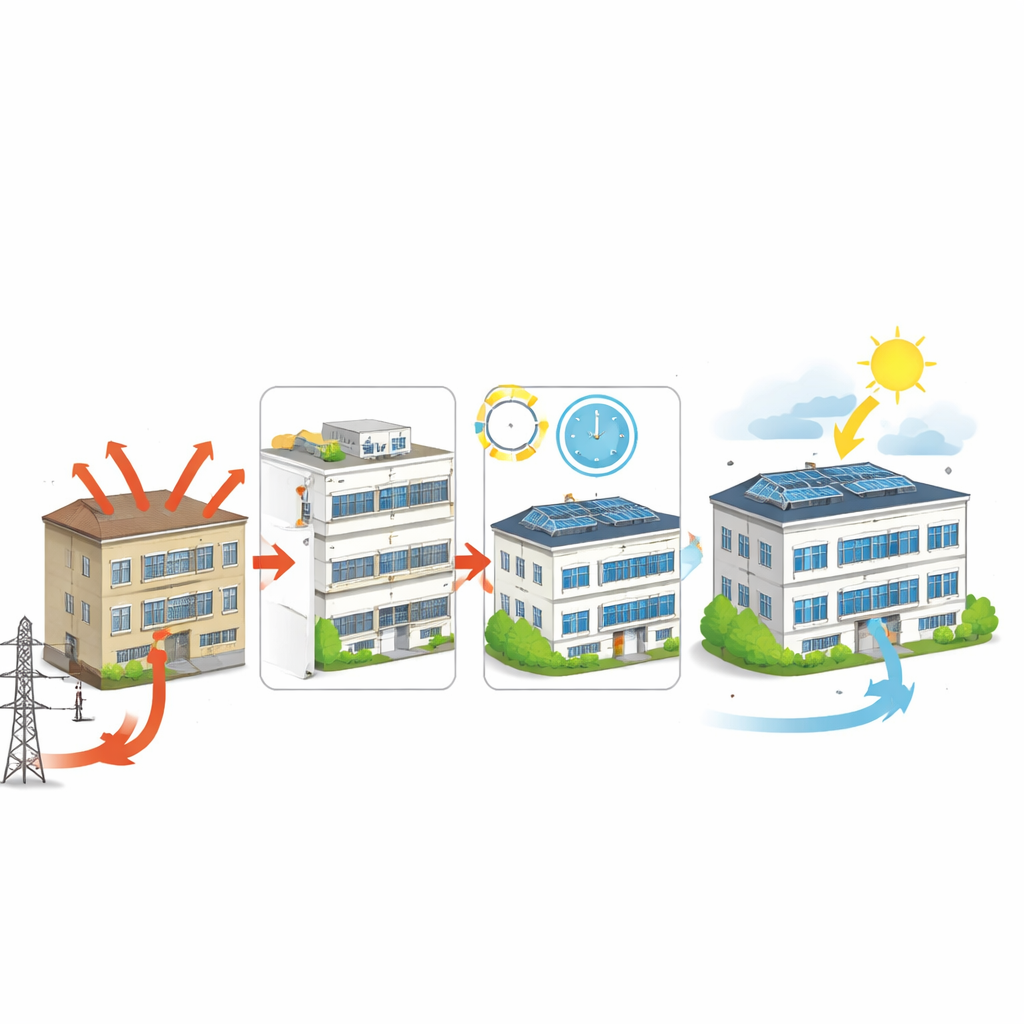
Before adding any new power sources, the team investigates how to shrink the building’s energy appetite. Using a simulation tool, they test several relatively simple changes. These include repainting the exterior walls from beige to white to reflect more sunlight, adding horizontal shades above the windows to block direct sun, installing smarter scheduling so the cooling system only runs when the building is actually in use, and replacing power-hungry desktop computers with more efficient laptops. Together, these steps cut the building’s yearly energy use by about a third and reduce peak cooling needs by more than 11%. They also lower carbon pollution by roughly 296 tons of CO2 per year, or over 7,300 tons across 25 years—without changing how the building is used.
Bringing in the Sun
With the demand trimmed, the next step is to see how much of the remaining energy can come from the sun. The UAE’s intense sunshine makes rooftop solar panels particularly attractive. Space on the M9 building is limited, but the researchers design a grid-connected solar array of about 215 kilowatts using specialized software. On paper, this system can generate roughly 366 megawatt-hours of electricity each year, supplying 38.4% of the building’s reduced annual demand. While this falls short of the formal “nearly zero-energy” threshold—defined here as at least half of the building’s energy coming from renewables—it still trims grid dependence substantially. Financial modeling shows the solar system pays for itself in about six years, delivers a levelized cost of electricity lower than the local grid price, and yields a strong return on investment over a 25‑year lifetime, all while avoiding nearly 5,000 tons of carbon emissions even after accounting for the panels’ manufacturing footprint.
Letting Artificial Intelligence Sort the Options
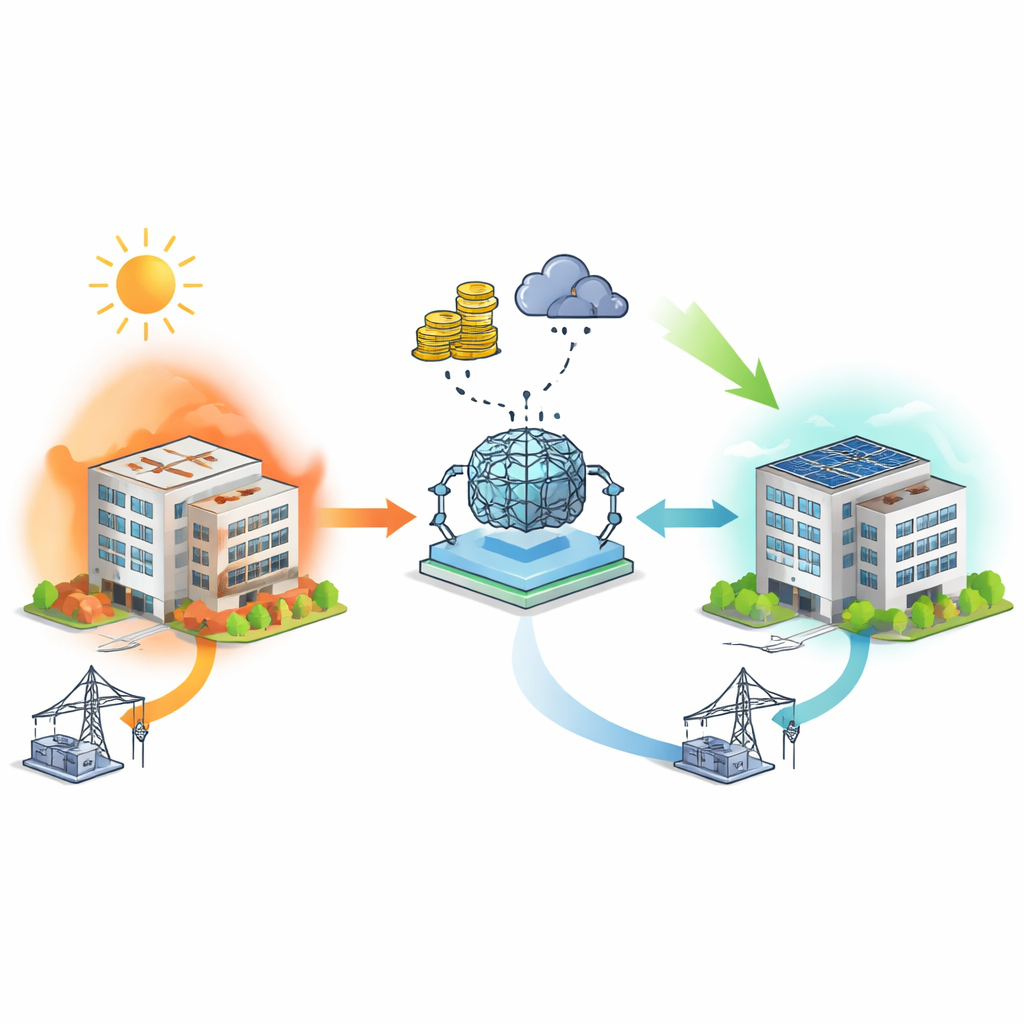
Because there are many possible combinations of efficiency measures and solar sizes, the team builds an artificial intelligence tool to speed up decision-making. They generate thousands of hypothetical retrofit scenarios, each with different mixes of building improvements and solar capacity, and calculate long-term costs, payback times, and emission reductions. A decision-tree model learns from this data to predict key indicators such as net present value and CO2 savings for new scenarios almost instantly. This AI-based “advisor” can then rank retrofit packages by how well they balance three goals at once: lower energy bills, higher financial returns, and deeper cuts in emissions. Instead of running a fresh, time-consuming simulation for every idea, planners can quickly see which options are likely to deliver the best value.
What This Means for Future Buildings
By the end of the analysis, the M9 building has not yet become a full nearly zero-energy building, but it gets close: energy use is cut by a third and on-site solar supplies close to two-fifths of remaining demand, all with solid financial performance. The study shows that combining modest architectural tweaks, smarter operation, efficient equipment, and rooftop solar can deliver big gains without radical reconstruction. Just as important, it demonstrates how AI can turn mountains of technical data into clear guidance for facility managers and policymakers. For campuses and cities in hot climates, this approach points toward a realistic path: rather than waiting for futuristic buildings, we can use today’s tools to refit the ones we already have into cleaner, cheaper, and more resilient places to live and work.
Citation: Alobaid, M., Abo-Khalil, A.G. & Sayed, K. AI-enhanced techno-economic and environmental optimization for nearly zero-energy building retrofitting: a case study of university campus. Sci Rep 16, 14599 (2026). https://doi.org/10.1038/s41598-026-41747-1
Keywords: nearly zero-energy buildings, building retrofits, solar photovoltaics, energy efficiency, artificial intelligence in energy