Clear Sky Science · en
Effect of sand particle size on the thermal effusivity of clay-admixed cement mortar bricks
Why the feel of your walls matters
When you walk into a room, the walls quietly decide how quickly it heats up or cools down. In hot or humid regions, especially where energy is costly, the way bricks handle heat can make the difference between a stifling home and a comfortable one. This study looks at a simple but powerful idea: by changing the size of the sand grains and the amount of clay inside cement bricks, builders may fine‑tune how walls store and release heat—without adding more material or expensive insulation.
Building better bricks from local earth
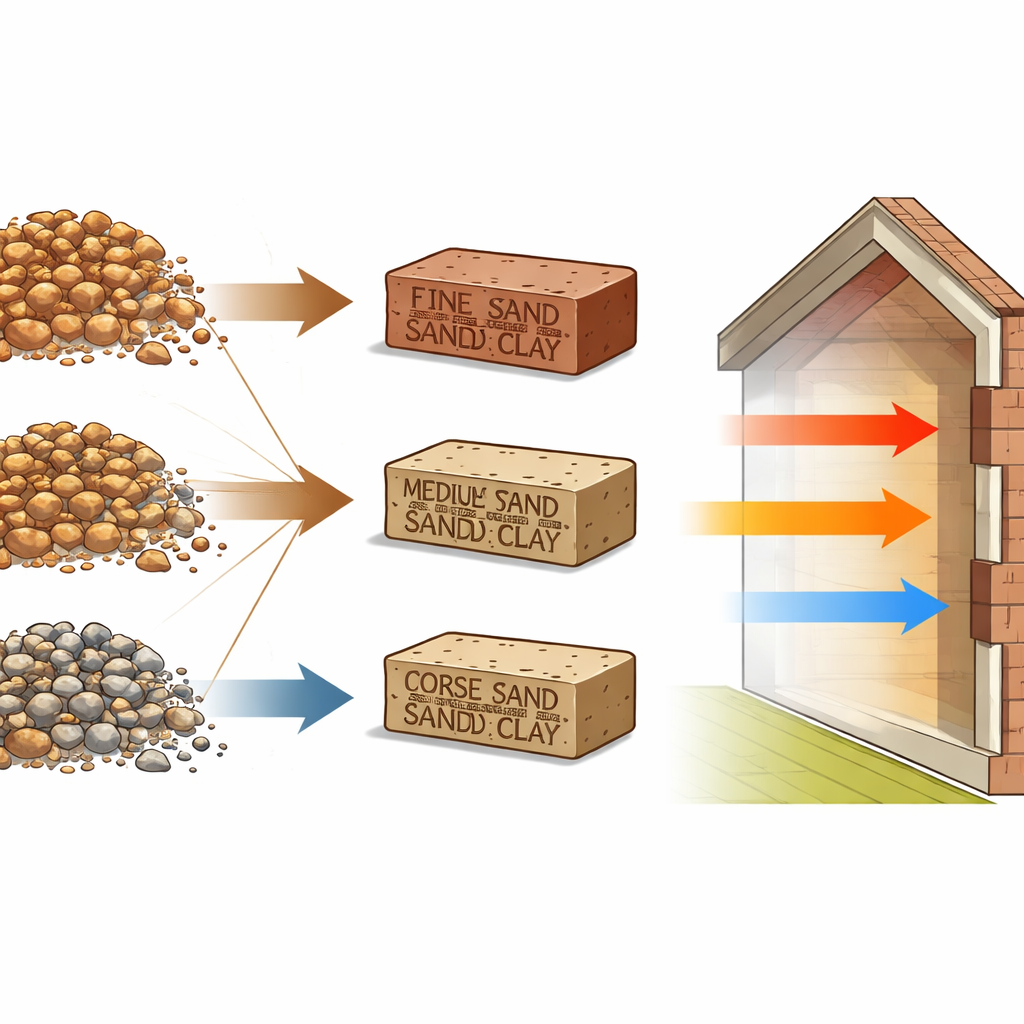
The researchers focused on a common building recipe: cement mortar bricks made from river sand, local clay from Nkolbisson near Yaoundé in Cameroon, water, and Portland cement. Clay is attractive because it is abundant, inexpensive, and has a lower carbon footprint than many modern materials. However, it also tends to weaken bricks if used carelessly. The team asked a question that had been largely overlooked: if you partially replace sand with clay, does the size of the sand grains—very fine, medium, or coarse—change how well the brick stores and passes heat? Answering this could help design walls that moderate indoor temperature more naturally.
From grains to bricks in the lab
To explore this, sand from the Sanaga River was carefully washed, dried, and sifted into three grain-size bands: fine (0.08–0.5 mm), medium (0.5–1.6 mm), and coarse (1.6–2 mm). The Nkolbisson clay was also characterized in detail: its grain-size distribution, plasticity (how easily it deforms when wet), and chemical makeup rich in silica, alumina, and iron oxide were all measured. Bricks were then cast in standardized molds, always keeping the same total dry mass and water‑to‑cement ratio. For each sand size, clay replaced between 0 and 60% of the sand mass, producing 63 small test bricks that were cured for 28 days before testing.
Measuring how bricks interact with heat
The team examined two key thermal behaviors. First, they measured thermal effusivity—a material’s tendency to absorb or release heat when its surface suddenly meets something warmer or cooler. Second, they measured thermal conductivity, which describes how easily heat flows through the brick. Specialized methods were used: an asymmetric hot plate to probe effusivity and a parallel hot wire inserted into the bricks to determine conductivity. Each combination of sand size and clay content was tested several times, and the uncertainties in the measurements were carefully estimated to ensure the trends were real and not just experimental noise.
Clay cools things down, grain size tunes the effect
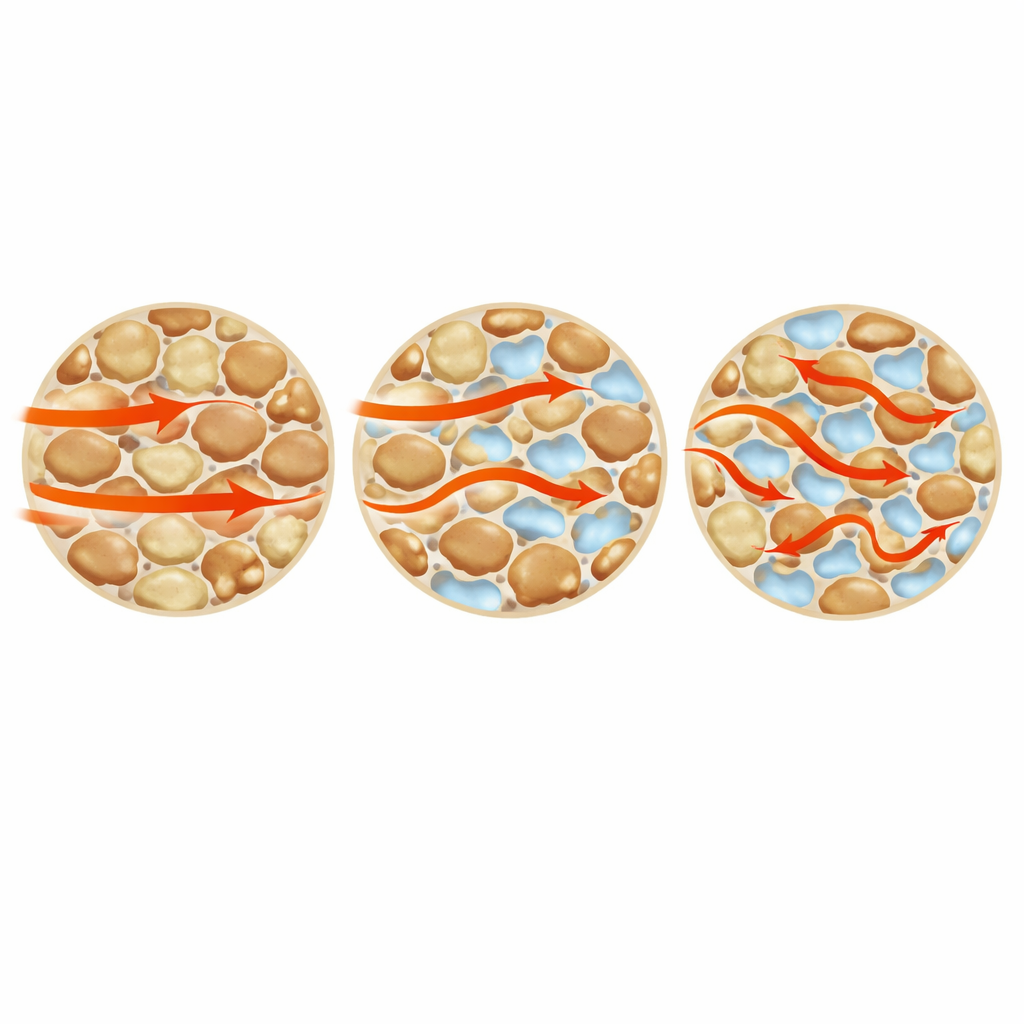
The results draw a clear picture. As more clay is added, both effusivity and conductivity drop for all three sand sizes. In other words, bricks become more insulating and less able to rapidly exchange heat with their surroundings. For the finest sand class, the maximum reductions reached about 18% for effusivity and 34% for conductivity. For the medium and coarse sands, the cuts were even larger—up to roughly 26–28% in effusivity and about 44% in conductivity at the highest clay contents. At the same clay level, bricks made with finer sand tended to have lower thermal properties than those made with coarser sand. Finer grains increase the total surface area and encourage many tiny pores filled with air, which slows heat flow. Coarser grains, by contrast, form a more continuous mineral skeleton, allowing heat to travel more directly through solid contacts.
What this means for comfortable homes
For everyday life, the message is straightforward: by adjusting the mix of clay and the size of sand grains, builders can design bricks that better protect homes from outdoor temperature swings. More clay and finer sand generally make bricks that insulate more, helping interiors stay cooler during hot days and reducing the load on fans or air conditioners. Coarser sand leads to bricks that conduct heat more readily, which might be useful in cooler climates where rapid warming is desired. Because this approach relies on tuning local materials rather than adding thick layers of synthetic insulation, it offers a low-cost, low-carbon way to improve indoor comfort, especially in regions where resources are limited but sunlight and heat are abundant.
Citation: Djouatsa Donfack, A., Yamb Bell, E., Diakhate, M. et al. Effect of sand particle size on the thermal effusivity of clay-admixed cement mortar bricks. Sci Rep 16, 13057 (2026). https://doi.org/10.1038/s41598-026-41726-6
Keywords: energy-efficient buildings, clay bricks, thermal insulation, sand grain size, sustainable construction