Clear Sky Science · en
Characterization of anticariogenic mycosymbiotic fungi associated with the medicinal plant Piper crocatum
Hidden Helpers for Healthy Teeth
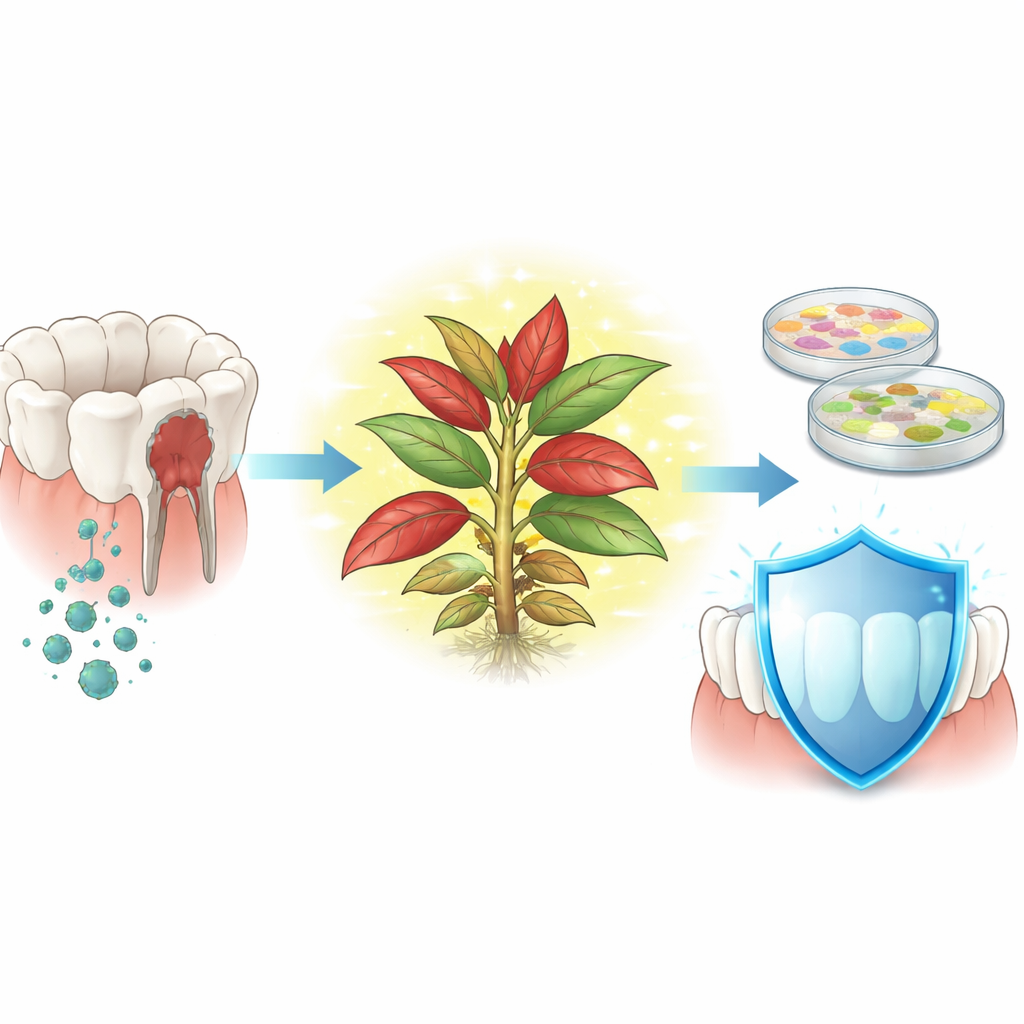
Dentists have long warned us about sugar and cavities, but a quieter threat is now taking center stage: many of the bacteria that cause tooth decay are becoming resistant to common antibiotics. This study looks in an unexpected place for new ways to protect our teeth—the tiny fungi living inside the leaves of a traditional Indonesian medicinal plant called red betel (Piper crocatum). By exploring these hidden partners, the researchers hope to discover natural substances that could one day power new mouth rinses or dental treatments that stop cavities before they start.
Why Tooth Decay Needs New Answers
Tooth decay begins when mouth bacteria feed on sugary or starchy foods and release acids that slowly dissolve the hard surface of our teeth. A key culprit is the bacterium Streptococcus mutans, which sticks to teeth, forms stubborn films, and creates localized acid “hotspots.” In Indonesia, about eight in ten people have cavities, and many lose several teeth over their lifetime. Dentists often turn to antibiotics, especially when decay reaches the tooth pulp, but these drugs are increasingly failing. Recent data show that S. mutans can resist many standard antibiotics, including amoxicillin and tetracycline, at worryingly high rates. This has created an urgent need for new, more targeted antimicrobial compounds that can work where standard drugs fall short.
A Traditional Plant with a Modern Twist
Red betel has been chewed for centuries in Indonesia in a practice believed to strengthen teeth and heal mouth sores. Modern research has confirmed that its leaves contain chemical compounds capable of slowing or killing several harmful mouth microbes. Yet chewing the raw leaves for years can damage gums and may even raise the risk of precancerous changes. The team behind this study took a different approach: instead of focusing only on the plant’s own chemistry, they turned to the microscopic fungi that quietly colonize its inner leaf tissues. Because these fungi share the plant’s protected internal space, they often evolve similar or even stronger defensive chemicals—and, crucially, they can be grown in the lab much more easily than the plant itself.
Sorting and Testing the Leaf Fungi
The researchers collected healthy red betel leaves from 13 sites in West Java, Indonesia, carefully sterilized their surfaces, and then encouraged any internal fungi to grow on nutrient plates. This yielded 66 pure fungal strains that looked strikingly different from one another in color, texture, and growth pattern. To avoid testing near-duplicates, the team used a structured visual classification method to group the fungi into ten main types based on 33 observable traits, such as colony color, edge shape, and presence of pigment droplets. One representative from each group was then grown on cooked red rice, and the resulting fungal growth was extracted with alcohol to obtain crude mixtures of their chemical products. These extracts were placed on paper disks and laid onto plates seeded with S. mutans to see which ones could block bacterial growth.
Discovering Fungi That Fight Cavity Bacteria
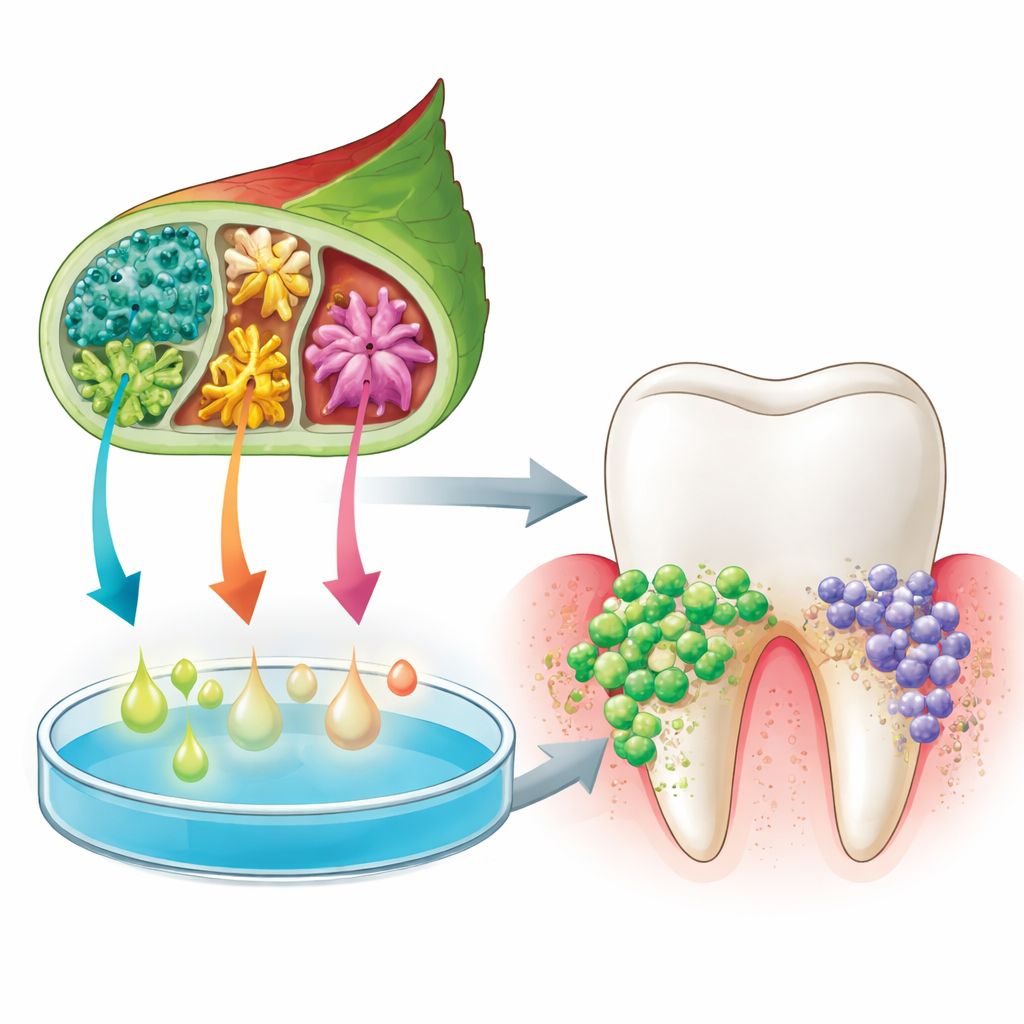
The test results revealed a clear pattern: some fungal groups produced rich, colorful colonies and complex chemical “fingerprints” when separated on thin-layer chromatography plates, and these were also the ones that most strongly inhibited S. mutans. One standout strain, labeled t5-059, created an inhibition zone around the paper disk larger than even the standard dental antiseptic chlorhexidine. Several other strains also showed promising activity. By analyzing a commonly used DNA barcode region, the researchers identified the most active fungi as species of Colletotrichum, Torula, and Aspergillus. Some of these are usually thought of as plant pathogens or rare environmental species, but here they appeared as quiet tenants inside healthy red betel leaves, apparently producing defensive chemicals that may help the plant—and now, potentially, our teeth.
From Leaf Microbes to Future Mouth Care
To a non-specialist, the core message of this work is surprisingly simple: within a familiar medicinal plant lives a small community of fungi that can make powerful substances against cavity-causing bacteria. The study shows that red betel tends to host a consistent “core” set of fungal partners across different locations, and that certain darkly pigmented, slow-growing strains produce especially strong anticavity effects. While these crude mixtures are far from ready-made drugs, they offer a promising starting point for isolating pure compounds that could be turned into targeted mouth rinses, gels, or coatings for teeth. In a world where traditional antibiotics are losing their edge, these quiet fungal roommates of red betel may help inspire a new generation of safer, plant-inspired treatments to keep our smiles intact.
Citation: Azmi, S.Z.K., Kurnia, D., Nurpalah, R. et al. Characterization of anticariogenic mycosymbiotic fungi associated with the medicinal plant Piper crocatum. Sci Rep 16, 13993 (2026). https://doi.org/10.1038/s41598-026-41703-z
Keywords: dental caries, Piper crocatum, endophytic fungi, natural antimicrobials, Streptococcus mutans