Clear Sky Science · en
NMR characterisation of biopolymers and lipids from hemp pomace treated with Thermomyces lanuginosus
Turning Harvest Leftovers into Hidden Treasure
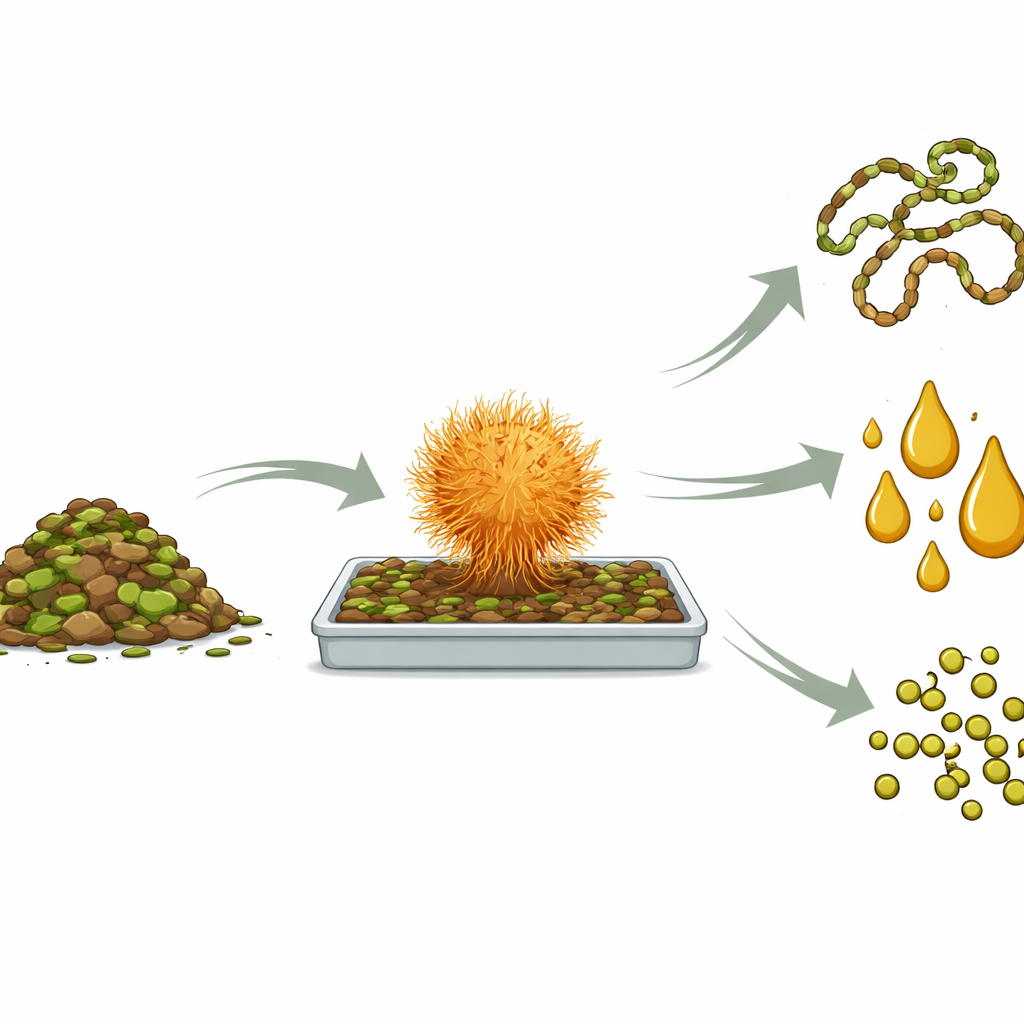
Around the world, farmers and food producers are left with mountains of plant leftovers once oil or grain has been extracted. Hemp oil production is no exception: it creates a fibrous by-product called hemp pomace that is usually treated as low-value waste or animal feed. This study explores how a heat-loving fungus can act like a microscopic refinery, reshaping the molecules inside hemp pomace to create more useful ingredients for fuels, materials, and fertilizers. Using a powerful analytical method called NMR, the researchers watched in detail how the fungus transforms oils, plant fibers, and phosphorus compounds locked inside this underused resource.
A Closer Look at Hemp’s Forgotten Fraction
Hemp pomace is far more than dry, leftover plant matter. It is rich in structural plant fibers—cellulose, hemicellulose, and lignin—as well as a surprisingly high content of oils and phosphorus-containing compounds. These ingredients are valuable but tightly bound together in a complex, hard-to-process mix known as lignocellulosic biomass. That complexity makes the material resistant to breakdown and difficult to upgrade into advanced products. The authors set out to see whether a thermophilic fungus, Thermomyces lanuginosus, grown on moist hemp pomace under solid-state fermentation could gently but effectively rearrange this internal chemistry, making the biomass more versatile for industrial use.
Fungus as a Natural Oil Processor
The team first tracked what happened to the oil fraction during 4, 7, and 10 days of fungal growth. Using proton NMR, they found that the fungus steadily consumed complex storage fats—mono-, di-, and triglycerides—while increasing the amount of free glycerol and keeping a rich pool of unsaturated fatty acids. After 10 days, glycerol rose dramatically, reaching roughly one third of the lipid fraction, while certain polyunsaturated fatty acids, such as linoleic and linolenic acids, were partially converted. The oils in hemp pomace turned out to be unusually rich in monounsaturated fatty acids, which are prized for both nutrition and fuel quality. In effect, the fungus acted like a biological processing plant, splitting large fat molecules into smaller, more valuable pieces that could feed industries from food and cosmetics to biodiesel and bio-based plastics.
Reworking Plant Fibers and Unlocking Phosphorus
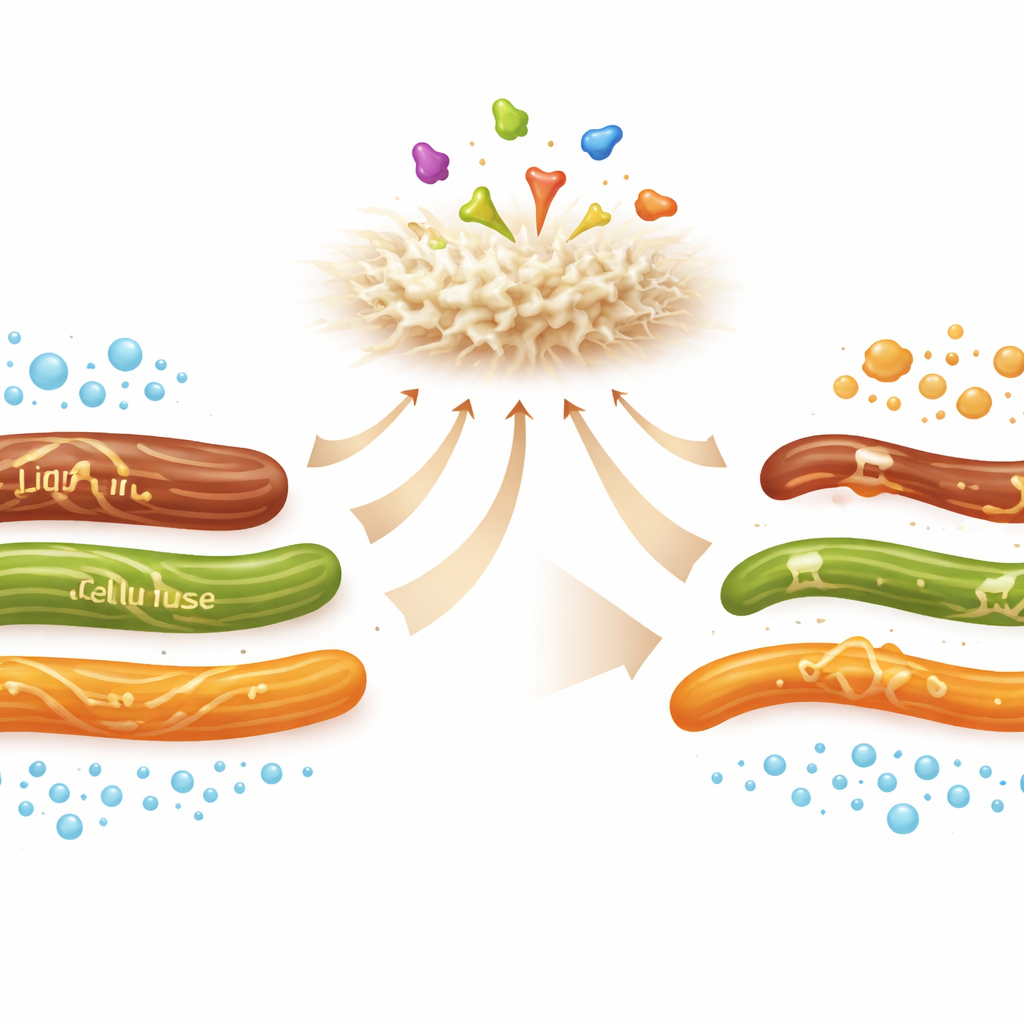
Beyond oils, the fungus also rewired the solid plant matrix. Solid-state NMR revealed that the lignin component—the tough, woody glue in plant cell walls—gained more carbonyl and carboxyl groups over time. These changes can make lignin more reactive and better suited as a building block for dispersants, polymers, or even bitumen substitutes in construction materials. In cellulose, the signals suggested that remaining aromatic impurities, likely traces of lignin, were diminished, leaving a chemically cleaner polysaccharide that is attractive for paper, textiles, and chemical derivatives. Hemicellulose showed a shift toward more carbohydrate-like signals and fewer methoxyl groups, indicating that fungal activity was stripping away lignin-like attachments and enriching the sugar backbone. At the same time, analysis of phosphorus-rich extracts showed that the fungus converted a portion of organic phosphorus forms (monoesters) into more available inorganic orthophosphates, potentially enhancing the value of the residue as a source of plant nutrients.
A New Pathway for Green Biorefineries
Taken together, these changes show that Thermomyces lanuginosus can upgrade hemp pomace in several ways at once: simplifying its oils into glycerol and useful fatty acids, tuning lignin toward more reactive forms, cleaning up cellulose and hemicellulose, and reshaping phosphorus chemistry toward more accessible nutrients. Because NMR allowed the researchers to monitor these transformations non-destructively and in detail, they could link specific molecular shifts to potential industrial applications. For a general reader, the key message is that what looks like lowly processing waste can, with the help of the right fungus, become a multi-purpose feedstock for fuels, materials, and fertilizers. This kind of gentle, biology-driven refining is an important piece of the emerging circular bioeconomy, where leftovers from one process become the raw materials for the next.
Citation: Vuković, J.P., Jednačak, T., Novak, P. et al. NMR characterisation of biopolymers and lipids from hemp pomace treated with Thermomyces lanuginosus. Sci Rep 16, 13345 (2026). https://doi.org/10.1038/s41598-026-41682-1
Keywords: hemp pomace, solid-state fermentation, fungal biorefinery, lignocellulosic biomass, NMR spectroscopy