Clear Sky Science · en
Development of a cell-based sweet perception model to study the metabolic effect of different sweeteners
Why Our Sweet Tooth Matters
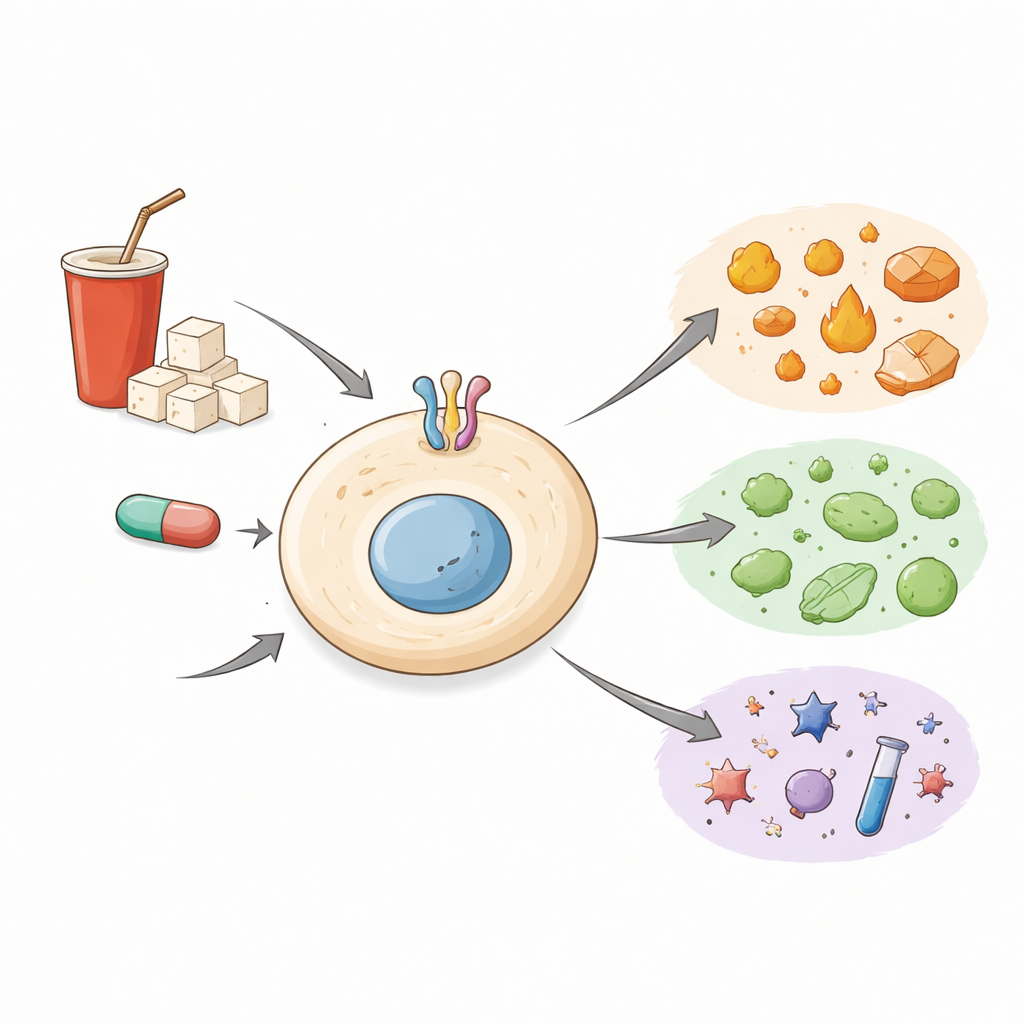
Whether it’s a spoonful of sugar or a zero-calorie sweetener in a diet soda, the taste of sweetness shapes what we eat every day. But sweetness doesn’t just delight our tongue; it also sends signals deep inside our cells that can influence health, weight, and disease risk. This study asks a deceptively simple question: what happens inside human cells in the first minutes after they sense different sweeteners? By building a lab-grown “sweet taste” cell system and tracking hundreds of tiny molecules inside those cells, the researchers show that common sweeteners—sucrose, sucralose, and neotame—each leave their own rapid chemical fingerprints.
Building a Mini Taste System in a Dish
To peer into the earliest moments after we taste sweetness, the team first needed a controlled, human-based model. They engineered a common human cell line (HEK293) to carry the two key sweet taste sensors, known together as the T1R2/T1R3 receptor pair. These receptors are normally found on taste bud cells and are responsible for detecting a wide range of sweet substances. By attaching fluorescent tags to the receptors and confirming their presence with gene and protein tests, the researchers created a stable cell line that reliably responds to sweet compounds, essentially turning a generic cell into a simplified “sweet taste” cell.
Watching Cells React to a Burst of Sweet
Next, the scientists checked that these engineered cells could actually “feel” sweetness. They used a calcium-sensitive dye to watch how the cells’ internal calcium levels changed when exposed briefly to sucrose (table sugar) at a level similar to that found in sugary drinks, as well as to two popular non-caloric sweeteners, sucralose and neotame. Calcium surges are a hallmark of sweet taste signaling. The cells showed a strong calcium spike when sweeteners were added, but not when a known blocker of the sweet receptor was present, confirming that the response truly came from activation of the taste sensor. The researchers then chose doses of each sweetener that produced similar-strength calcium signals, allowing a fair comparison of their downstream effects.
Following Hundreds of Molecules Inside Cells
With the model in place, the team focused on metabolism—the constantly shifting network of small molecules that fuel cells and carry signals. They briefly exposed the sweet taste cells to each sweetener for just two minutes and then rapidly froze and extracted their contents. Using high-resolution mass spectrometry, they measured hundreds of different molecules, including amino acids, energy-related compounds, and fats. Statistical tools were used to highlight which molecules changed significantly compared with untreated cells, and to see whether each sweetener produced a distinct metabolic “signature.” The resulting patterns were strikingly different for sucrose, neotame, and sucralose.
How Different Sweeteners Leave Different Footprints
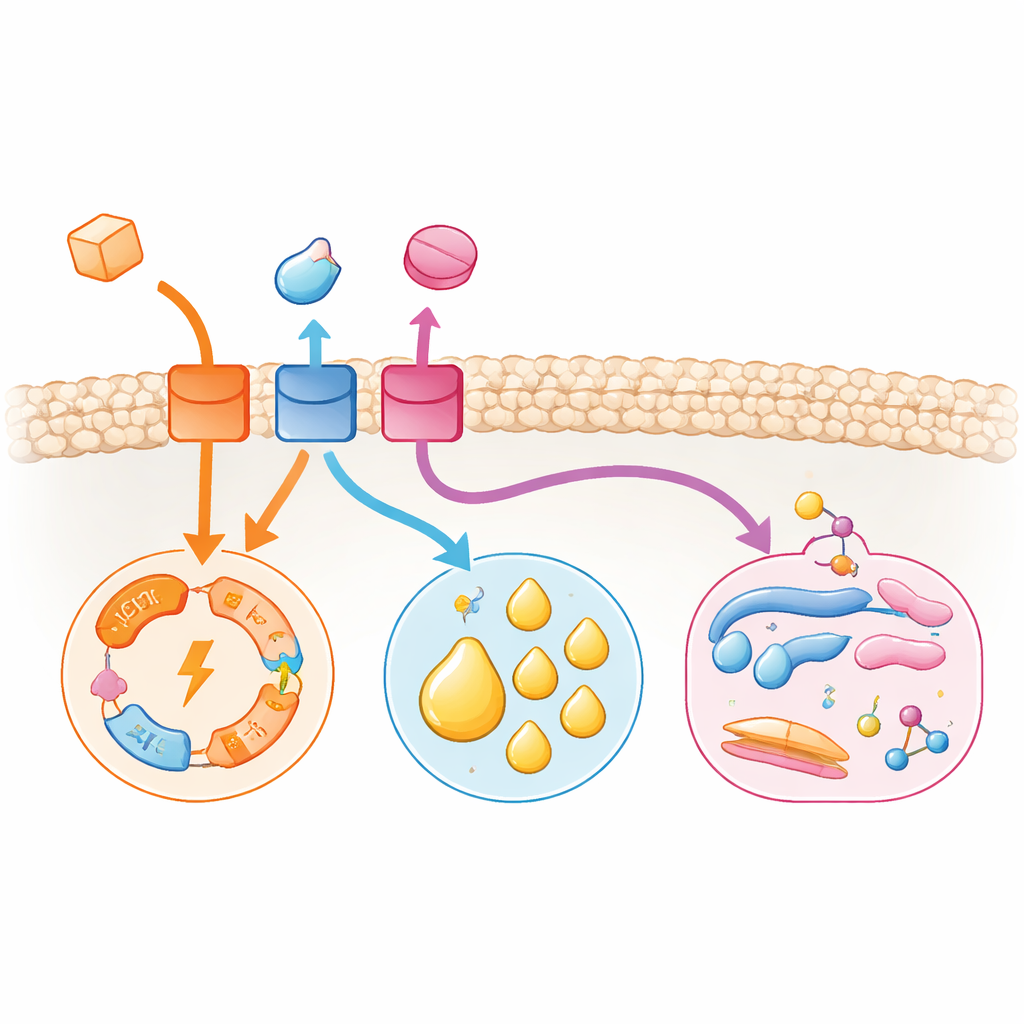
Sucrose, a calorie-containing sugar, mainly altered molecules linked to the cell’s core energy factory, including key steps in the tricarboxylic acid (TCA) cycle, as well as amino acids and antioxidant molecules. These shifts suggest that even a short burst of real sugar can temporarily tilt energy production and redox balance inside cells. Neotame, in contrast, strongly affected many fats, particularly a group called ceramides that are known players in stress responses and insulin sensitivity, and also showed signs of an activated antioxidant response. Sucralose mostly influenced specific membrane lipids and related signaling fats, hinting that it may quickly touch pathways involved in how cells send and receive internal messages. Advanced pattern-recognition analysis showed that the overall metabolic profiles produced by each sweetener were clearly separable, meaning the cell could “tell them apart” at a chemical level, even after a single short exposure.
What This Means for Everyday Sweet Choices
For everyday consumers, this work underscores that not all sweeteners are equal simply because they taste sweet or share the same calorie count. In this controlled cell system, sugar and two popular sugar substitutes each triggered rapid but distinct shifts in the chemical landscape inside human cells. While this study does not directly test long-term health outcomes, it shows that sweet taste receptors act as more than simple on–off switches: they link what we taste to specific metabolic pathways within minutes. The cell-based sweet taste model developed here offers a powerful new way to explore how different sweeteners may shape metabolism over time, helping to inform future research, dietary guidelines, and the design of safer, smarter sugar alternatives.
Citation: Zhu, Q., Xie, F., Zhao, G. et al. Development of a cell-based sweet perception model to study the metabolic effect of different sweeteners. Sci Rep 16, 11196 (2026). https://doi.org/10.1038/s41598-026-41678-x
Keywords: sweeteners, cell metabolism, sweet taste receptors, non-nutritive sweeteners, metabolomics