Clear Sky Science · en
Combined effects of depression and visual impairment on cardiovascular disease incidence in a Chinese population-based cohort
Why Mood and Sight Matter for the Heart
Heart disease and stroke are often blamed on high blood pressure, cholesterol, or diabetes. But our minds and senses also shape our heart health. This study followed thousands of middle-aged and older adults across China to ask a simple but important question: when people live with both low mood and poor eyesight, does that combination put their hearts in extra danger? The answer helps show why tending to emotional well-being and vision could be just as vital as checking blood pressure in later life.
A Large Look at Middle and Older Age
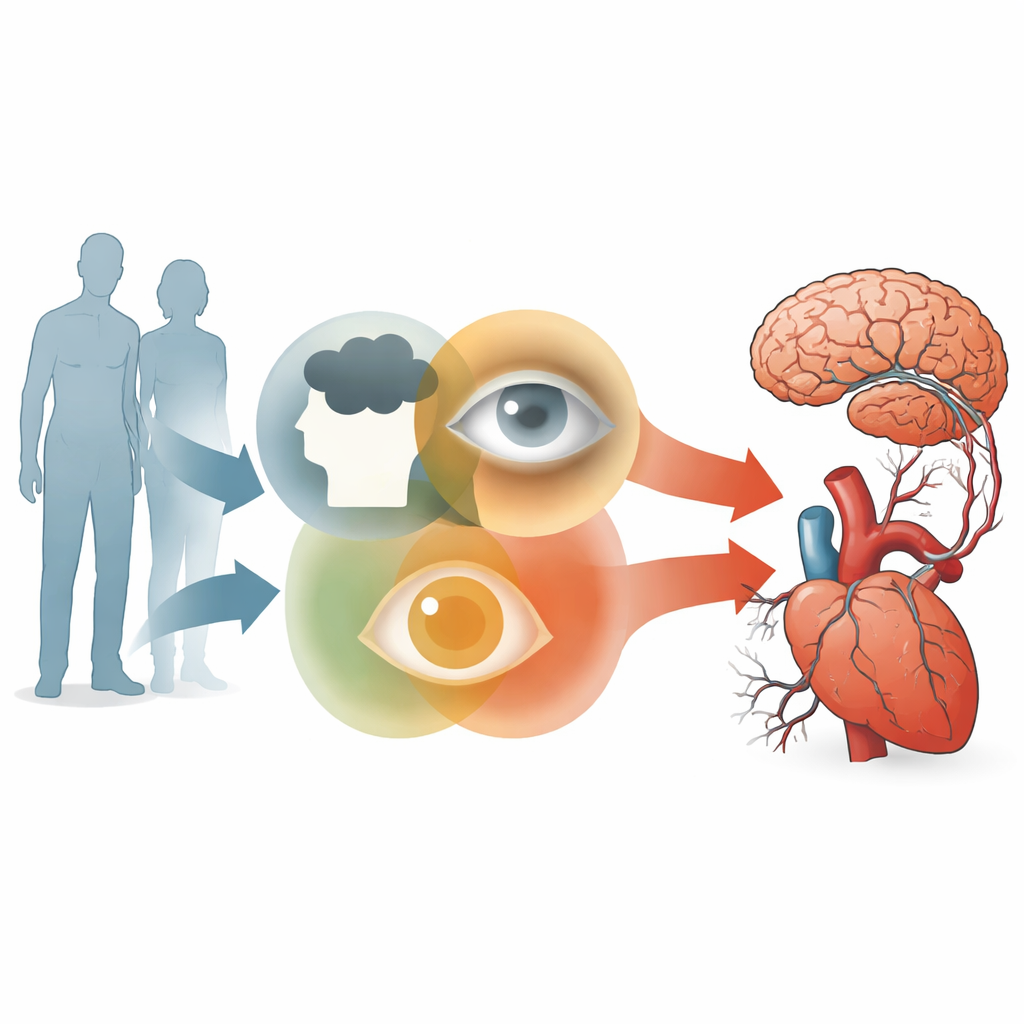
The researchers used data from a nationwide project that regularly interviews Chinese adults aged 45 and older. From this pool, they focused on 18,633 people who did not have heart disease or stroke at the start and then tracked who later developed cardiovascular problems over nearly a decade. At their first eligible survey, each participant reported how well they could see up close and far away, and they completed a short questionnaire about depressive symptoms such as sadness and poor sleep. People who rated their vision as only fair or poor were considered visually impaired, and those with higher scores on the mood questionnaire were considered to have depression.
Four Groups, One Clear Pattern
With this information, the team divided everyone into four simple groups: those with neither depression nor visual problems, those with depression only, those with visual problems only, and those with both. They then compared how often people in each group went on to develop heart disease or stroke, taking into account age, sex, smoking, drinking, body weight, and existing conditions such as diabetes and high blood pressure. Every group with at least one of the two conditions had higher heart risk than people with neither. The biggest increase was seen in people with depression only, followed closely by those who had both depression and visual impairment, and then by those with visual problems alone.
When Two Problems Do Not Fully Add Up
At first glance it might seem obvious that having both depression and poor sight should be much worse than having just one. However, the statistics told a subtler story. Although people with both conditions had a clearly higher absolute chance of developing cardiovascular disease, their combined risk was not greater than what would be expected from depression alone. In other words, depression appeared to be the main driver of heart risk, and adding visual impairment on top did not multiply that risk as strongly as one might predict. This pattern, seen across several different types of analyses and confirmed in men and women separately, suggests that the two conditions may share many of the same harmful pathways.
Clues from Age, Sex, and Possible Pathways
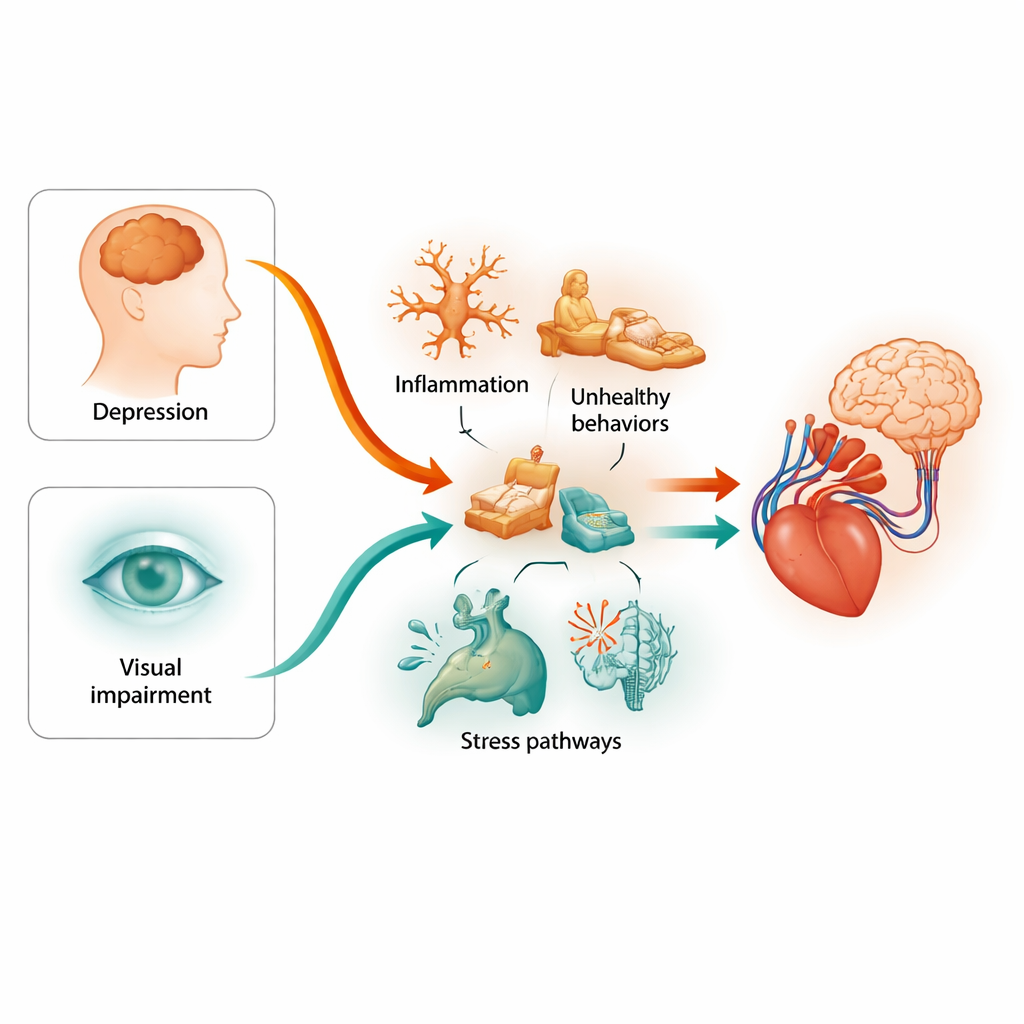
When the researchers looked more closely, they found the raised heart risk in all three affected groups across both middle-aged adults and those 60 and older, though the interplay between depression and poor sight seemed stronger in the younger group. Women with visual impairment showed a particularly marked increase in heart risk compared with men, echoing other studies that link sensory loss to heart problems more strongly in women. The authors suggest several reasons why depression and visual impairment might travel together toward heart disease: both can reduce physical activity, make it harder to manage medications and medical visits, and increase stress, inflammation, and strain on blood vessels. People with both conditions might also face social isolation, yet their frequent contact with healthcare or family support could partly limit additional harm.
What This Means for Everyday Health
For a layperson, the key lesson is that the heart does not exist in isolation from the brain and the eyes. In this large Chinese cohort, depression and visual impairment each raised the chance of future heart disease and stroke, and living with both signaled a group at especially high overall risk. However, depression stood out as the more powerful predictor, and poor sight did not push risk beyond what depression alone already did. This suggests that screening for low mood, especially in older adults who also struggle with their vision, could be a practical step in preventing heart problems. Addressing depressive symptoms and ensuring good eye care may therefore be part of a more complete strategy to protect heart health as populations age.
Citation: Zhou, Y., Guo, S., Wu, Z. et al. Combined effects of depression and visual impairment on cardiovascular disease incidence in a Chinese population-based cohort. Sci Rep 16, 11533 (2026). https://doi.org/10.1038/s41598-026-41670-5
Keywords: depression, visual impairment, cardiovascular disease, aging, population cohort