Clear Sky Science · en
A two stage optimization model for sustainable location routing problem with capacity and time window constraints in smart parcel lockers
Why smarter parcel delivery matters to city life
Online shopping has made it possible to order almost anything to our doors, but the vans, motorbikes, and traffic jams that follow come with hidden costs: clogged streets, dirty air, and higher prices. This study explores how "smart parcel lockers"—those self-service boxes where you can pick up packages at your convenience—can be planned and routed in a way that cuts pollution and traffic while still giving shoppers fast, reliable service. Using real data from Tehran, the authors show how math, maps, and clever algorithms can make last‑mile delivery cleaner, cheaper, and fairer.
From doorstep chaos to shared pickup points
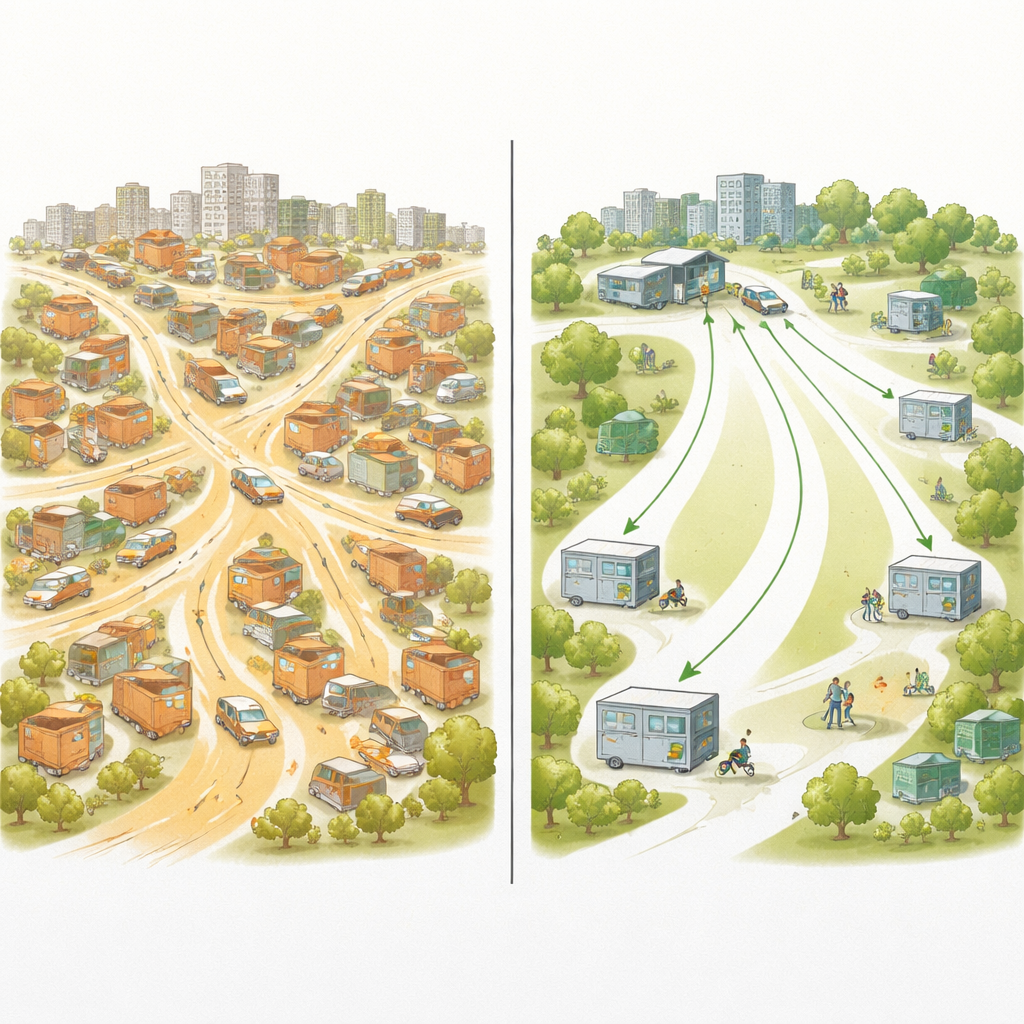
The paper starts from a simple observation: the last leg of delivery, from a local depot to each customer, is the most expensive and polluting part of e‑commerce. In a big, congested city like Tehran, millions of daily trips by cars, vans, and motorcycles slow traffic and worsen air quality. Smart parcel lockers offer a different pattern. Instead of many vehicles stopping at many doors, a smaller number of vehicles visit a network of lockers, and customers walk a short distance to collect their parcels. Earlier studies had examined locker placement, locker design, or customer satisfaction in isolation. This work pulls those strands together, asking where to put lockers, how to route vehicles to them, and how to balance cost, service, and environmental impact all at once.
Two linked decisions: where lockers go and how vehicles move
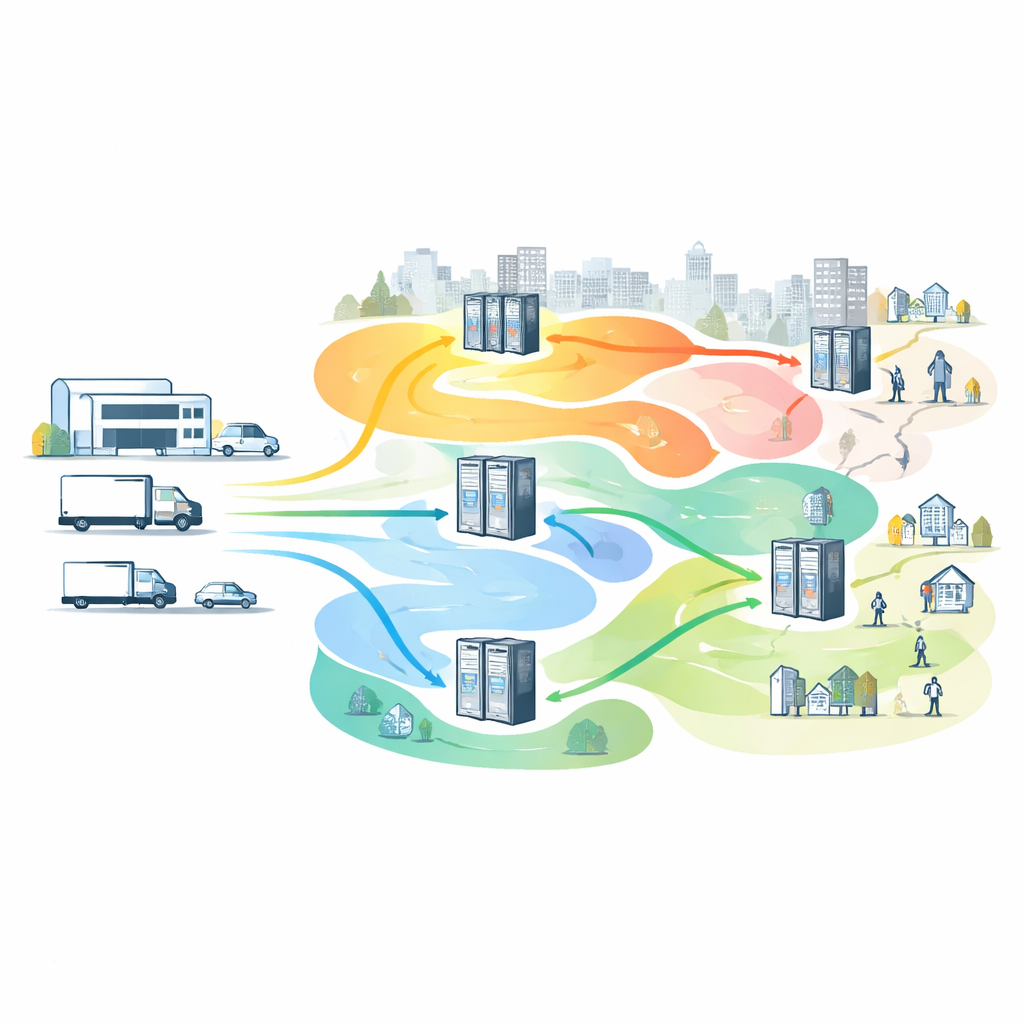
To tackle this, the authors build a two‑stage optimization model. In the first stage, the model decides which locker sites to open and how many parcels each should handle, taking into account locker capacity, set‑up cost, and how far customers are willing to travel. In the second stage, it designs delivery routes from a central depot to the chosen lockers, respecting limits on vehicle capacity, driving time, and time windows when lockers can be served. Several objectives are combined: reducing the cost of building and operating lockers, avoiding rejected parcels that must still be taken door‑to‑door, shrinking driving distances and fuel use, and keeping service times tight. The model converts these competing goals into a single score using adjustable weights, so managers can emphasize savings, speed, or emissions depending on their priorities.
Testing the model in a crowded real-world district
The framework is put to the test using a detailed case study of Tehran, focusing on a central district known for heavy traffic and dense demand. Data on existing lockers, customers, distances, vehicle types, fuel use, and time limits are fed into the model. The results show that carefully chosen locker locations in high‑demand spots—near busy residential and commercial areas—allow many parcels to be consolidated into fewer routes. Compared with less structured delivery patterns, the optimized network cuts total travel distance, operating costs, and carbon emissions, while still keeping lockers close enough for convenient customer pickup. Scenario analyses, where the researchers vary allowed travel times, distances, and the importance of each objective, reveal how sensitive the network is to policy choices such as stricter time limits or stronger emphasis on environmental performance.
How smarter algorithms scale to big cities
Because large cities can have many lockers, vehicles, and customers, finding the absolute best solution by brute force is extremely hard. The authors therefore compare exact mathematical solvers with three search‑based methods inspired by natural processes, known as metaheuristic algorithms: a Keshtel algorithm, a genetic algorithm, and simulated annealing. For small test problems, all methods are checked against exact solutions and found to be accurate. For medium and large problems, where exact solvers bog down, the Keshtel algorithm consistently delivers better solutions in less time, especially when dozens of lockers and vehicles are involved. This suggests that city-scale locker networks can be optimized fast enough to be practically useful for daily or weekly planning.
Broader benefits for cities, businesses, and people
Beyond cleaner logistics, the study points to social and economic gains. By lowering the cost and complexity of last‑mile delivery, shared locker networks can help smaller couriers and local shops compete with dominant e‑commerce giants, reducing monopoly power and giving consumers more options. Strategically placing lockers in underserved neighborhoods, near transit hubs, and in mixed‑income areas can spread these benefits more fairly, instead of concentrating good service only in wealthy districts. The authors argue that combining smart lockers with electric vehicles and renewable energy could deepen the environmental gains.
What this means for everyday shoppers
For a layperson, the message is straightforward: choosing to pick up parcels from a nearby smart locker, rather than insisting on doorstep delivery, can be part of a cleaner and more efficient city. This research shows that, with careful planning and the right algorithms, locker networks can substantially cut delivery traffic, fuel use, and emissions without sacrificing convenience. As more cities expand e‑commerce and face growing congestion, models like this offer a roadmap for how to redesign last‑mile delivery so it works better for shoppers, small businesses, and the urban environment alike.
Citation: Ghadirpour, S.M., Chaharsooghi, S.K. & Hajiaghaei-Keshteli, M. A two stage optimization model for sustainable location routing problem with capacity and time window constraints in smart parcel lockers. Sci Rep 16, 11514 (2026). https://doi.org/10.1038/s41598-026-41653-6
Keywords: smart parcel lockers, last-mile delivery, urban logistics, sustainable transportation, location-routing optimization