Clear Sky Science · en
The Arctic vegetation is more sensitive to heatwave-induced photosynthetic decline than other climate zones in Europe (2009–2017)
Why Hot Spells in the Far North Matter to Everyone
When most of us picture heatwaves, we think of parched fields in southern Europe, not icy Arctic tundra. Yet this study shows that during Europe’s recent decade of extreme summers, the plants of the European Arctic turned out to be more fragile than their counterparts in warmer regions. Because Arctic vegetation stores an enormous amount of carbon, its reaction to rising heat could tip the balance between our planet quietly absorbing carbon dioxide and suddenly releasing much more of it back into the air.
Heatwaves Meet a Landscape Built for Cold
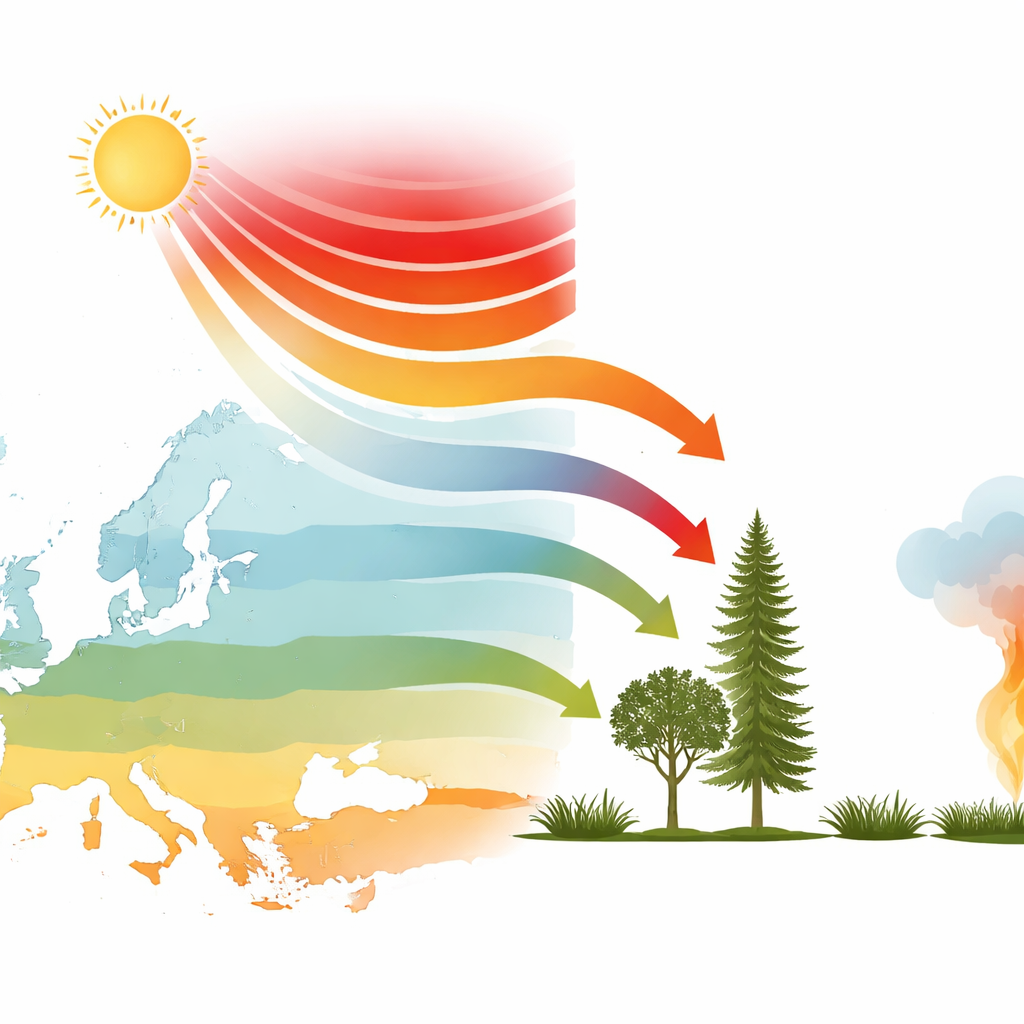
The researchers start by explaining that Arctic plants are finely tuned to short, cool summers and soils sitting on permafrost. Over the last decades, the region has been warming rapidly, and heatwaves—long runs of unusually hot days—have become more frequent across Europe. In the Arctic, these hot spells arrive on plants that are used to cold stress, not heat stress. When temperatures spike, their leaves and tissues can be damaged, and they have little time each year to recover. Meanwhile, the Arctic tundra, once mostly moss and sparse shrubs, has been getting greener and denser, storing a huge share of the world’s land-based carbon. That makes it crucial to understand whether these greener landscapes will keep soaking up carbon or begin to leak it back out.
Comparing North and South Across the Continent
To see how vulnerable different regions are, the team compared 18 climate zones across Europe from 2009 to 2017, grouped into four main types: arid, temperate, cold, and Arctic. Instead of relying on a few field sites, they used satellites to track both the plants’ condition and the carbon in the air above them. Vegetation “vital signs” such as greenness, leaf area, how much sunlight the plants absorb, and how much water they evaporate were combined with satellite-based measurements of atmospheric carbon dioxide. Using a statistical approach that accounts for both location and time, they could see, grid cell by grid cell, how tightly changes in plant activity were linked to carbon levels during and after hot summers.
Following Subtle Shifts Through the Seasons
Plant growth naturally rises and falls with the seasons, especially in high-latitude regions. To avoid mistaking normal spring and summer swings for heatwave damage, the authors first modeled the usual yearly rhythm of each vegetation indicator with a smooth, wave-like curve. They then looked at what was left over—anomalies that persisted after the seasonal pattern was removed. These “legacy effects” show how long plants remain stressed after a heatwave passes. By comparing these patterns across climate zones, they could see where heat left only a short-lived scar and where it seemed to push ecosystems into a longer downturn.
Arctic Plants Show the Sharpest Downturn
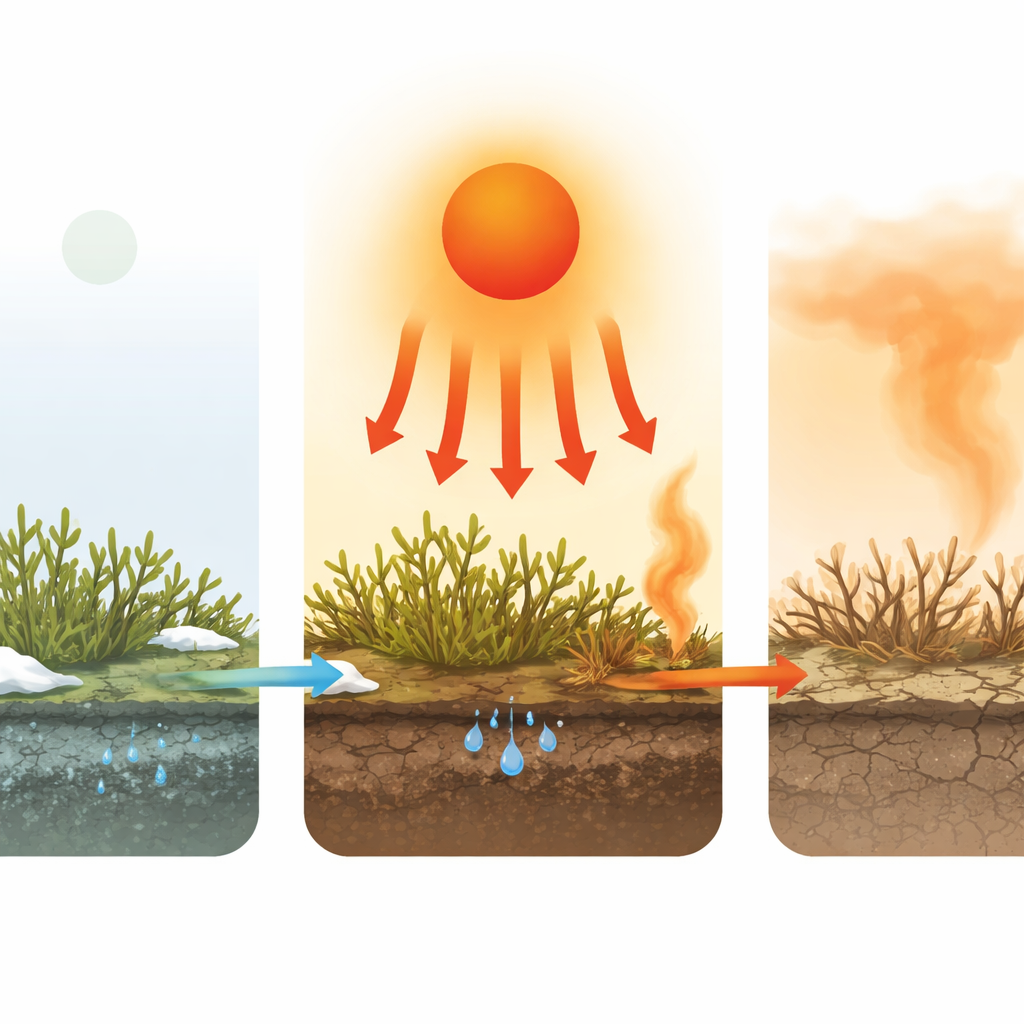
The results were striking. In arid, temperate, and cold zones, signs of photosynthesis generally weakened under heat, but the statistical links between plant indicators and carbon were moderate. In the Arctic zone, the same indicators—especially greenness and water loss from leaves and soil—showed two to fifteen times stronger responses to heatwaves. In these northern areas, increases in absorbed sunlight and water loss during hot spells were tied not to healthy growth but to a pronounced decline in photosynthesis. Over the nine-year period, the influence of repeated heatwaves on Arctic vegetation kept strengthening, suggesting that past hot summers make plants more vulnerable to the next ones. This pattern hints that permafrost thaw, soil drying, and plant stress may be feeding on one another.
What This Means for the Planet’s Carbon Budget
Put simply, the study concludes that European Arctic plants are more easily pushed past their comfort zone by heatwaves than vegetation in warmer parts of Europe. As heatwaves sap their ability to photosynthesize, and as soils first wet from thaw and then dry out, these northern landscapes risk flipping from carbon “sponges” into carbon “sources.” That would add extra carbon dioxide to the atmosphere on top of human emissions. Because the Arctic stores so much carbon, even a partial shift in this direction could undermine global efforts to reach net-zero emissions. The authors argue that climate strategies must pay close attention to how repeated extreme heat is undermining the Arctic’s quiet role as one of Earth’s most important natural carbon vaults.
Citation: Hwang, YS., Schlüter, S., Park, H. et al. The Arctic vegetation is more sensitive to heatwave-induced photosynthetic decline than other climate zones in Europe (2009–2017). Sci Rep 16, 12104 (2026). https://doi.org/10.1038/s41598-026-41640-x
Keywords: Arctic vegetation, heatwaves, photosynthesis, carbon cycle, climate change