Clear Sky Science · en
Comprehensive antigen profiling predicts post-surgical neuropathic pain in women treated for breast cancer
Why some women hurt long after surgery
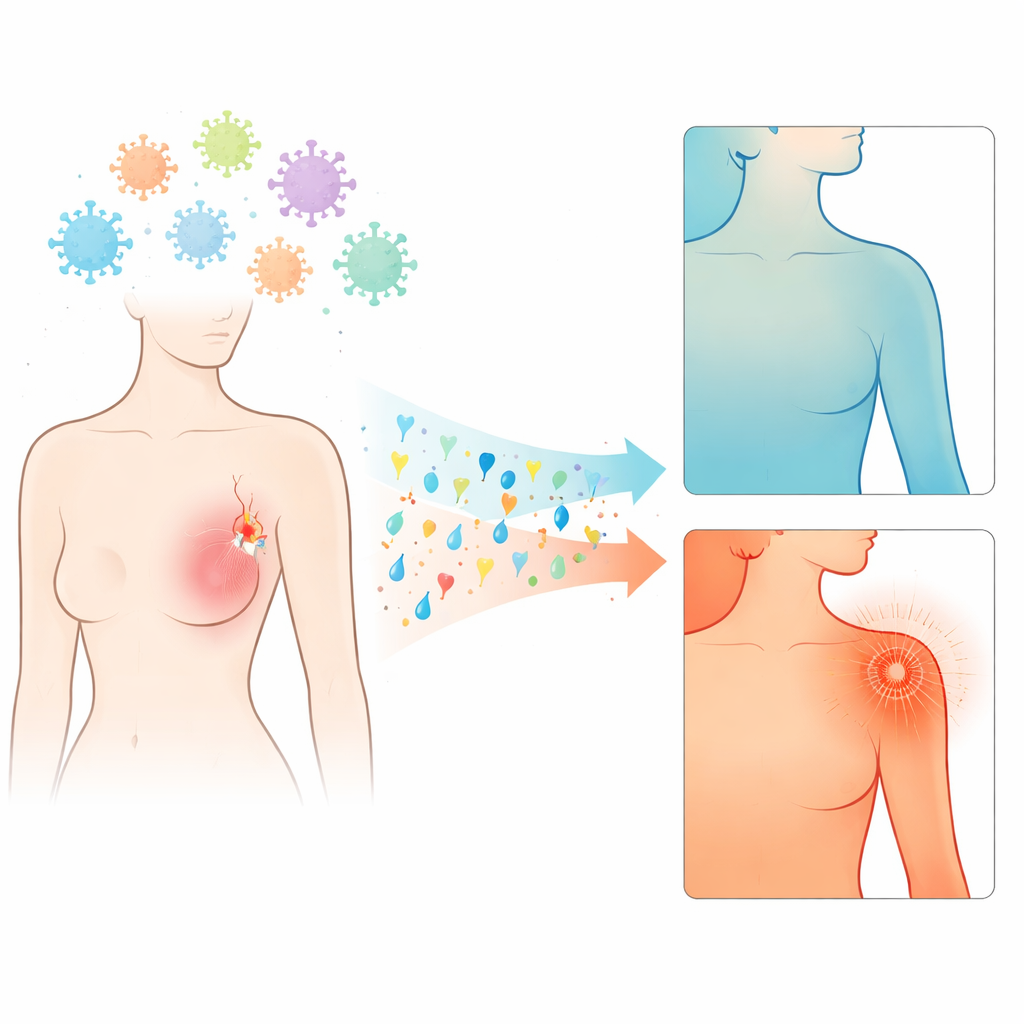
Many women who undergo surgery for breast cancer are left with a hidden legacy: lasting nerve pain in the chest and upper arm that can interfere with sleep, work and everyday life. Yet others, despite similar operations and nerve injuries, recover without chronic pain. This study asks a simple but important question with big implications for patients and doctors: can a woman’s lifelong history of common viral infections, as reflected in her antibodies, help predict who will develop persistent nerve pain after breast cancer surgery?
Looking at the immune system’s memory
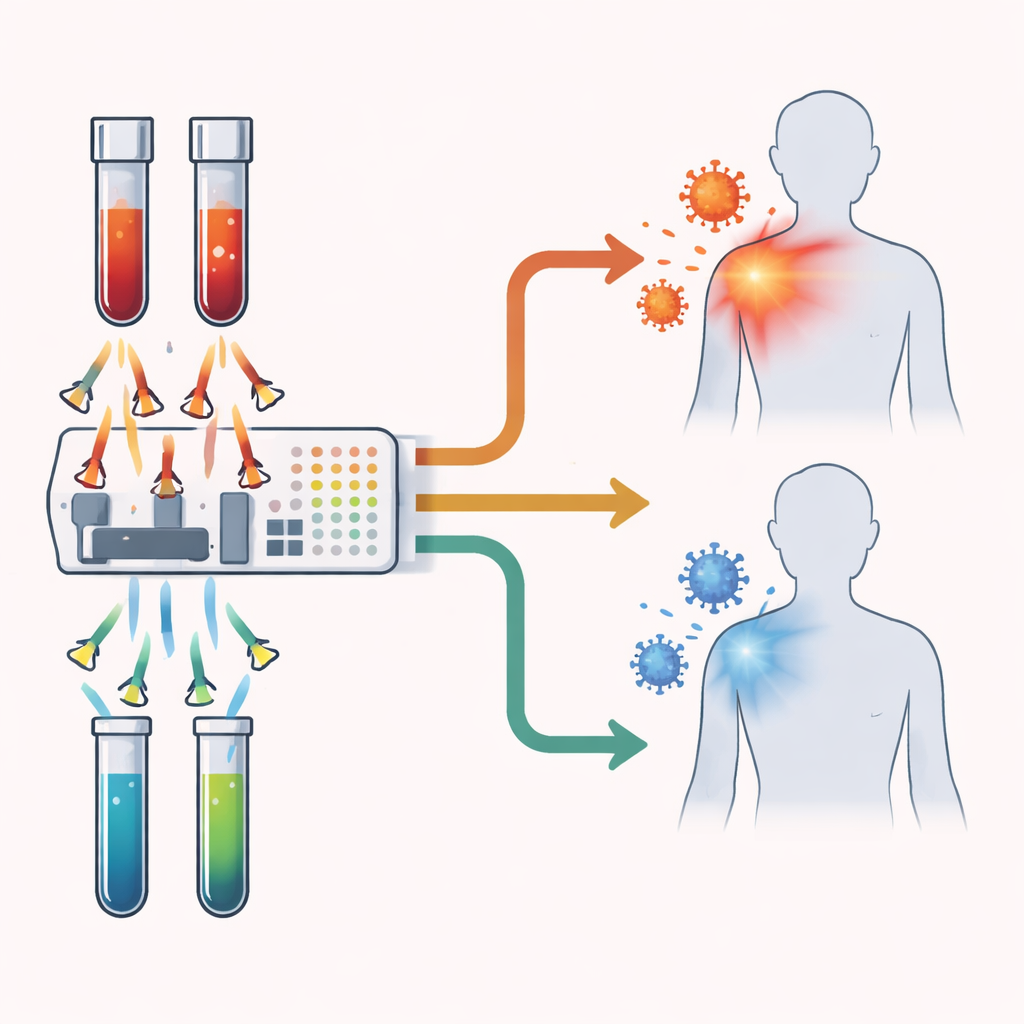
The researchers followed 57 women who had breast cancer surgery that damaged a major sensory nerve in the armpit region. About half of them developed chronic neuropathic pain—burning, shooting, or electric shock–like sensations—while the rest remained pain-free, even years after surgery. Blood samples had been collected from all participants before surgery and again 4 to 9 years later. Instead of testing for just a few known antibodies, the team used a broad screening method that reads out which tiny protein fragments, or “epitopes,” the women’s antibodies recognize. This produces a detailed fingerprint of each person’s immune history, shaped by past infections and immune reactions.
Highly personal, but with shared patterns
Each woman’s antibody fingerprint turned out to be remarkably individual and stayed very stable over time, even across nearly a decade. This means the major features of our antibody profiles are more like fingerprints than moving targets. Despite this individuality, the researchers also found shared patterns that separated women with chronic pain from those without. They identified 1,882 antibody targets that differed between the two groups and could be traced back to 79 common human pathogens, especially familiar viruses that most people encounter during life.
Common viruses tied to later nerve pain
Women who went on to develop chronic neuropathic pain had stronger antibody responses—already before surgery—to several herpes-family viruses and other common viruses, including cytomegalovirus, Epstein–Barr virus, herpes simplex viruses 1 and 2, human papillomavirus 16 and a rhinovirus strain. In contrast, antibodies against one enterovirus, Coxsackievirus B3, were lower in the pain group and higher in the women who stayed pain-free. These differences showed up not only in the broad antibody profiling but were also confirmed using standard laboratory tests for viral exposure. Importantly, the antibody patterns were present before any nerve damage occurred and remained similar many years later, suggesting they reflect a longstanding “immune load” rather than a short-lived infection.
Building a risk signal from antibody clues
To see whether these immune patterns could actually flag who was at risk, the team combined responses to five viral epitopes—linked to Coxsackievirus B3, Epstein–Barr virus, cytomegalovirus, human papillomavirus 16 and herpes simplex virus 2—into a simple statistical model. Using only these pre-surgery antibody signals, the model distinguished women who later developed chronic neuropathic pain from those who did not with high accuracy. It also performed well when tested in an independent group of women of similar age and background, suggesting that the signal is not just a fluke of one small cohort.
What this could mean for patients
For a layperson, the key message is that your history of everyday viral infections may silently shape how your body reacts to nerve injury years later. In this study, women whose immune systems showed heavier, ongoing engagement with certain herpes-family viruses were more likely to develop chronic nerve pain after breast cancer surgery, while stronger responses to one enterovirus seemed protective. These findings do not prove that the viruses themselves directly cause pain, but they strongly suggest that a primed or imbalanced immune system can set the stage for lasting nerve sensitivity after surgical trauma. If confirmed in larger and more diverse patient groups, simple blood tests that read these antibody patterns before surgery might help identify women at high risk for long-term pain—and open the door to new strategies, such as targeted antiviral or immune-modulating treatments, to prevent or better manage neuropathic pain after cancer care.
Citation: Sadam, H., Mustonen, L., Rähni, A. et al. Comprehensive antigen profiling predicts post-surgical neuropathic pain in women treated for breast cancer. Sci Rep 16, 12511 (2026). https://doi.org/10.1038/s41598-026-41637-6
Keywords: neuropathic pain, breast cancer surgery, antibodies, herpesviruses, chronic post-surgical pain