Clear Sky Science · en
Novel magnetically retrievable SnO2/Fe3O4/WSe2 heterojunction for the photocatalytic degradation of tinidazole through a synergistic strategy for environmental remediation
Why Cleaning Hidden Drug Pollution Matters
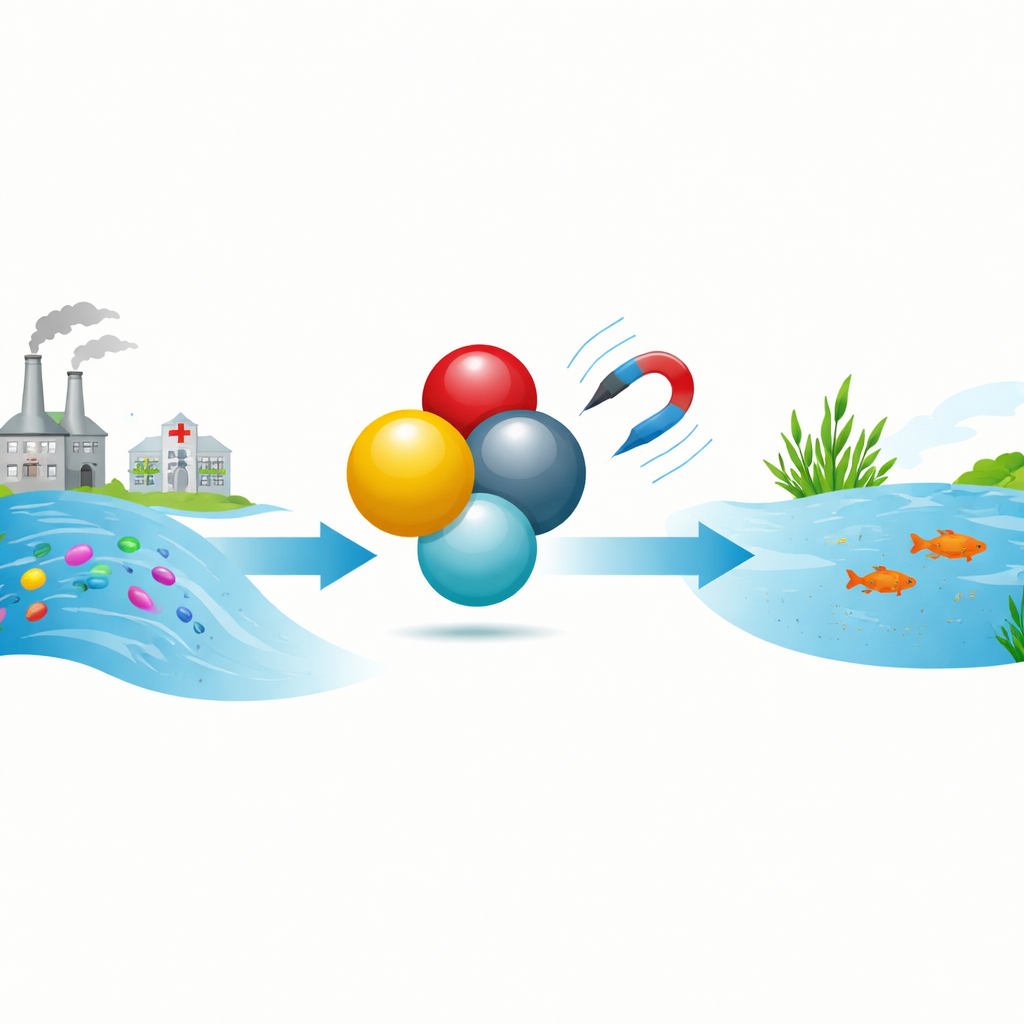
Modern medicines save lives, but traces of them often slip through wastewater treatment plants and end up in rivers, lakes, and even drinking water. Among these is tinidazole, a widely used antimicrobial drug that lingers in the environment and can help drive antibiotic resistance. This study explores a sunlight-powered material that can not only break tinidazole into safer components but can also be quickly pulled out of the water with a magnet, making it practical for real-world cleanup.
A New Sun-Driven Cleaning Helper
The researchers designed a tiny three-part material, called a nanocomposite, that acts like a highly efficient sponge and reactor for tinidazole. It combines tin oxide (for strong chemical reactivity and fast electron flow), iron oxide (for magnetic recovery), and tungsten selenide (for strong absorption of visible sunlight). By carefully joining these ingredients, they created a “heterojunction” structure in which light-generated charges can move easily instead of canceling each other out. This design lets the material tap into a larger portion of the solar spectrum and convert that light into powerful cleaning chemistry.
How the Tiny Particles Are Built and Seen
To make the composite, the team first prepared separate nanoparticles of tin oxide and iron oxide using simple solution steps, then combined them with tungsten and selenium sources in a sealed, heated vessel. A suite of advanced tools confirmed what they had made. X-ray measurements showed that all three crystalline components were present and well formed. Electron microscopy revealed rod- and plate-like tungsten selenide structures decorated with small tin and iron oxide particles, all packed into a porous network with abundant surface area. Spectroscopic tests showed that the combined material absorbed more visible light and suppressed unwanted recombination of charges compared with any single component alone, pointing to more efficient use of sunlight.
Putting the Photocatalyst to Work on a Stubborn Drug
The scientists then tested how well the composite could remove tinidazole from water under real sunlight. In a series of carefully controlled experiments, they varied the amount of catalyst, the amount of added hydrogen peroxide, and the starting concentration of the pollutant. Under optimized conditions, the system removed about 89 percent of tinidazole from water within an hour, following a predictable kinetic pattern. The performance clearly outpaced that of tin oxide, iron oxide, or tungsten selenide alone, and even surpassed many previously reported materials designed for the same task. The iron oxide component also gave the composite soft magnetic behavior, allowing it to be rapidly collected and reused with a simple external magnet while maintaining high activity over multiple cycles.
What Happens to the Drug Molecules
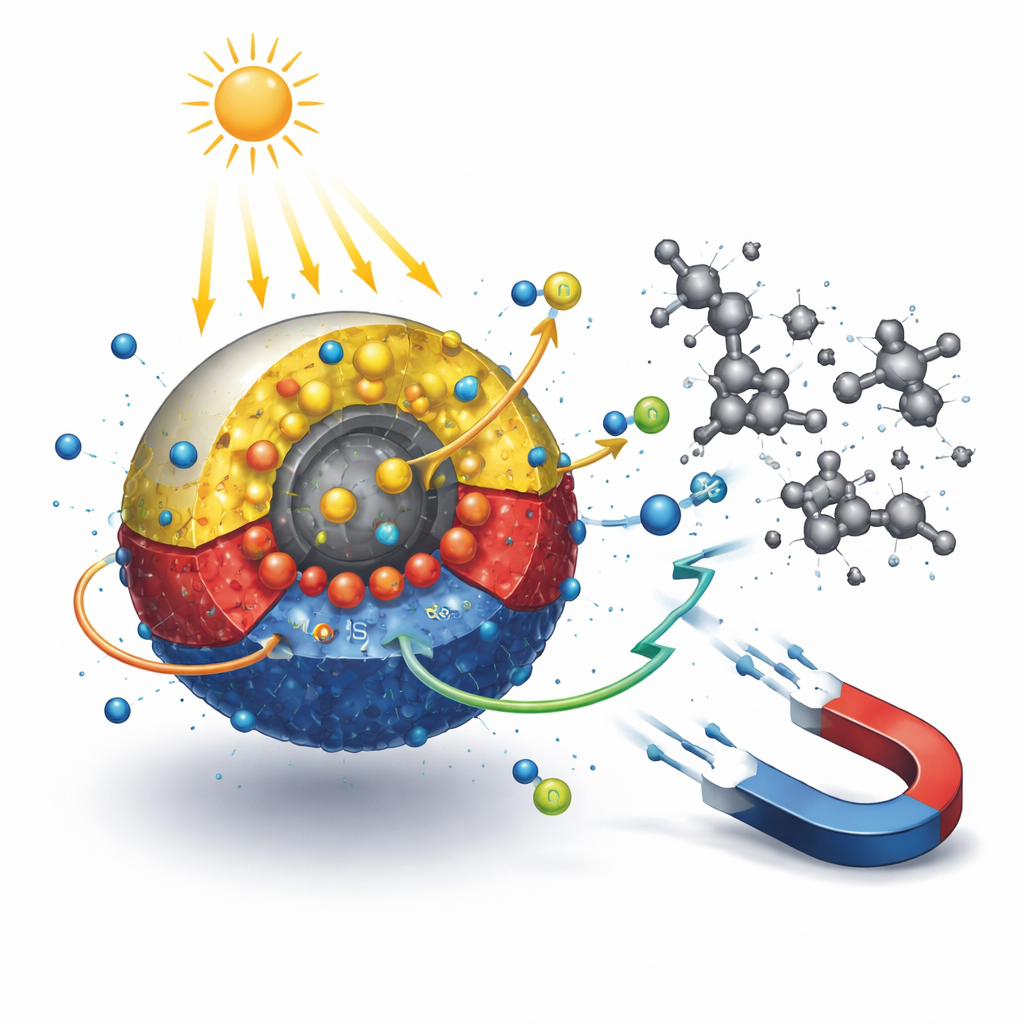
Beyond simply tracking how much tinidazole disappeared, the team probed how it was transformed. They used chemical probes to show that highly reactive forms of oxygen, especially hydroxyl radicals and superoxide species, were mainly responsible for attacking the drug. Sunlight striking the composite generates mobile charges, which in turn react with dissolved oxygen and hydrogen peroxide to form these radicals. High-resolution mass spectrometry revealed a sequence of breakdown products in which the drug’s nitro group and ring structures were progressively opened and removed, ultimately yielding small, more water-friendly fragments. Measurements of total organic carbon showed that much of the drug’s carbon content was mineralized to carbon dioxide, indicating deep cleaning rather than mere masking.
From Lab Bench to Real Water
To gauge real-world relevance, the researchers exposed the photocatalyst to different water types, including tap, mineral, lake, and river water, which contain natural salts and organic matter. Although these additives reduced efficiency somewhat—by competing for reactive species and blocking light—the composite still achieved substantial tinidazole removal, showing resilience in complex conditions. It also showed promising, though varied, activity against other common pharmaceuticals such as metronidazole and amoxicillin, suggesting it could help tackle mixtures of pollutants rather than just a single compound.
What This Means for Cleaner Water
In everyday terms, this work shows that it is possible to build a “smart dust” that uses sunlight to hunt down and break apart stubborn drug molecules in water, and then can be swept up with a magnet for reuse. By marrying strong light absorption, efficient charge handling, and magnetic recovery in one material, the study offers a practical path toward greener, more sustainable treatment of pharmaceutical pollution. With further tuning, scaling, and safety checks, such magnetically retrievable photocatalysts could one day complement or upgrade current wastewater treatment, helping to curb hidden drug residues and the spread of antimicrobial resistance.
Citation: Hussain, A., Roy, S. & Ahmaruzzaman, M. Novel magnetically retrievable SnO2/Fe3O4/WSe2 heterojunction for the photocatalytic degradation of tinidazole through a synergistic strategy for environmental remediation. Sci Rep 16, 11206 (2026). https://doi.org/10.1038/s41598-026-41633-w
Keywords: photocatalytic water treatment, pharmaceutical pollution, magnetic nanocomposites, tinidazole degradation, visible light catalysis