Clear Sky Science · en
Aging-related severe hypertension causes prostatic gland atrophy and testicular injury in rats
Why blood pressure and men’s health are linked
High blood pressure is usually discussed in terms of heart attacks and strokes, but it can also quietly reshape the reproductive organs that support men’s health later in life. This study used a well-known rat model of lifelong high blood pressure to explore how aging and hypertension together affect the prostate and testes—the organs that help control urination and produce the hormone testosterone. The findings hint that, as animals grow older, severe hypertension may first drive prostate overgrowth and then push the gland toward shrinkage and damage, while also injuring the testes and lowering testosterone.
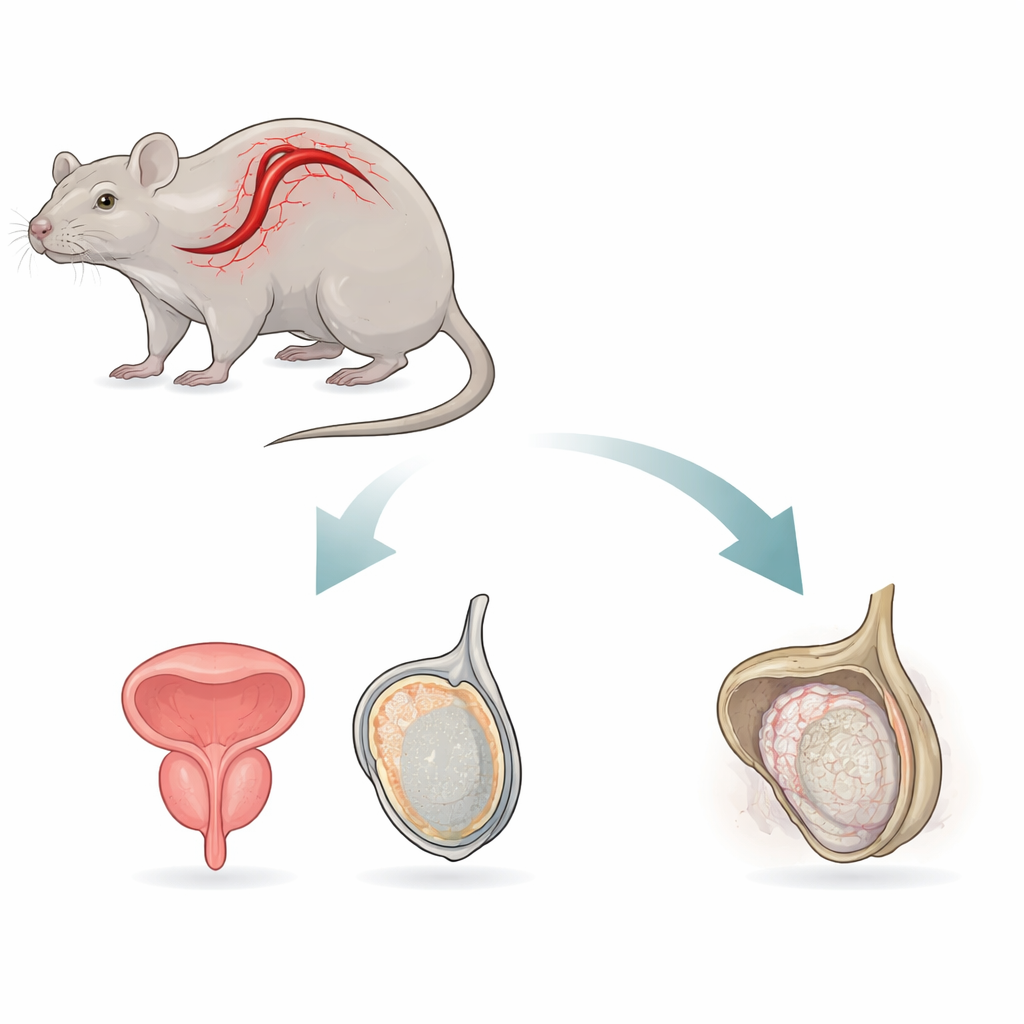
From enlarged gland to shrunken organ
The researchers compared male rats with genetic high blood pressure to normal rats at two ages: middle-aged adults and much older animals. In midlife, hypertensive rats had heavier prostates and a larger proportion of active gland tissue than their healthy counterparts, a picture consistent with prostate overgrowth. By old age, however, the pattern had flipped. Despite having even higher blood pressure, the hypertensive rats now had smaller prostates and a reduced outer size of individual glands, signs of atrophy, while normal rats showed relatively stable prostate measurements over time.
Blood flow squeezed by pressure
To probe how circulation might underlie these changes, the team measured both blood pressure and blood flow to the prostate. At both ages, hypertensive rats had much higher pressure and clearly reduced blood flow to the gland compared with normal rats. As the hypertensive rats aged, their pressure rose further, but prostate blood flow remained low. The combination of chronically high pressure and poor local circulation suggests that long-lasting strain on blood vessels may deprive the prostate of oxygen and nutrients, helping to drive a late-life transition from overgrowth to tissue thinning and shrinkage.
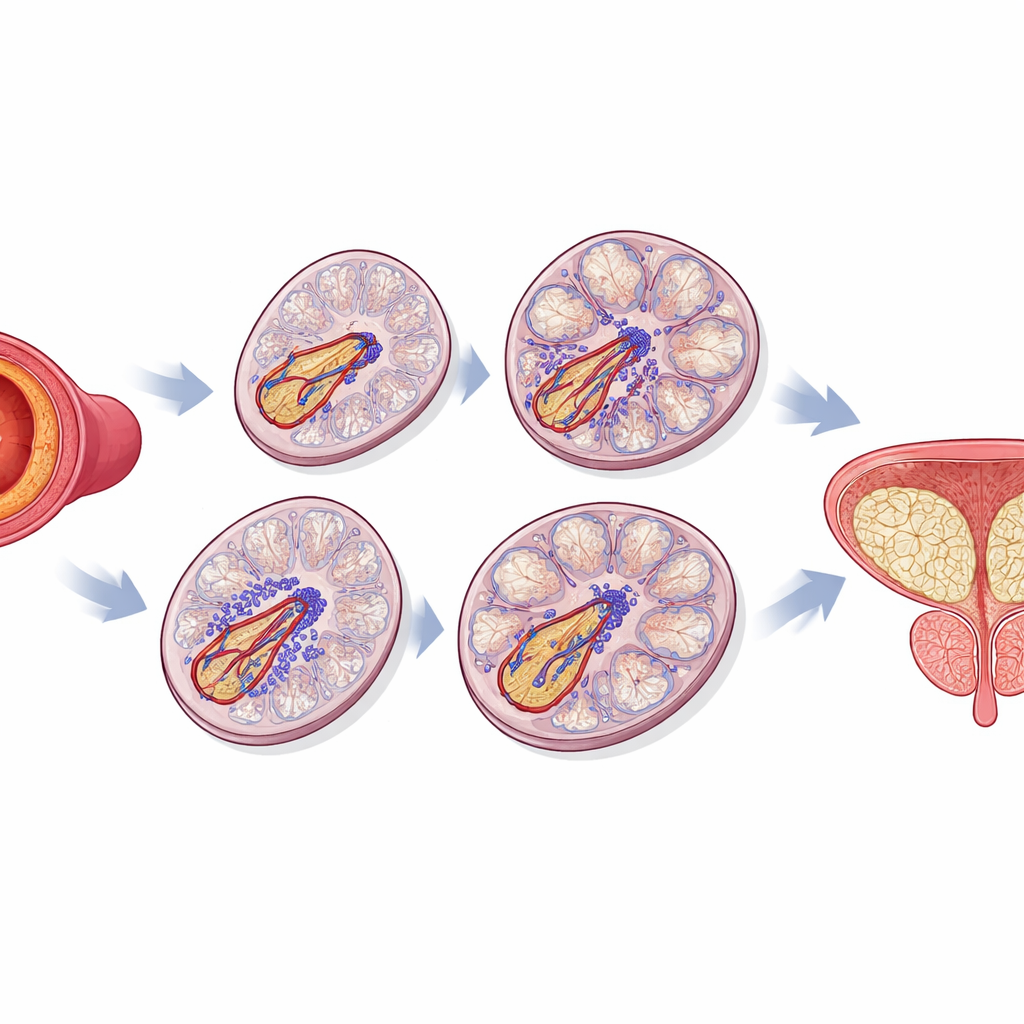
Testicular damage and falling testosterone
Because the testes are the main source of testosterone, the scientists also examined these organs. Under the microscope, younger hypertensive rats already showed thickened blood vessel walls in the testes, but the tubules that produce sperm were mostly intact. In older hypertensive rats, the damage was much more severe: blood vessels were heavily thickened, the lining of the sperm-producing tubules was peeling away, and there was a strong influx of inflammatory immune cells. These rats also had lower testosterone levels in their blood than age-matched normal rats, even though their testes were slightly larger relative to body weight, suggesting swelling and injury rather than healthy growth.
How hormone loss ties back to the prostate
The authors propose that testicular injury and falling testosterone help explain why the hypertensive rats’ prostates shrink with age. Testosterone is essential for maintaining normal prostate structure; treatments that block male hormones in humans are known to shrink the gland. In the rats, severe, long-standing hypertension appears to damage the testes, reduce testosterone production, and, together with poor prostate blood flow, encourage the gland to progress from a state of overgrowth in midlife to atrophy in old age. Similar patterns are seen in other disease models, such as diabetes, where hormone loss and vascular problems also lead to smaller prostates.
What this could mean for aging men
Although this work was done in rats, it offers a possible explanation for why some older men move from enlarged prostates and urinary symptoms toward smaller, weakened glands later in life. The study suggests that long-term, poorly controlled high blood pressure does not just burden the heart and brain; it may also quietly injure the testes, lower testosterone, and erode prostate tissue. If similar processes occur in humans, managing blood pressure throughout life could help protect not only cardiovascular health but also the structure and function of male reproductive organs as men age.
Citation: Shimizu, S., Nagao, Y., Kurabayashi, A. et al. Aging-related severe hypertension causes prostatic gland atrophy and testicular injury in rats. Sci Rep 16, 11902 (2026). https://doi.org/10.1038/s41598-026-41624-x
Keywords: hypertension, prostate, testosterone, aging, testicular injury