Clear Sky Science · en
Hyaluronic Acid–Phospholipid Hybrid Nanocarriers (Hyalutocosomes) for Enhanced Dermal Delivery of Vitamin E and Photoprotection
Why Protecting Skin from Sun Damage Matters
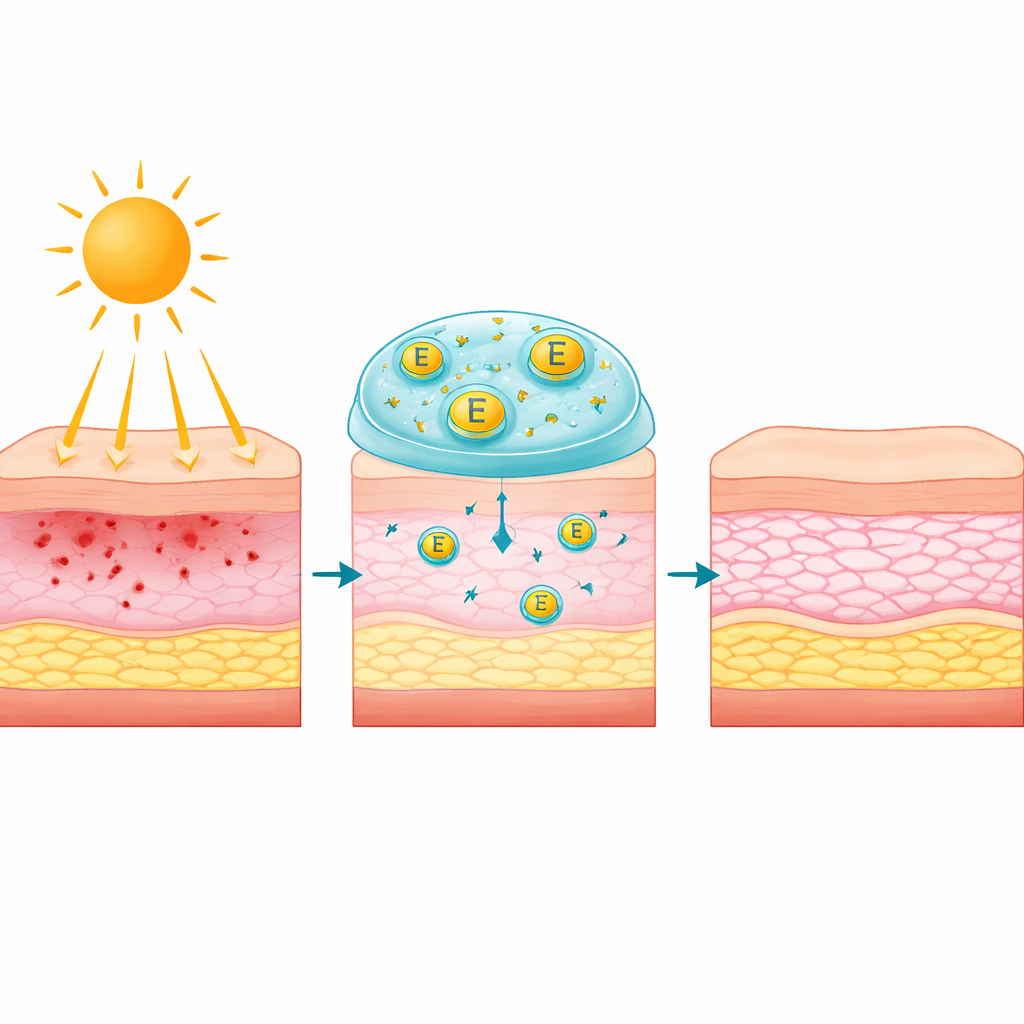
Sunlight keeps us alive, but its ultraviolet (UV) rays quietly erode the skin over time, triggering redness, dark spots, wrinkles, and even skin cancer. Sunscreens help block rays at the surface, yet much of the downstream damage is driven by runaway molecules called free radicals inside the skin. This paper explores a new way to smuggle a powerful antioxidant, vitamin E, deep into the skin using ultra-small carriers and a supportive gel. The goal is simple but ambitious: to better shield skin from photoaging and help it repair itself after UV exposure.
How Sunlight Ages the Skin
The authors begin by outlining what repeated UV exposure does to our skin. UV-A and UV-B rays penetrate the outer layers and spark reactive oxygen species, unstable molecules that damage DNA, proteins, and fats. Over time, this stress overwhelms the skin’s natural defenses and activates enzymes that chop up collagen and elastin, the proteins that keep skin firm and elastic. The result is a thinner, weaker support structure beneath the surface, visible as fine lines, wrinkles, and sagging. Vitamins C and E are well-known antioxidants that can interrupt this chain of damage, but getting them where they are needed—into the deeper layers of the skin—has proven difficult, especially for oily molecules like vitamin E.
Building Tiny Vitamin E Ferries
To tackle this delivery problem, the researchers designed “hyalutocosomes,” tiny soft vesicles made from skin-friendly phospholipids and coated with hyaluronic acid, a sugar naturally present in skin that holds water and aids repair. These vesicles can encapsulate oily vitamin E in their core while the hyaluronic acid shell helps them interact with and slip through the skin surface. The team optimized the recipe so the vesicles were about 160 nanometers across—small and uniform enough to pass through the outer barrier—with very high vitamin E loading (almost all the vitamin E added was captured inside). Electron microscopy confirmed a neat core–shell structure consistent with a hyaluronic-acid-coated sphere rather than clumps of free oil.
From Lab Bench to Skin-Friendly Gel
On their own, liquid nanovesicles could run off the skin too quickly to be useful, so the authors blended them into a thicker collagen and vitamin C gel. Collagen provides structural support and may encourage skin repair, while vitamin C adds another antioxidant punch and boosts collagen production. Tests showed that the combined gel remained mildly acidic—close to natural skin pH—and had a comfortable, spreadable thickness. When placed in a warm, skin-like fluid, both the free vesicles and the vesicle-loaded gel released vitamin E slowly over 24 hours, but the gel further smoothed out the initial burst of release, acting as a reservoir for long-lasting delivery.
Putting the Nanogel to the Test on Skin
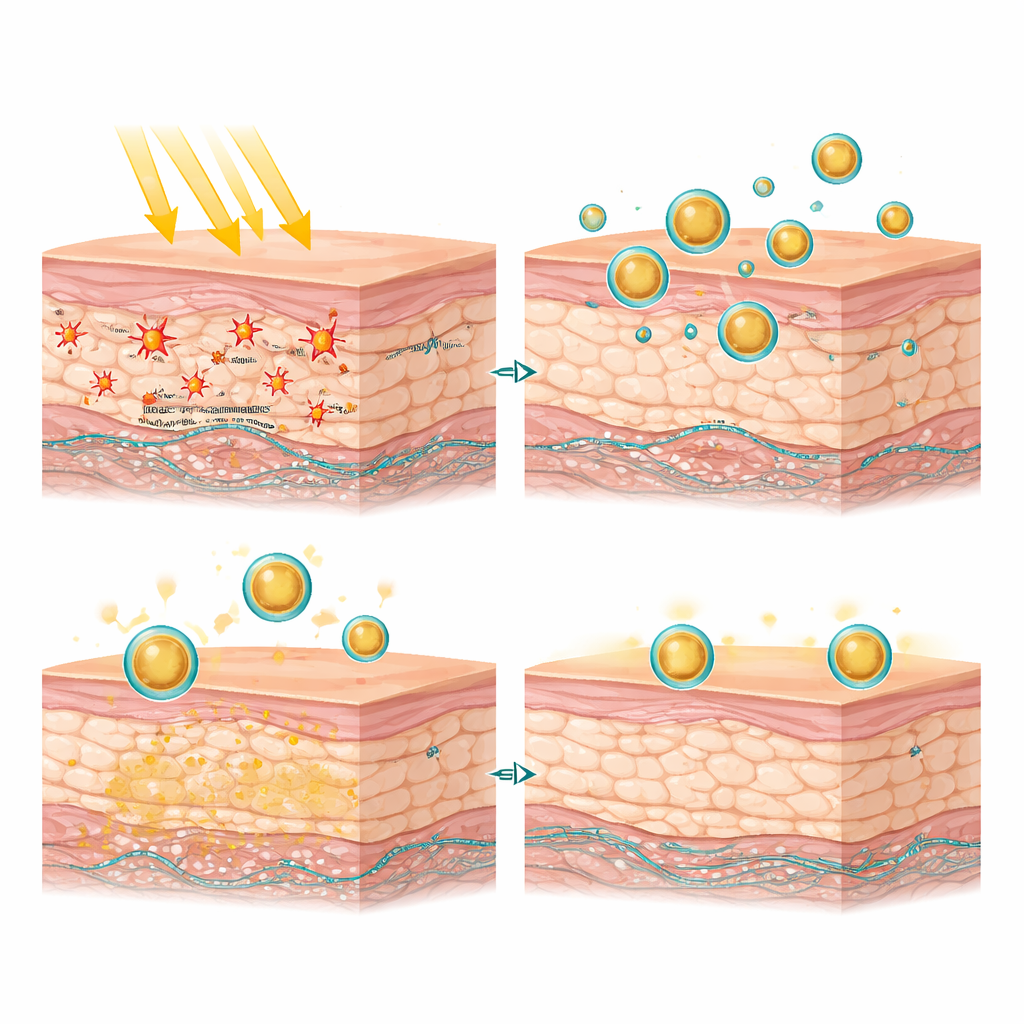
The real test came in hairless rats exposed to UV-B light to mimic photoaging. Some animals received no treatment, others got plain gel, free vitamin E, vitamin E–loaded vesicles, or the full combination gel containing vesicles, collagen, and vitamin C. In untreated irradiated animals, protective enzymes that normally neutralize free radicals dropped to about one-fifth of normal, while inflammatory signals and collagen-destroying enzymes surged. Skin samples looked thickened, inflamed, and depleted of organized collagen fibers. Treatments helped to varying degrees, but the nanogel stood out: antioxidant enzyme levels were restored close to normal, inflammatory markers fell sharply, and collagen-degrading enzymes were strongly suppressed. Under the microscope, these animals’ skin more closely resembled unexposed controls, with smoother epidermis and denser, better-organized collagen bundles.
What This Could Mean for Future Skincare
Taken together, the findings suggest that carefully engineered nanocarriers, nested within a supportive collagen and vitamin C gel, can substantially boost the protective power of vitamin E against UV-induced damage. Instead of simply coating the surface, the hyalutocosomes appear to ferry vitamin E deeper into the skin and release it in a controlled way, dampening oxidative stress, calming inflammation, and preserving the collagen network that keeps skin firm and youthful. While the work was done in rats and not yet in humans, it points toward next-generation topical treatments that go beyond sunscreen—formulations that both protect and actively repair the skin from the inside out.
Citation: Zewail, M., Elkelish, A., Elsayed, A.M. et al. Hyaluronic Acid–Phospholipid Hybrid Nanocarriers (Hyalutocosomes) for Enhanced Dermal Delivery of Vitamin E and Photoprotection. Sci Rep 16, 11625 (2026). https://doi.org/10.1038/s41598-026-41623-y
Keywords: skin photoprotection, vitamin E delivery, hyaluronic acid nanocarriers, anti-aging skincare, UV-induced skin damage