Clear Sky Science · en
Transcriptional signatures associated with female receptivity and longevity in genetically male-sterile wheat (Triticum aestivum L.)
Why wheat flowers matter for our food supply
Modern wheat feeds billions of people, yet yield gains have slowed just as the world needs more grain. One promising path forward is hybrid wheat, which can produce hardier, higher-yielding plants. But making hybrid wheat seeds is costly, in part because wheat flowers are naturally poor at catching pollen from neighboring plants. This study peeks inside wheat’s female flowers to find out what makes them receptive to pollen, how long that receptive window lasts, and which genes control these traits—knowledge that could ultimately make hybrid wheat cheaper and more reliable.
From opening flowers to fading blooms
The researchers focused on a special wheat line that is genetically male-sterile: it makes normal female parts but no viable pollen. This allows scientists to study how well incoming pollen from other plants sets seed without interference from self-pollination. By hand-pollinating these plants at different times after the flowers first open—a stage called “gaping”—the team measured when seeds formed most efficiently. They found three clear phases: a growth phase as the female organs mature, a peak phase when the stigma hairs are fully extended and most receptive, and a deterioration phase when these hairs wilt and the tissues begin to die back.
Peak seed set in the male-sterile plants occurred three days after the flowers opened, with about 60% as many seeds as fully self-fertile plants. After around seven to ten days, seed set dropped sharply, matching visible signs of aging: the feathery stigma hairs lost firmness, cells collapsed, and stains that mark dying tissue lit up. When the team compared these plants with ordinary fertile plants that had been manually emasculated (their male parts removed), they saw that the emasculated plants actually reached peak receptivity two to three days earlier. This suggests that the presence or absence of functional stamens shifts the timetable of female flower development.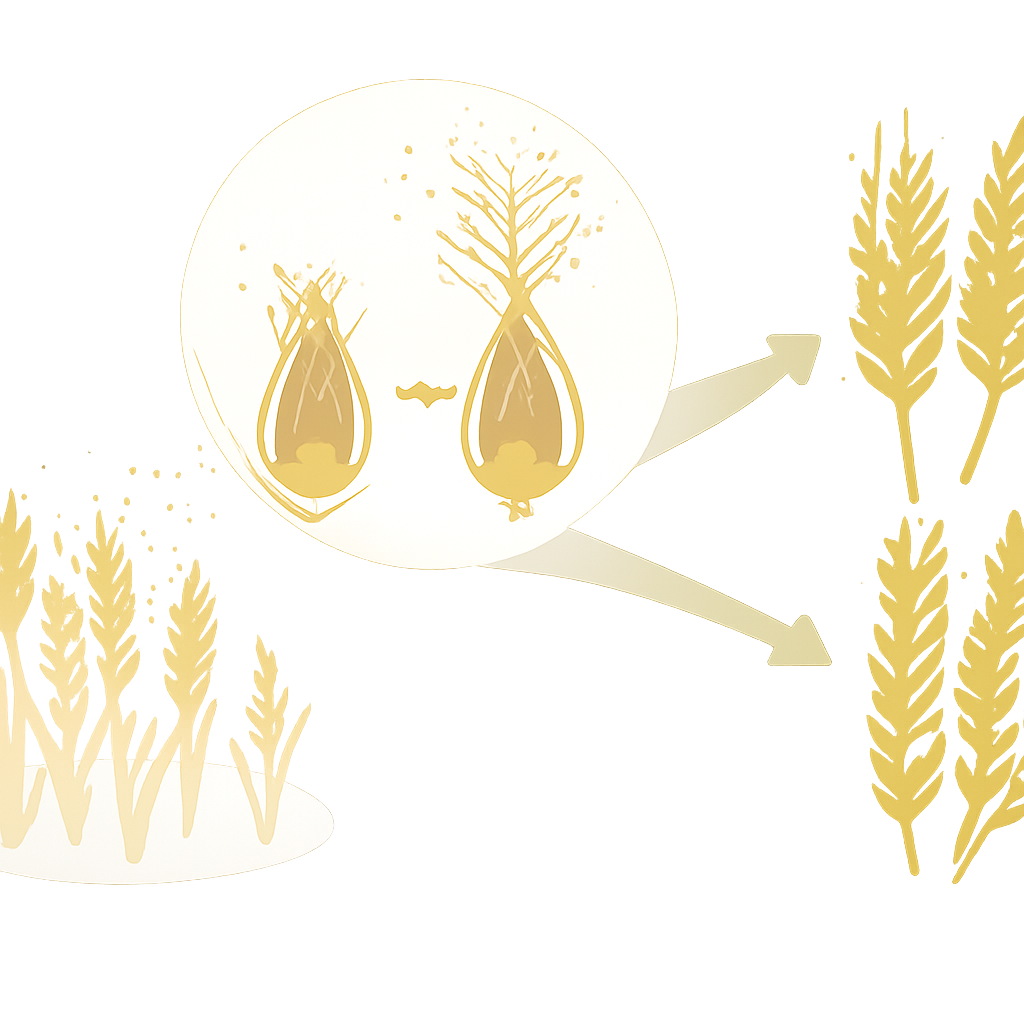
Reading the flower’s genetic clock
To understand what drives these changes, the scientists used RNA sequencing to track which genes were turned on or off in pistils and in the tiny stigma hairs at several time points—from before gaping through peak receptivity to senescence. They analyzed more than half of all high-confidence genes in the wheat genome and grouped them into co-expression networks, clusters of genes that rise and fall together over time. These patterns clearly separated male from female tissues, and within female tissues, distinguished whole pistils from stigma hairs. Importantly, they revealed that in the male-sterile plants, female tissues lagged behind those of emasculated fertile plants after flowering, aligning with the observed developmental delay.
Among thousands of changing genes, the team homed in on about 900 whose activity closely followed actual seed-setting performance. Many of these were active specifically in stigma hairs at the time of peak receptivity. They included genes involved in cell wall loosening and elongation, energy production, and hormone responses. Notably, the study highlighted stigma-specific peroxidases—enzymes that modify cell walls and are known biochemical markers of receptivity—as well as genes related to gibberellins, a class of growth hormones. These genes form a coordinated program that supports the full extension and physiological readiness of stigma hairs to capture and support pollen.
Hormones, enzymes, and the life span of stigma hairs
The role of gibberellins emerged as a key theme. Receptors that sense these hormones, along with gibberellin-stimulated regulators and expansins that loosen cell walls, were most active as stigma hairs elongated and receptivity peaked. The authors propose that gibberellins, often produced in the anthers, shape the pistil and help push the feathery hairs outward between the flower bracts, increasing the surface available to intercept airborne pollen. In male-sterile plants, which retain defective but hormonally active anthers, altered gibberellin signals may slow female development compared with emasculated plants that completely lack stamens. Later in time, a different set of genes switches on as the flower approaches the end of its fertile window. Components of the exocyst complex—proteins that manage membrane traffic and secretion—along with genes tied to programmed cell death and oxidative stress, become active, marking the onset of stigma hair senescence and a steep drop in seed set.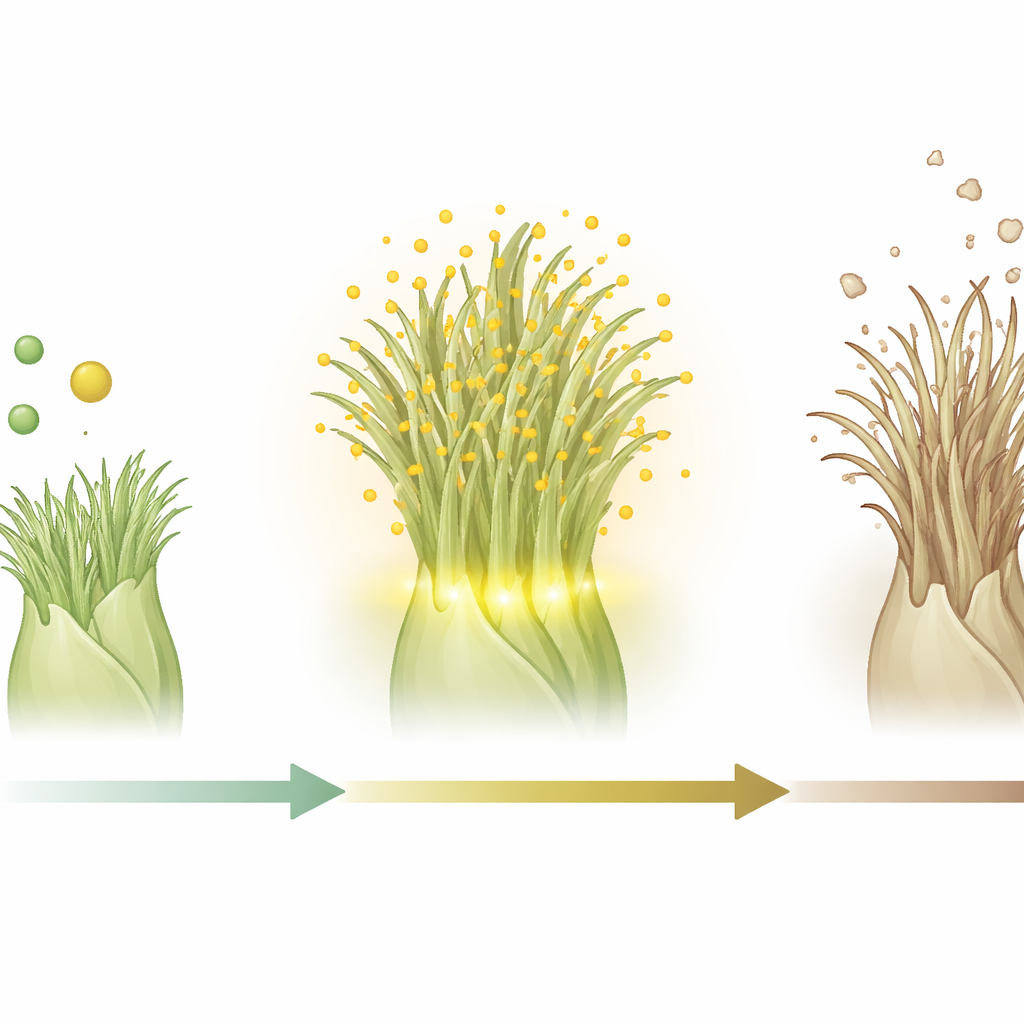
Designing longer-lasting, more receptive flowers
By linking these genetic “signatures” to precise stages of stigma growth, peak function, and decline, the study builds a roadmap for breeding or engineering wheat varieties whose female flowers stay receptive longer and capture more pollen. While the work is largely descriptive and will require future experiments to test gene function, it points to promising levers: tweaking gibberellin signaling to enhance stigma presentation, adjusting regulators of peroxidase enzymes to fine-tune receptivity, and moderating senescence pathways and exocyst components to delay floral aging. If plant breeders can harness these insights, they may be able to create female wheat lines that produce hybrid seeds more efficiently and at lower cost—helping unlock the yield benefits of hybrid wheat for farmers and, ultimately, for global food security.
Citation: Whitford, R., Baumann, U., Yang, X. et al. Transcriptional signatures associated with female receptivity and longevity in genetically male-sterile wheat (Triticum aestivum L.). Sci Rep 16, 12422 (2026). https://doi.org/10.1038/s41598-026-41612-1
Keywords: hybrid wheat, flower receptivity, stigma hairs, plant hormones, seed set