Clear Sky Science · en
A study on refined curing control of precast segmental concrete for prefabricated railway bridges
Why Keeping Concrete Cool Matters
Modern high‑speed trains often glide over long lines of concrete bridge spans that are built in pieces at specialized yards and then assembled like giant building blocks. These precast segments must stay crack‑free for decades of heavy use, yet they generate a lot of internal heat as the concrete hardens. This study looks at how to better control that early heat in railway bridge segments from the Zhengzhou–Xuchang intercity line in China, so that the bridges stay safer and last longer with fewer hidden weaknesses.
The Challenge of Hot Concrete
When fresh concrete is poured into a large, hollow box‑shaped beam, a chemical reaction inside the cement releases heat. Because concrete is a poor conductor, the interior warms up while the outer surfaces lose heat to the air. If the temperature difference between the warm core and the cooler surface becomes too large, the concrete can crack while it is still young and relatively weak. For the Zhengzhou–Xuchang railway, thousands of such segments must be cast over more than a year of construction, facing both freezing winters and hot summers. The authors set out to understand which practical factors in the casting yard most strongly control this early temperature behavior and the resulting internal stresses.
Testing What Matters Most
The team built a detailed computer model of a typical bridge segment, including its thick webs, thin top and bottom slabs, and the hollow ducts where steel tendons later provide prestress. They checked the model against real temperature measurements taken inside test beams over seven days, finding that simulated and measured peak temperatures differed by less than 2 °C. With this verified model, they systematically varied six real‑world factors: formwork material and thickness, the temperature of the concrete at pouring, wind speed, the presence of internal ducts, and overall curing conditions. For each case they tracked how quickly the beam heated up and cooled down, how high the peak temperature rose, and how much thermal stress developed near the most vulnerable junctions.
What Controls Cracking Risk
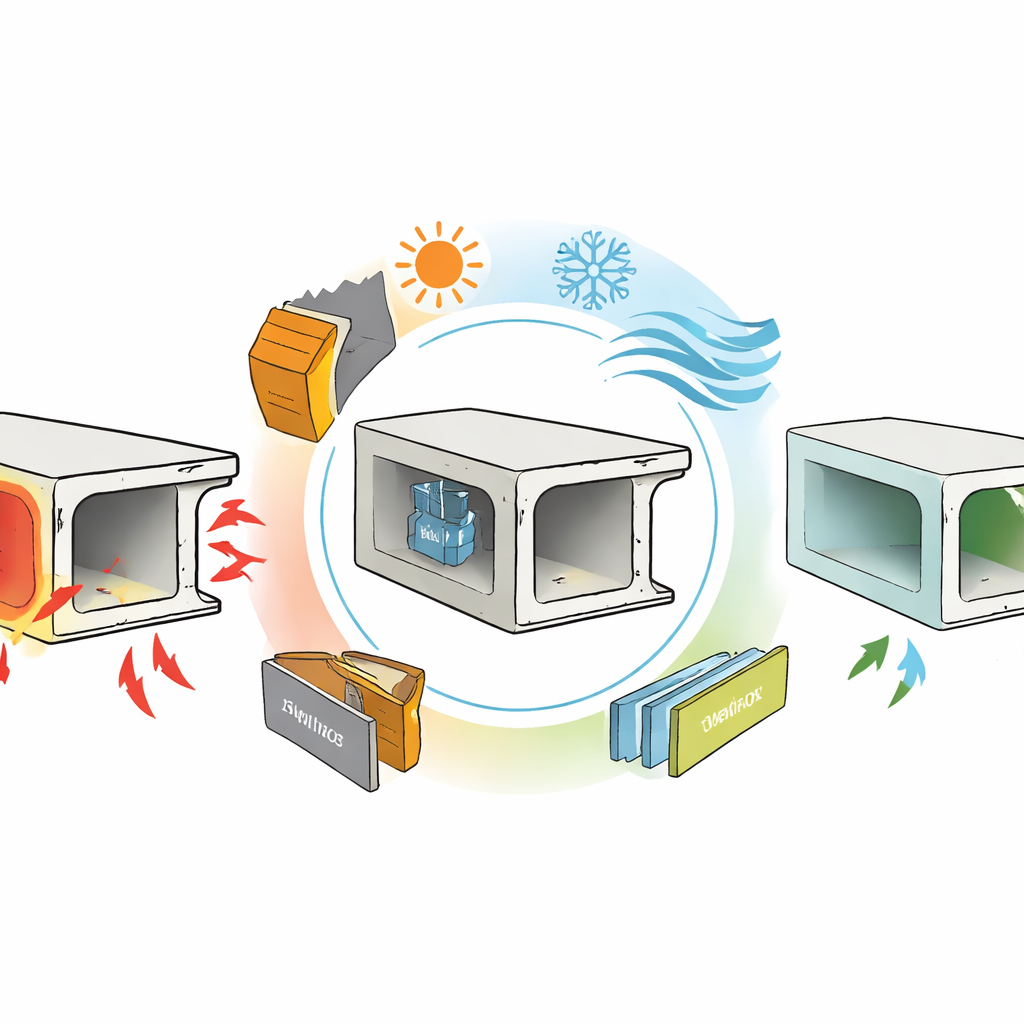
The simulations showed that not all factors are equally important. The material of the formwork—the panels that shape and support the fresh concrete—had the largest impact. Highly insulating plastic formwork kept heat in, producing higher and later temperature peaks and much larger thermal stresses after the panels were removed. Steel formwork, which conducts heat well, let the beam shed heat more evenly and reduced stress. The temperature of the concrete at pouring came next in importance: warmer mixes produced higher peak temperatures and greater internal stress. Wind speed and internal ducts had smaller but still meaningful roles. Higher wind sped up surface cooling, raising stress before formwork removal but lowering it afterward. Hollow ducts, especially near the thick beam ends, helped vent heat from the interior and slightly lowered both peak temperature and stress, cutting cracking risk in those regions.
Smart Curing for Summer and Winter
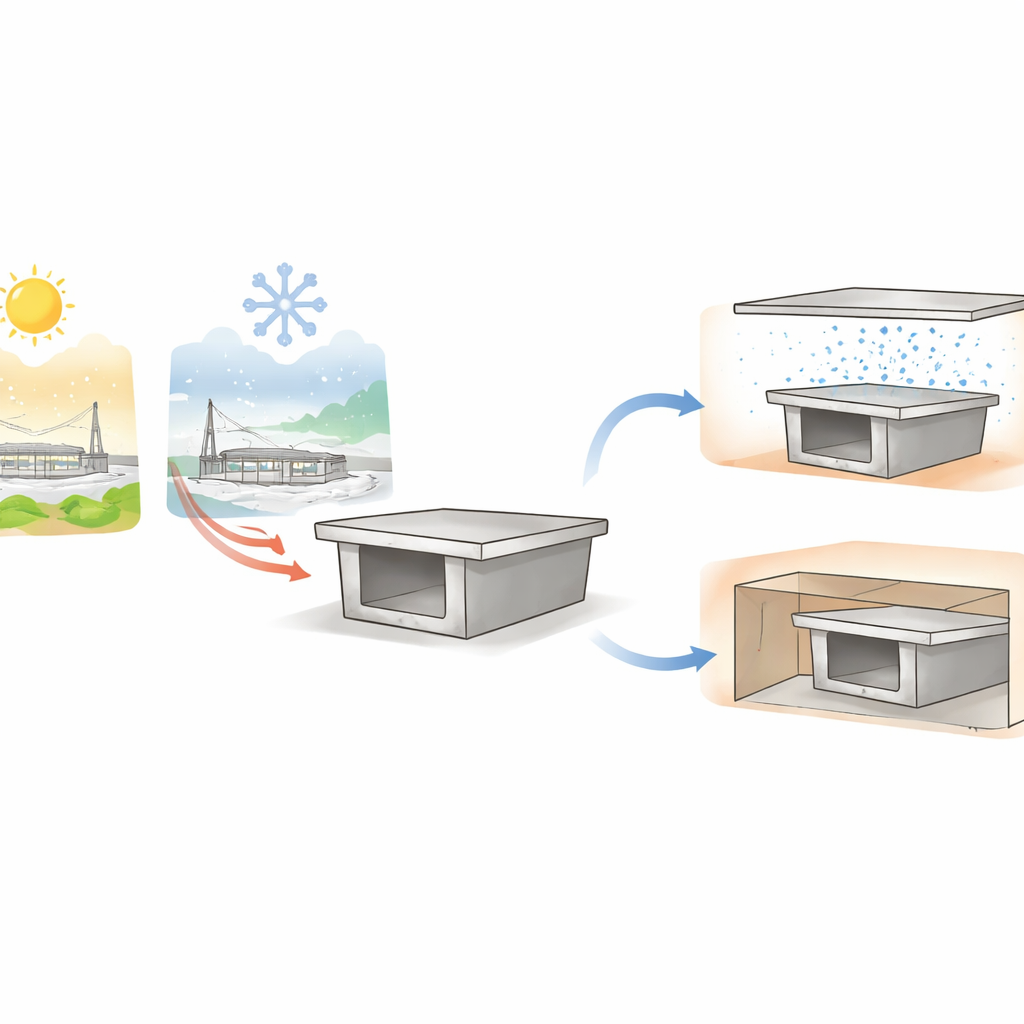
Building on these insights, the researchers designed refined curing strategies tailored to the local climate. In summer, they used an automated water‑spray system that repeatedly misted the beam surfaces with cool groundwater, both before and after formwork removal. This gentle cooling reduced the temperature gap between the hot interior and the surface and brought down peak tensile stresses by up to about one quarter compared with letting the concrete cure naturally. In winter, they turned to an insulated steam‑curing chamber. By gradually heating the beams to a moderate temperature, holding them there, and then cooling them slowly, they delayed and lowered the maximum stress and avoided sharp temperature swings that would otherwise cause cracking in the cold air.
What This Means for Future Bridges
In plain terms, the study shows that early cracking in precast railway bridge segments is not an unavoidable side effect of concrete heat; it can be controlled by a few key levers available to engineers. Choosing heat‑conducting steel formwork rather than highly insulating panels, keeping the fresh concrete mix moderately cool, using ducts and wind shields wisely, and applying climate‑appropriate curing—spray cooling in summer and controlled steam in winter—all work together to smooth out temperature changes inside the beams. In the project yard, segments produced under this refined curing plan showed clean surfaces without visible cracks, suggesting a stronger, more durable bridge for the trains that will run above.
Citation: He, R., Zhang, K. & He, W. A study on refined curing control of precast segmental concrete for prefabricated railway bridges. Sci Rep 16, 13718 (2026). https://doi.org/10.1038/s41598-026-41606-z
Keywords: precast concrete bridges, thermal cracking, concrete curing, railway infrastructure, hydration heat