Clear Sky Science · en
Enhanced biomethane production from organic matter recovered from municipal wastewater by a pilot-scale plant continuous high-rate contact stabilization process
Turning Wastewater into a Power Source
Every day, the water we flush and drain carries away not only waste but also hidden energy. This study explores how municipal wastewater treatment plants can be redesigned to harvest more of that energy in the form of methane gas, a fuel that can generate electricity. By fine-tuning an early treatment step, the researchers show that it is possible to capture more of the organic material in sewage and convert it into biomethane, helping treatment plants move closer to energy self-sufficiency and lowering their climate impact.
Why Sewage Plants Use So Much Power
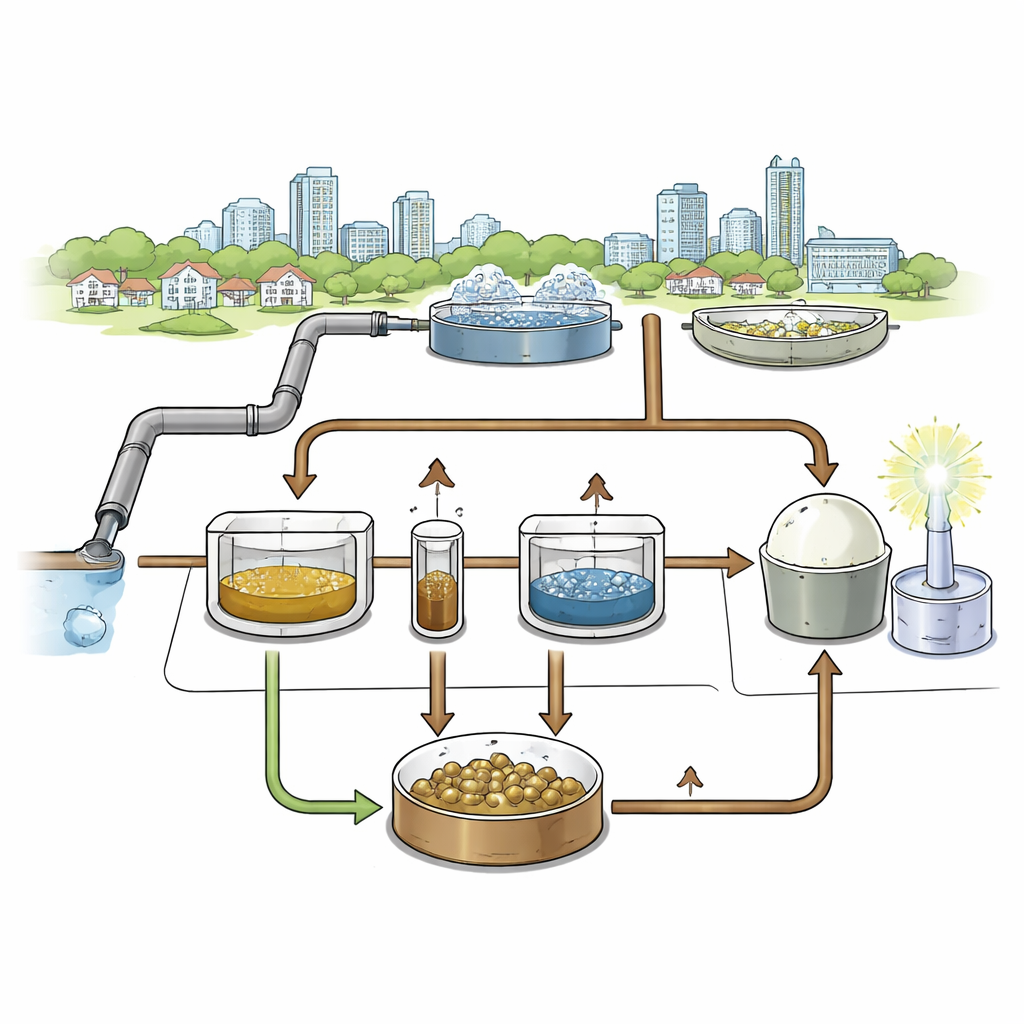
Collecting and cleaning city wastewater already uses about 1% of the world’s electricity, and that share is expected to grow as more people connect to sewers. Traditional treatment plants are designed mainly to remove pollutants, not to save or generate energy. They typically include a primary settling tank to remove heavier solids, followed by a large aerated basin where microbes break down the remaining organic matter in a process called the conventional activated sludge system. While this approach protects rivers and coasts, it also burns up a lot of the potential energy in the wastewater as heat and carbon dioxide instead of capturing it as useful fuel.
A New Way to Capture More Fuel from Water
The study focuses on a process called high-rate contact stabilization, or HiCS, which is added just after the primary settling step. Instead of giving microbes several days to slowly oxidize organic matter, the HiCS system keeps them in the tanks for less than two days. In this short time, the microbes produce sticky substances that help tiny particles and dissolved organics clump together into larger flocs that can be settled out by gravity. The key idea is to pull these energy-rich clumps out quickly, before they are fully “burned up” by the microbes, and then send them to an anaerobic digester where they are converted to methane without using oxygen. The researchers installed a pilot-scale HiCS plant at a real wastewater treatment facility to see how well this strategy works under practical conditions.
Testing the Pilot Plant in Real Conditions
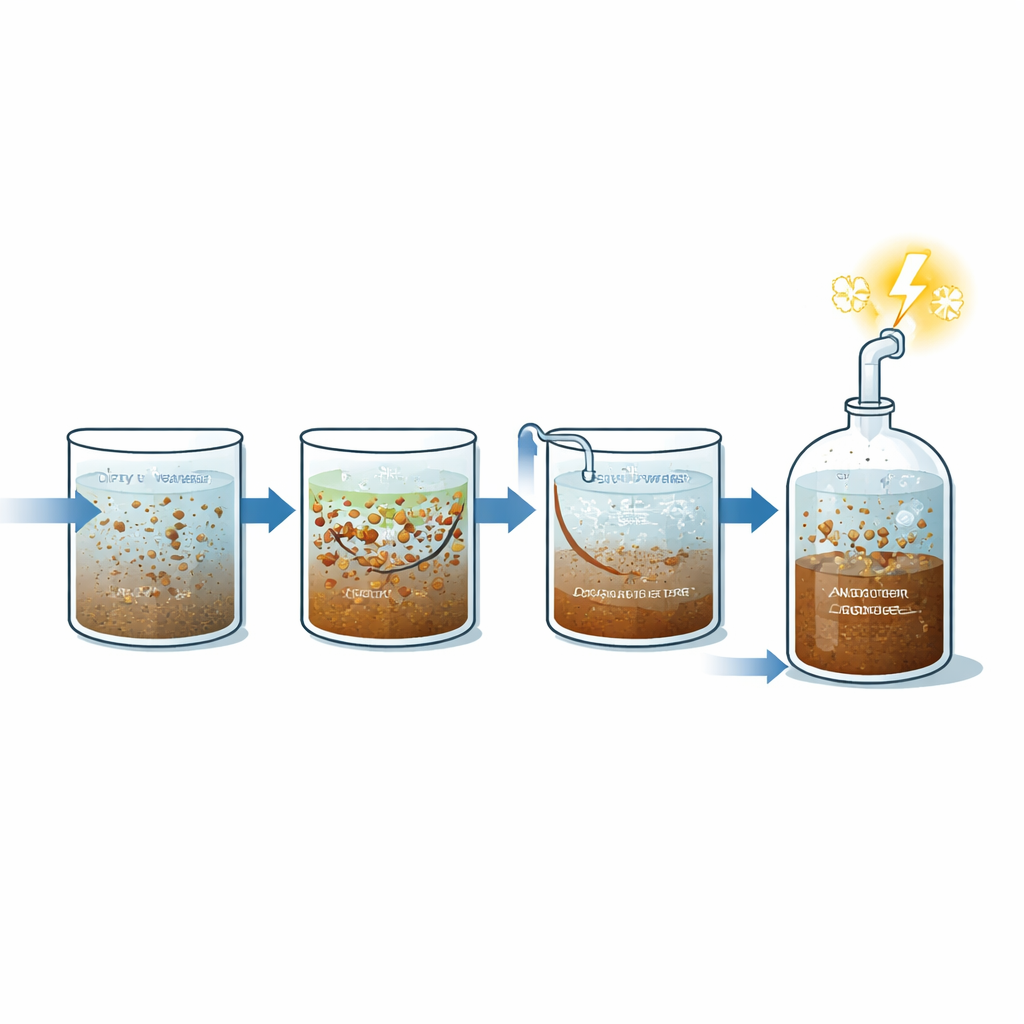
The pilot setup received real sewage that had already passed through the plant’s primary clarifier. It included a stabilization tank with air, a contact tank without air, and a secondary settler to capture the newly formed sludge. The team ran the system in two periods with different sludge ages and water temperatures, both typical of real plants. They carefully measured how much organic matter entered and left the system, how much ended up in the extra sludge produced by HiCS, and how fast this sludge settled. They also compared these values with what is expected from standard high-rate and conventional activated sludge systems to see whether the new configuration truly improves carbon capture.
From Captured Sludge to Extra Methane
To determine how much usable energy the recovered sludge could yield, the researchers carried out biomethane potential tests. They placed samples of the HiCS sludge, traditional waste activated sludge, and primary sludge in sealed vessels with active microbes from a digester and tracked methane production over 28 days. The HiCS sludge consistently produced more methane per unit of organic matter than sludge from the conventional system, and it did so at a faster rate, meaning it is well suited to standard digestion times used in full-scale plants. The amount of organic matter captured per unit of what was removed from the water was also higher for HiCS than for conventional treatment, showing that the process not only protects effluent quality but also preserves more energy-rich material for later recovery.
What This Means for Future Sewage Plants
Taken together, the pilot tests show that adding a continuous HiCS step after the primary clarifier can increase the fraction of sewage carbon that is turned into methane by around one-third compared with the conventional process alone, without being overly sensitive to normal changes in water temperature or operating conditions. In plain terms, the plant can pull more “fuel” out of the same wastewater while doing less unnecessary biological burning early in treatment. Integrating this type of high-rate capture stage into existing facilities could help cities generate more renewable electricity from their wastewater, trimming both power bills and greenhouse gas emissions from an essential public service.
Citation: Sakurai, K., Abe, C. Enhanced biomethane production from organic matter recovered from municipal wastewater by a pilot-scale plant continuous high-rate contact stabilization process. Sci Rep 16, 11078 (2026). https://doi.org/10.1038/s41598-026-41598-w
Keywords: wastewater energy, biomethane, high-rate contact stabilization, anaerobic digestion, carbon recovery