Clear Sky Science · en
The effects of short-term blood flow restriction training on knee function and quality of life in older adults patients with tibial plateau fractures
Why this matters for everyday life
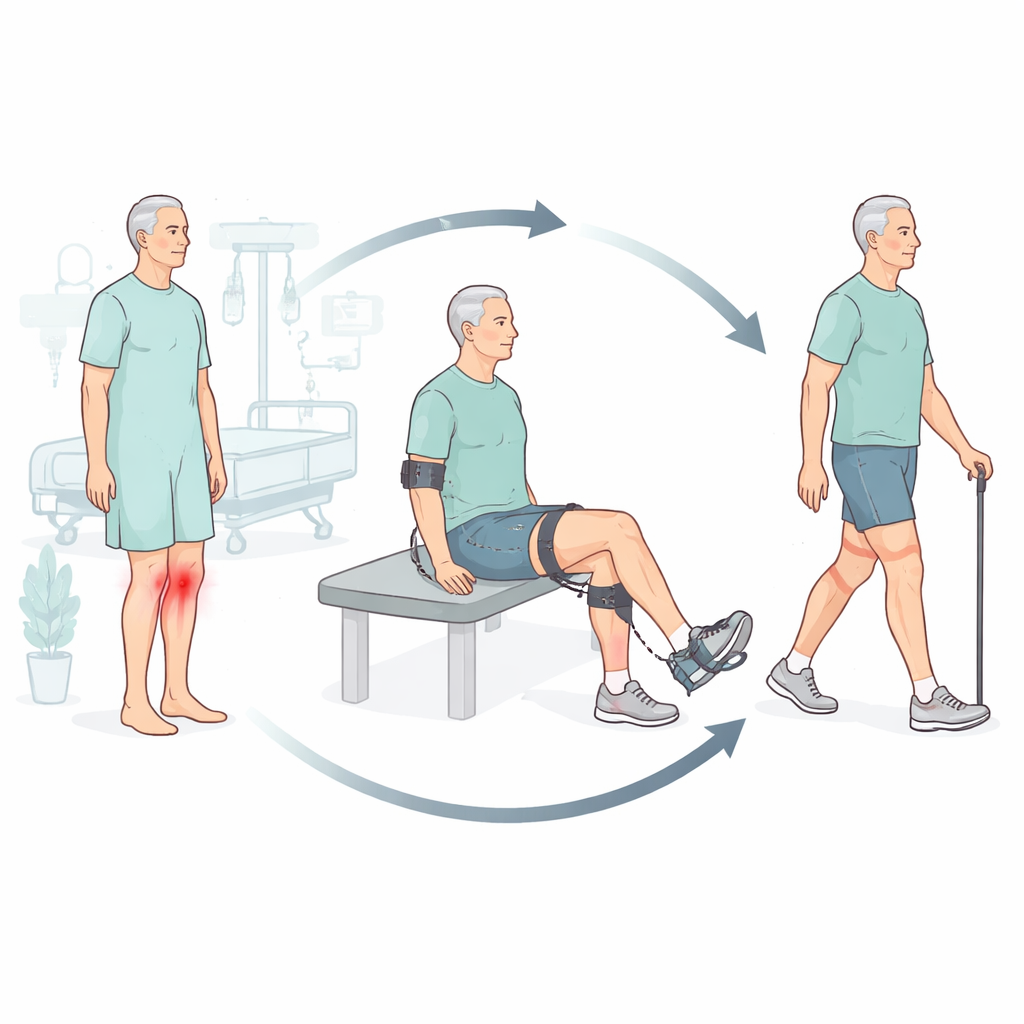
When an older person breaks the upper part of their shin bone near the knee—called a tibial plateau fracture—it can turn simple daily tasks like walking, climbing stairs, or getting out of a chair into major challenges. Standard rehab often moves slowly and can allow the thigh muscles to shrink and weaken. This study asks a practical question with big implications for independence in later life: can a smart tweak to usual exercises, using gentle pressure cuffs on the leg, speed recovery of knee function and quality of life without demanding heavy, painful workouts?
A common injury with a hidden cost
Tibial plateau fractures make up only a small share of all broken bones, but they are especially troublesome in older adults. The injury and the surgery that follows often require weeks of limited movement. During that time, the large thigh muscle at the front of the leg—the quadriceps—can quickly lose size and strength. That loss slows bone healing, stiffens the joint and raises the risk that people will struggle with pain, poor balance and reduced independence long after the bone has technically healed. Doctors have tried strategies like early weight bearing and customized braces, but these can carry their own risks or may not be suitable for every patient.
A low‑load twist on strength training
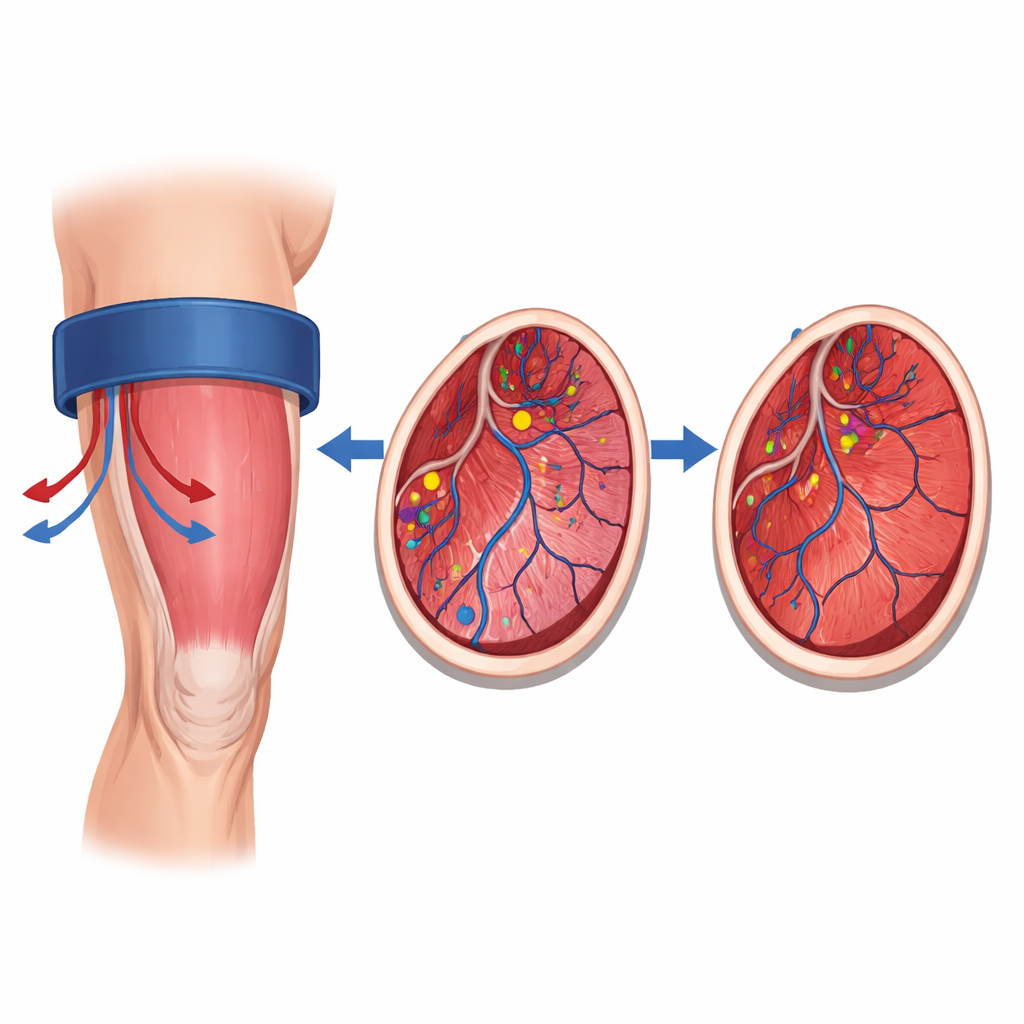
Blood flow restriction (BFR) training is a newer exercise method that aims to get the benefits of heavy strength training while using only light effort. A wide cuff is wrapped high on the leg and gently tightened to partially limit blood flow during simple movements, such as ankle pumps or leg lifts. This restriction creates a low‑oxygen, high‑metabolite environment inside the working muscle that mimics the stress of lifting heavy weights, even though the external load is small. Because the joints are not heavily loaded, BFR has attracted attention as a way to help injured or older patients build or maintain muscle without overstraining vulnerable tissues.
How the study was carried out
The researchers enrolled 92 patients aged 60 and older who had undergone surgery for moderate to complex tibial plateau fractures. Everyone received a structured four‑week rehab program three times a week, including carefully guided ankle, hip and knee exercises. Half of the patients followed this conventional plan alone. The other half performed the same exercises while wearing BFR cuffs on the operated thigh. The cuff pressure was customized for each person and set to 40% of the level that would fully stop blood flow during the first two weeks, rising to 50% in weeks three and four. The team measured knee function, thigh muscle thickness, muscle strength and overall quality of life at the start, after two weeks and after four weeks.
What the researchers found
After just two weeks, patients using BFR already showed better knee scores than those doing standard rehab alone, and the gap widened by week four. More than half of the BFR group achieved an improvement in knee function that patients themselves would consider clearly meaningful, compared with about four in ten in the control group. Ultrasound scans showed that the front thigh muscle in the BFR group became thicker over four weeks, while the control group tended to lose muscle. Both groups experienced some drop in leg strength early on, but by week four the BFR group had lost far less strength than those without cuffs. Quality‑of‑life ratings, covering physical ability, social life, energy and mood, also rose more in the BFR group, and a higher share of these patients reached a meaningful gain.
What this could mean for older patients
The findings suggest that adding short bouts of blood‑flow‑restricted exercise to usual early rehab may help older adults recovering from serious knee fractures keep more muscle, regain smoother movement and feel better overall after surgery—all without resorting to heavy, painful workouts. The authors caution that their study lasted only four weeks and did not directly test the biological mechanisms behind the improvements, nor did it include frailer patients with serious heart, kidney or blood problems. Still, this simple addition—a carefully fitted cuff and low‑load exercises under supervision—may become an important tool for helping older people return more quickly to walking, climbing stairs and living independently after a tibial plateau fracture.
Citation: Cao, H., Li, T., Wang, P. et al. The effects of short-term blood flow restriction training on knee function and quality of life in older adults patients with tibial plateau fractures. Sci Rep 16, 11320 (2026). https://doi.org/10.1038/s41598-026-41589-x
Keywords: blood flow restriction, tibial plateau fracture, knee rehabilitation, older adults, muscle strength