Clear Sky Science · en
Phytochemical profiling and in vitro biological activities of Opuntia ficus-indica oil extracted by different methods
Why a desert fruit matters
Prickly pear cactus is better known for its brightly colored fruit than for what lies inside the seeds. Yet those tiny seeds hide an oil rich in natural chemicals that may help fight germs, slow damage caused by oxygen, and support food and skin health. This study looks closely at seed oil from Opuntia ficus-indica grown in Yemen, asking a simple question with big practical stakes: how do different ways of extracting the oil change its useful properties?
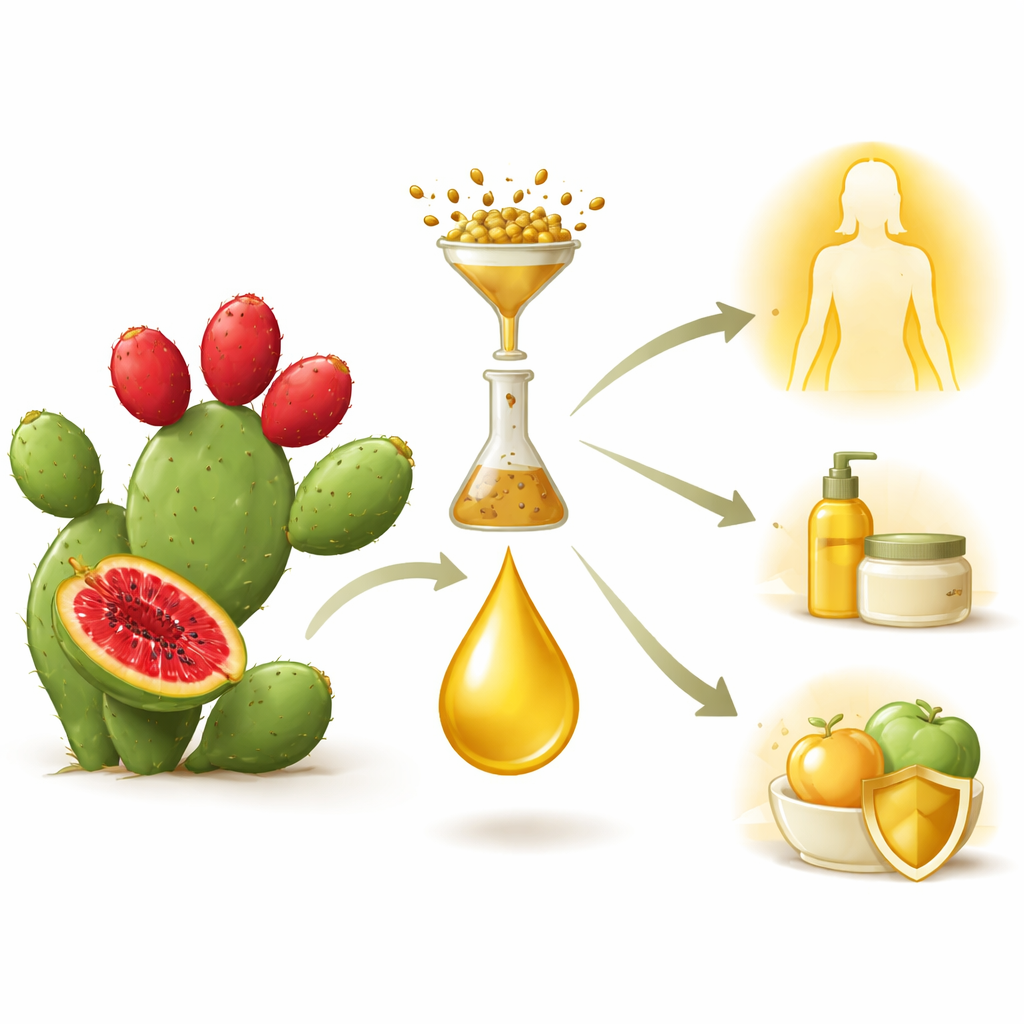
From cactus fruit to golden oil
The researchers collected ripe yellow-orange prickly pear fruits from fields near Sana’a, Yemen. After peeling and blending the pulp, they separated, washed, dried, and finely ground the seeds. Using this seed powder, they tried three common extraction approaches: Soxhlet (a hot continuous washing with solvent), maceration (soaking at room temperature while gently shaking), and ultrasound-assisted extraction (using sound waves to help release compounds). All three used the same oil-dissolving solvent to make comparisons fair. The team then weighed how much oil each method produced and measured basic quality traits such as acidity, density, and how easily the oil oxidizes or becomes rancid.
What is in the oil
To understand the oil’s chemical makeup, the scientists used gas chromatography–mass spectrometry, a technique that separates complex mixtures and identifies their components. They detected about thirty distinct compounds, including many fatty acids and related molecules, as well as small aromatic acids and aldehydes that shape both health effects and flavor. Important fatty acids such as linoleic, oleic, palmitic, and stearic acids were present alongside bioactive compounds like gallic acid, carotene-like molecules, and other plant chemicals known from earlier work to have antioxidant, anti-inflammatory, or antimicrobial activity. Overall, the Yemeni seed oil fit into the category of polyunsaturated oils, the same family that includes many heart-friendly plant oils.
Testing antioxidant power
Because no single lab test can capture all of the ways antioxidants work, the team used two different color-based assays that track how well the oil’s compounds can donate electrons to neutralize reactive forms of iron. They also measured total phenolic content, a broad group of plant chemicals strongly linked to antioxidant behavior. Maceration, the simple overnight soak, gave the highest overall antioxidant readings, while Soxhlet and ultrasound extracts showed somewhat lower values. Ultrasound stood out in another way: even though it produced less total oil and slightly weaker antioxidant scores, it yielded the highest proportion of phenolic compounds relative to its antioxidant capacity, hinting that this method concentrates certain protective molecules.
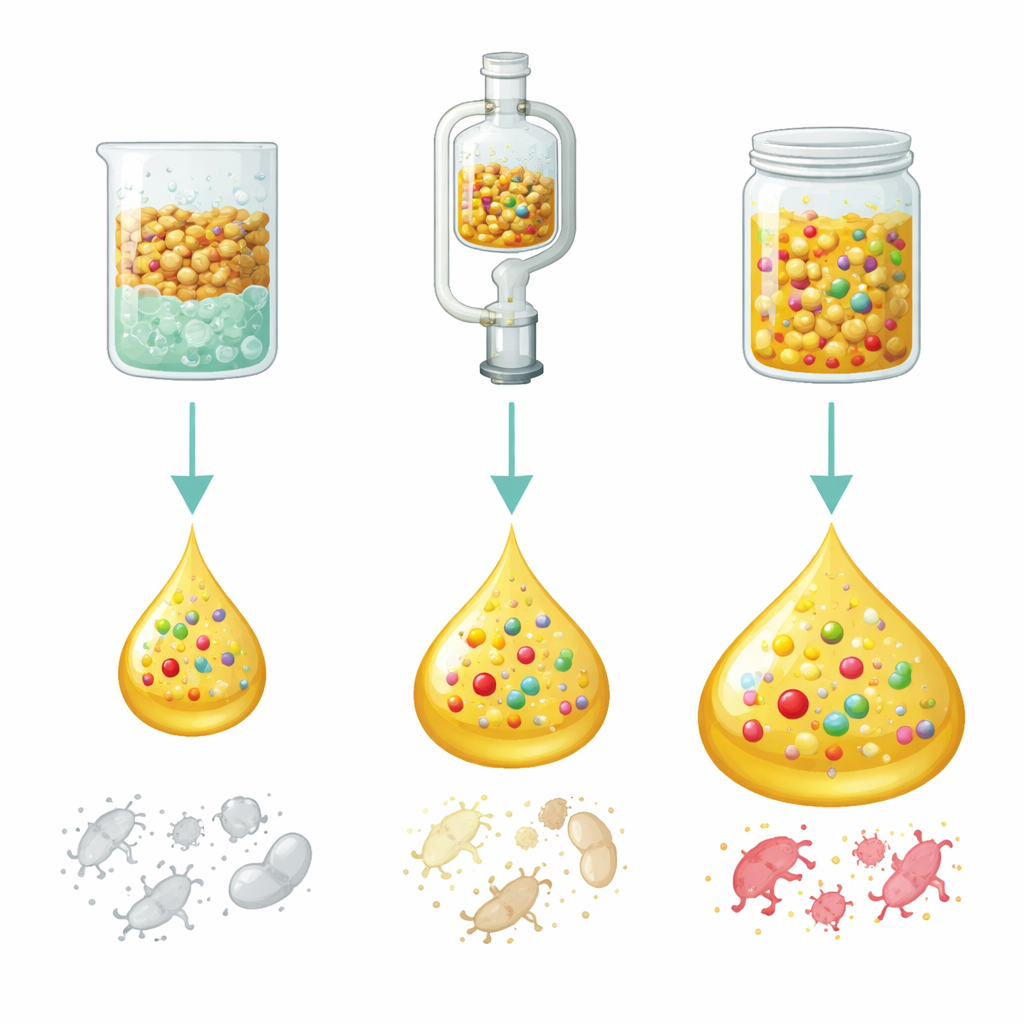
Fighting bacteria and fungi
The study also explored whether the seed oil could slow the growth of microbes that commonly infect skin or contaminate products. Using a standard dish test, the oil was placed in small wells on plates seeded with bacteria and yeast. The maceration-derived oil again performed best, creating the largest clear zones where two types of Staphylococcus bacteria and the yeast Candida albicans failed to grow. Ultrasound extracts showed slightly smaller zones, while Soxhlet oil was the least active of the three, though still effective compared with a solvent-only control. None of the oils inhibited Escherichia coli under the tested conditions, highlighting that their antimicrobial strength is selective rather than universal.
What this could mean for everyday life
Taken together, the results paint Yemeni prickly pear seed oil as a promising natural ingredient with a rich mix of bioactive compounds, notable antioxidant strength, and the ability to curb certain harmful microbes. The way the oil is extracted matters: hot continuous extraction gives the highest yield, maceration best preserves antioxidant and antimicrobial punch, and ultrasound offers a greener, time-saving route that enriches particular protective chemicals. While more work, including long-term stability tests and clinical studies, is needed before firm health claims can be made, this research suggests that an overlooked desert by-product could find growing roles in food preservation, skin care products, and possibly future treatments that lean on nature’s own chemical defenses.
Citation: Thamer, F.H., Alshargabi, A. Phytochemical profiling and in vitro biological activities of Opuntia ficus-indica oil extracted by different methods. Sci Rep 16, 13812 (2026). https://doi.org/10.1038/s41598-026-41582-4
Keywords: prickly pear seed oil, antioxidant activity, antimicrobial properties, green extraction methods, phytochemicals