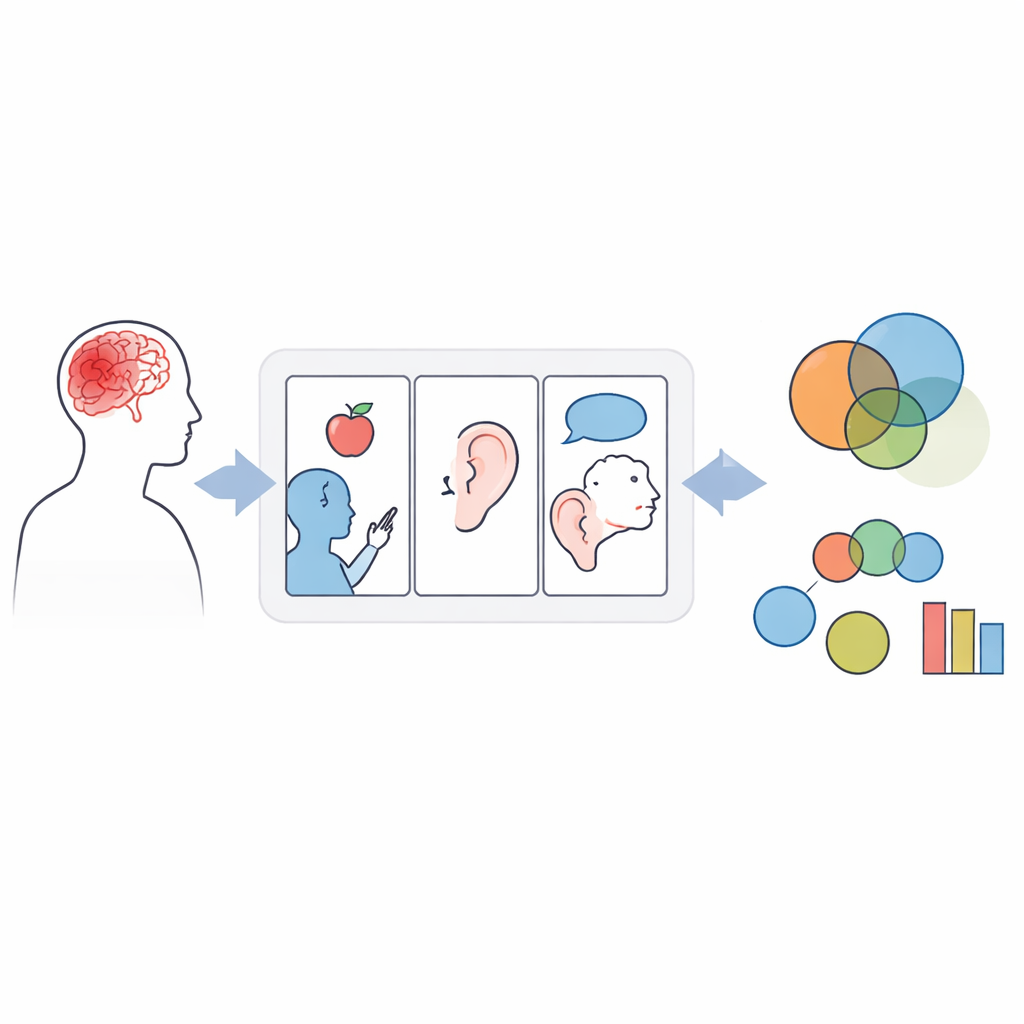
After a stroke, many people struggle to find the right words for everyday objects, a difficulty called "naming" problems. Because these word-finding slips are so visible and frustrating, clinicians often treat object naming as the key sign of language problems after stroke and as a quick way to screen for aphasia. This study asks a simple but crucial question: if someone can or cannot name pictured objects, how well does that actually tell us about their broader ability to understand and repeat speech? The answer matters for patients, families, and clinicians who rely on short tests to decide what help is needed.
Looking beyond a single language test
The researchers studied 382 English-speaking stroke survivors who all had some kind of language difficulty, months to decades after their stroke. Everyone completed five common language tasks from a widely used test: naming pictured objects, repeating single words, repeating sentences, understanding single words, and understanding sentences. The team focused on whether each person’s score on a task was clearly in the impaired range or not. They then counted how often object naming problems appeared in this group, how often naming problems went hand-in-hand with repetition or understanding problems, and how often repetition or understanding difficulties appeared even when naming seemed fine.
How common naming problems really are
Across the whole group, about two thirds of patients had trouble naming objects, making naming one of the most frequent language problems but not unique. Difficulties understanding sentences were slightly more common, while problems with word and sentence repetition occurred at similar rates to naming. In contrast, problems understanding single words were much less frequent. When the researchers zoomed in on the most severely affected patients, naming and sentence understanding problems appeared in over 90 percent of them. Among patients with milder language problems, though, naming difficulties were present in only about half. This shows that while naming problems are prominent in severe aphasia, they are far from universal when symptoms are milder.
What naming tells us about other language skills Figure 1.
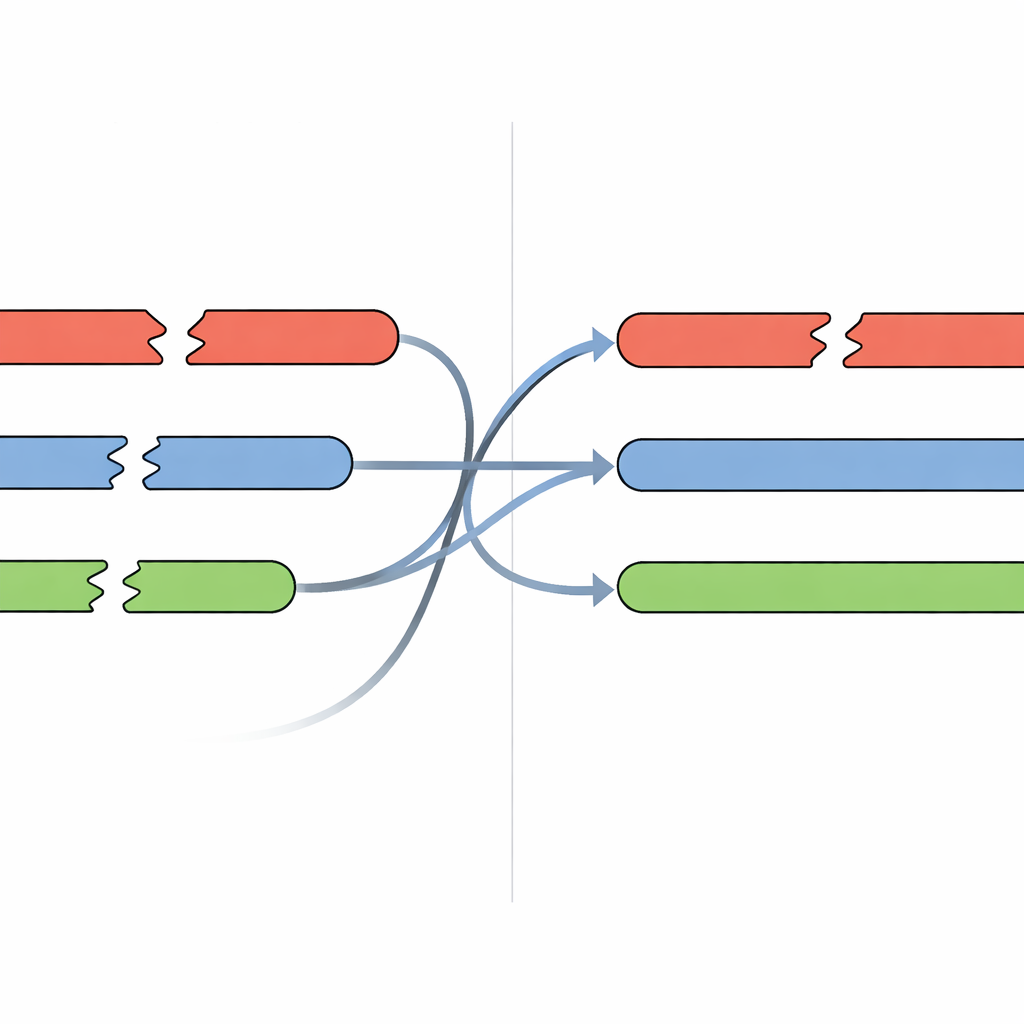
The team then examined how informative object naming is about other language abilities. For patients who did have naming problems, 9 out of 10 also had trouble with at least one of the repetition or understanding tasks, meaning naming problems are a strong sign that other language issues are likely. However, the picture changes when we look from the other direction. Among patients who struggled with repetition or understanding, more than a third had no naming problem at all. In other words, if a clinician only tests naming, a substantial number of people with important listening or repetition difficulties will be missed, especially when impairments are less severe.
Severity changes the pattern of overlap Figure 2.
Severity turned out to be a key factor. In the most severely affected patients, naming, repetition, and sentence understanding almost always failed together, so any of these tasks gave a reliable picture of broad language breakdown. But in patients with milder problems, the links between tasks loosened. Naming problems could appear without repetition or understanding problems, and vice versa. The study also showed that tests of single-word understanding were the least sensitive overall, largely because relatively few patients had this type of problem at all. When such problems did occur, however, they were usually accompanied by difficulties in understanding whole sentences and often by naming problems.
What this means for stroke survivors and their care
The study concludes that, despite its visibility and convenience, object naming is not a uniquely powerful or sufficient test for aphasia in people living with chronic effects of stroke. Strong naming skills make severe comprehension or repetition problems unlikely, but cannot rule out milder or more selective difficulties. Likewise, naming problems almost always signal broader language trouble, but not always in predictable ways. For patients, this means that a thorough language assessment should sample several skills—not just naming—to capture hidden problems that affect everyday conversation and recovery. For clinicians and researchers, the findings highlight the need to design and interpret language tests with attention to severity, task choice, and the many ways that language can break down after stroke.
Citation: Anderson, S., Bruce, R.M., Hope, T.M.H. et al. How object naming dissociates from repetition and comprehension impairments when post stroke aphasia is less severe.
Sci Rep16, 13526 (2026). https://doi.org/10.1038/s41598-026-41575-3