Clear Sky Science · en
Early prediction of wind turbine anomalies using 1D-CNN and temporal feature engineering on multi-source SCADA data
Keeping Wind Turbines Spinning
Wind farms are becoming a backbone of clean energy, but each turbine is a giant, complex machine working in harsh conditions. When something goes wrong inside a turbine, repairs are costly and every hour of downtime means lost electricity. This paper explores how modern artificial intelligence can spot early warning signs of trouble in turbine data, so that operators can fix small issues before they turn into big, expensive failures.
The Challenge of Watching Millions of Readings
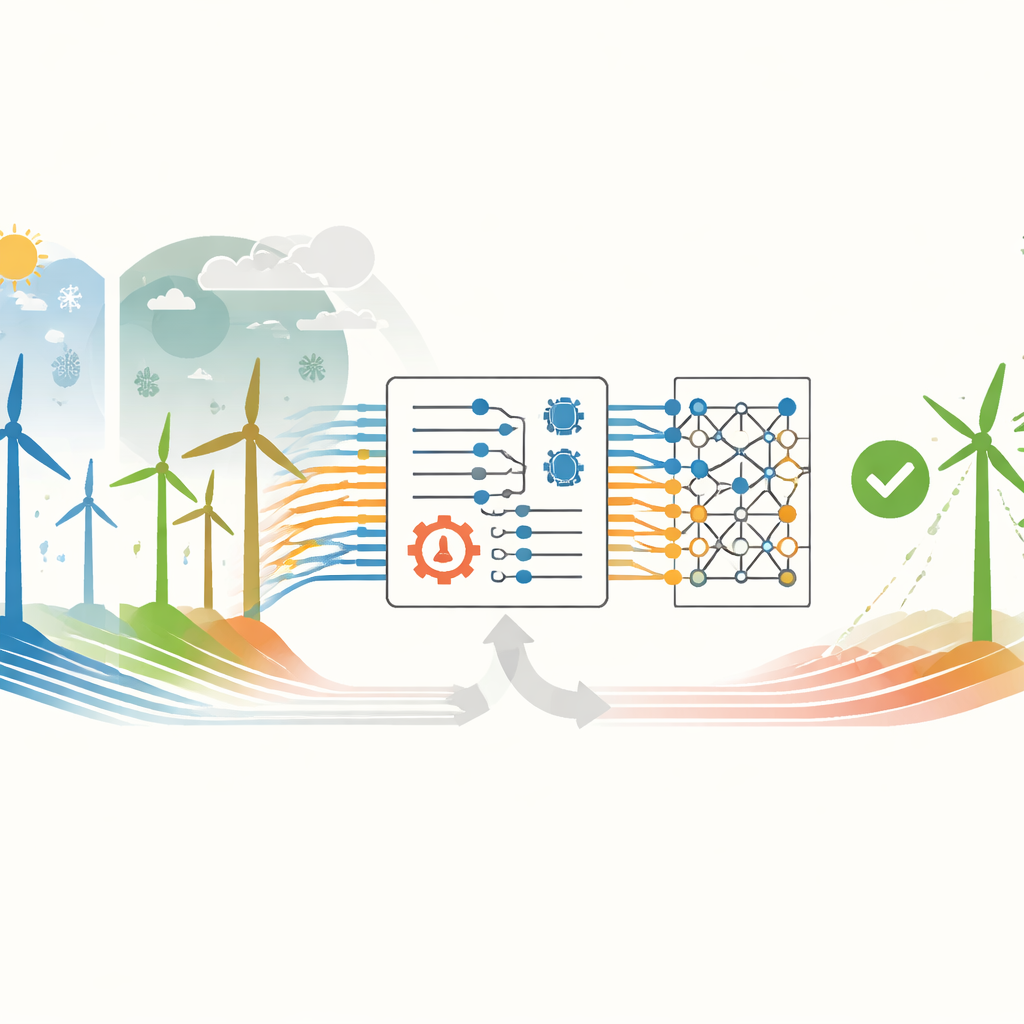
Every wind turbine constantly reports streams of information through its control system, known as SCADA. These readings include the outside air temperature, how fast the shaft is spinning, how much power is being produced, and how steady the electrical grid frequency is. Across dozens of turbines and several wind farms, this turns into millions of time-stamped measurements. Human engineers cannot realistically sift through all of this data by hand, and traditional rule-based alarms struggle when conditions vary from farm to farm or season to season.
Building One Big Picture from Many Wind Farms
The researchers tackled this problem by combining SCADA data from three different wind farms in Portugal and Germany, together covering 36 turbines over many years. Because each farm has its own mix of sensors and scales, the team first had to carefully align and clean the data. They picked four core signals that all farms shared—ambient temperature, grid frequency, active power, and rotational speed—and converted and standardized them so that a turbine in one country could be compared fairly with a turbine in another. They also added simple time clues like hour of day and month of year, then sliced the data into overlapping 24-hour windows labeled as either normal behavior or containing a fault event.
Putting Different AI Approaches to the Test
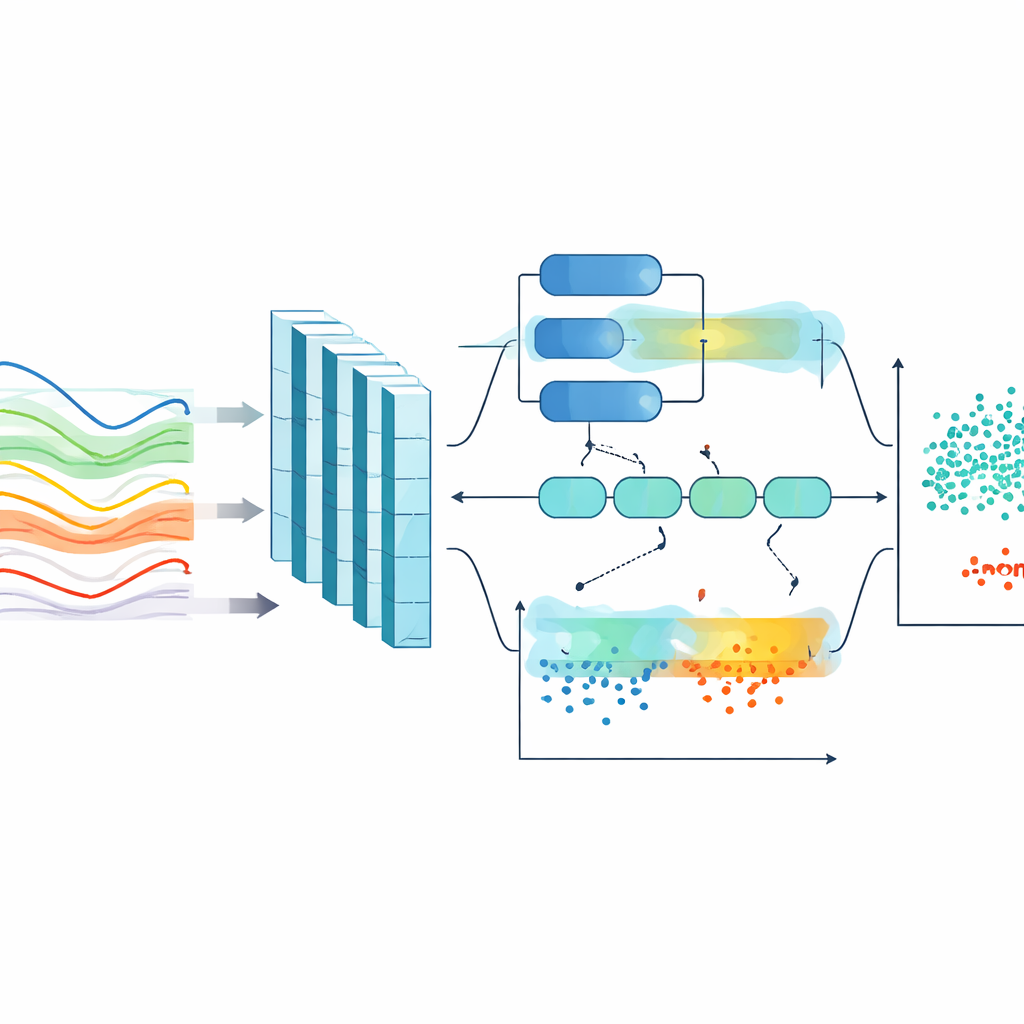
With this unified dataset in place, the team ran a head-to-head comparison of several popular deep learning methods for time-based data. They tested traditional recurrent networks that read sequences step by step, more advanced memory-based designs such as LSTM and bidirectional LSTM, a temporal convolutional network that looks further back in time using dilated filters, and a one-dimensional convolutional network (1D-CNN) that scans for local patterns along the timeline. All models were trained and tuned under the same conditions and judged by how accurately they could tell normal operation from early signs of failure, while also limiting false alarms.
Why Simple Convolutions Came Out on Top
Despite the popularity of more complex sequence models, the straightforward 1D-CNN performed best on this task. It reached about 85 percent accuracy and F1-score, and showed a strong ability to distinguish between healthy and faulty behavior across all three wind farms. The authors argue that this success comes from the way convolutional filters can efficiently capture short-term patterns and sudden changes across several signals at once, which are often what matters for early fault clues. Statistical tests confirmed that the advantage of the 1D-CNN over the other standard models was not just due to chance.
Adding a Smarter Hybrid Model
After establishing a fair baseline, the researchers went a step further and designed a hybrid model that blends convolutional layers with LSTM layers and an attention mechanism. In this setup, the convolution part quickly extracts local features from the sensor signals, the LSTM part tracks how those features evolve over longer stretches of time, and the attention component automatically gives more weight to the most informative moments in a sequence. This hybrid approach nudged performance even higher, to about 87 percent accuracy, and outperformed other combined architectures built from the same ingredients.
What This Means for Clean Energy
For non-specialists, the key takeaway is that carefully prepared data plus well-chosen deep learning models can give wind farm operators early, reliable alerts that something is starting to go wrong. By fusing information from multiple sites and letting algorithms learn the patterns that precede faults, the study shows a path toward smarter, more general tools for turbine monitoring. In practice, that means fewer surprise breakdowns, lower maintenance costs, and more steady clean power feeding into the grid—helping keep the blades turning and the lights on.
Citation: Ata, M.M., Osama, S., Ibraheem, M.R. et al. Early prediction of wind turbine anomalies using 1D-CNN and temporal feature engineering on multi-source SCADA data. Sci Rep 16, 9667 (2026). https://doi.org/10.1038/s41598-026-41571-7
Keywords: wind turbine monitoring, predictive maintenance, SCADA time series, deep learning models, fault detection