Clear Sky Science · en
Diversity, climatic correlations, and biocontrol prospects of seed-borne fungal endophytes in Egyptian maize
Hidden Life Inside Corn Seeds
Maize, or corn, feeds people, animals, and entire industries around the world. Yet every kernel carries an invisible world of fungi inside it. Some of these tiny hitchhikers damage crops and contaminate grain with dangerous toxins; others can actually help protect the plant. This study explores the fungal communities living inside maize seeds across Egypt and asks how climate shapes them, and whether one helpful fungus could be harnessed as a natural, eco-friendly shield against a major corn disease.
Why Tiny Seed Residents Matter
Maize is grown across Egypt in climates ranging from coastal Mediterranean to hot desert. Because the fungi inside seeds can be passed from one generation to the next, understanding who they are and how common they are is crucial for food safety and crop health. A particularly threatening fungus, Fusarium verticillioides, can rot seeds and produce fumonisins, toxins that may accumulate in seemingly healthy kernels and pose risks to humans and livestock. At the same time, some endophytes—fungi that live harmlessly within plant tissues—can strengthen plants and fight off invaders. The authors set out to map which fungi inhabit Egyptian maize seeds, how this varies with weather, and whether any naturally occurring strains of the helpful genus Trichoderma can hold Fusarium in check.
Surveying Egypt’s Maize Seed Fungal World
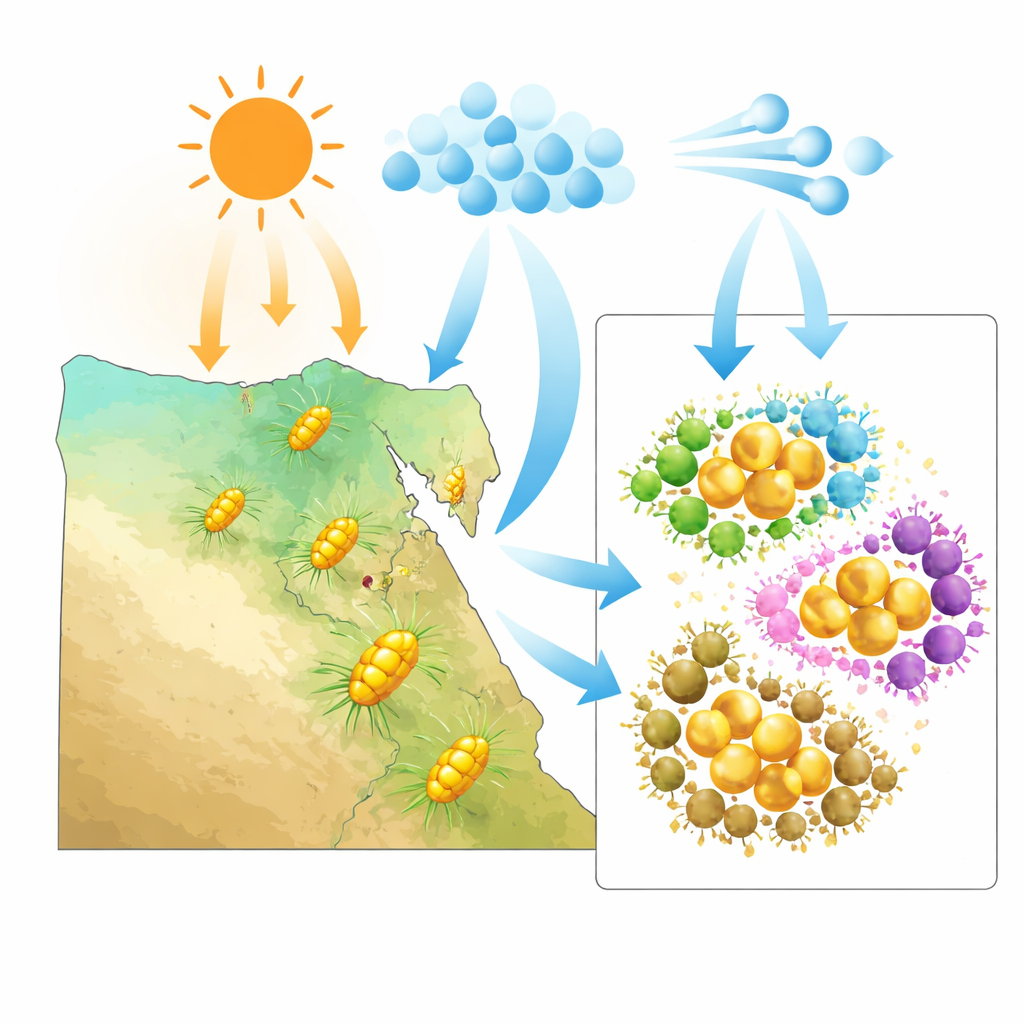
Researchers collected 144 maize grain samples from 18 maize-growing governorates spanning Egypt’s main agroecological zones and representing multiple yellow and white hybrids. After carefully surface-sterilizing the grains to remove external contaminants, they grew the internal fungi on standard laboratory media and identified them by their colony appearance and microscopic structures. In all, they recorded 34 fungal species from 23 genera. A small core group dominated: Aspergillus niger, Penicillium species, Aspergillus flavus, and Fusarium verticillioides were found in most locations and made up a large share of all colonies. Some rarer species appeared only occasionally and at low levels. Measures of diversity showed that some regions, such as Al-Behera and Luxor, hosted rich, well-balanced fungal communities, while others, like Damietta, were much simpler.
Climate’s Fingerprint on Fungal Communities
The team then examined how weather patterns during the growing season related to the seed fungi. They analyzed temperature, humidity, rainfall, solar radiation, and wind for each governorate and used a statistical technique that links these environmental gradients to community composition. Temperature, solar radiation, and relative humidity together explained nearly two-thirds of the variation in the fungal communities, suggesting climate is a major driver. Warm, sunny, drier conditions tended to favor Aspergillus species and Trichoderma, whereas moister environments were more closely associated with Fusarium and certain other genera. Because temperature and humidity were strongly and inversely related—hotter sites were usually drier—the authors caution that these patterns are correlations rather than proof of cause-and-effect, and that farming practices and maize varieties likely contribute as well.
A Native Fungus That Fights Back
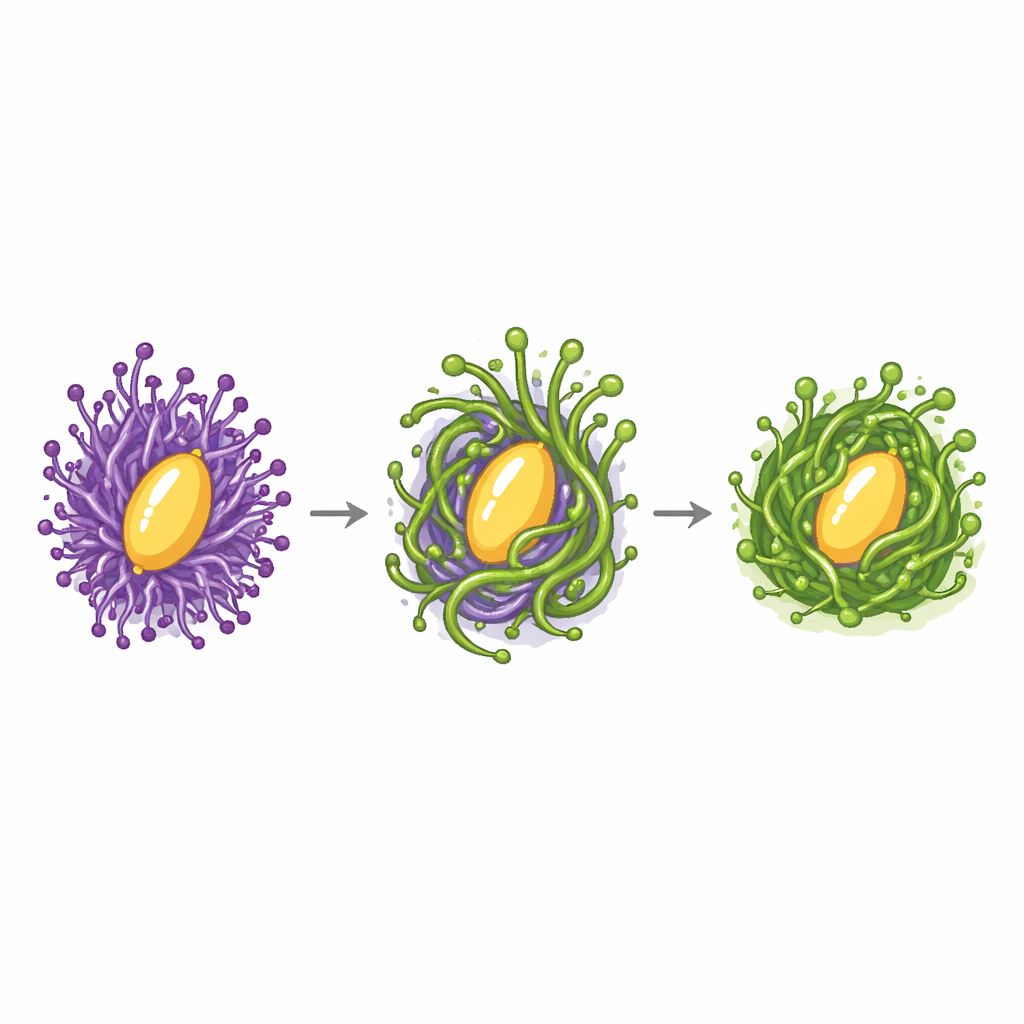
Among the fungi isolated from maize seeds were 50 strains of Trichoderma, a group well known for attacking plant pathogens. The researchers tested each strain in paired culture with Fusarium verticillioides to see how strongly it could slow the pathogen’s growth. One strain, labeled T14 and later identified by DNA sequencing as Trichoderma longibrachiatum, stood out, cutting Fusarium growth by about three quarters and producing a clear zone where the pathogen could not advance. Under the scanning electron microscope, T14’s filaments were seen wrapping around Fusarium’s threads, forming hook- and coil-like structures that are hallmarks of a parasitic attack. These observations suggest that T. longibrachiatum is not just competing for space and food but actively invading and overgrowing the harmful fungus.
Promise and Next Steps for Safer Maize
The study paints Egyptian maize seeds as home to a consistent cast of fungi shaped strongly by local climate, with a few species both highly common and agriculturally important. It also highlights a locally adapted Trichoderma longibrachiatum strain with strong laboratory performance against a key toxin-producing pathogen. For non-specialists, the take-home message is that managing corn health may increasingly depend on working with, rather than against, the seed’s own microscopic partners—using beneficial fungi as living shields in place of some chemical fungicides. However, the work was limited to one season and to fungi that can be grown in culture, and only one helpful strain received full genetic confirmation. Field trials, multi-season surveys, and modern DNA-based community profiling will be needed to confirm these patterns and to turn T14 and similar strains into practical, reliable biocontrol tools for farmers.
Citation: Hasan, K.A., Soliman, H.M., Ghoneem, K.M. et al. Diversity, climatic correlations, and biocontrol prospects of seed-borne fungal endophytes in Egyptian maize. Sci Rep 16, 10371 (2026). https://doi.org/10.1038/s41598-026-41567-3
Keywords: maize seed fungi, Fusarium verticillioides, Trichoderma biocontrol, climate and microbiomes, Egyptian agriculture
See more on the researcher's website: https://www.facebook.com/SeedPathologyLab/