Clear Sky Science · en
Neuroprotective mechanisms of cobalamin in ischemic stroke insights from network pharmacology and molecular simulations
Why a Vitamin Matters for Stroke
Stroke is one of the leading causes of death and disability worldwide, and most strokes occur when a blood vessel supplying the brain becomes blocked. Doctors already know that vitamin B12 (also called cobalamin) is important for nerve health and that low levels are linked to a higher risk of stroke. This study asks a deeper question: beyond simply preventing deficiency, could cobalamin itself act as a kind of “neuroprotective helper” during stroke, working on many fronts in the blood and brain to limit damage?
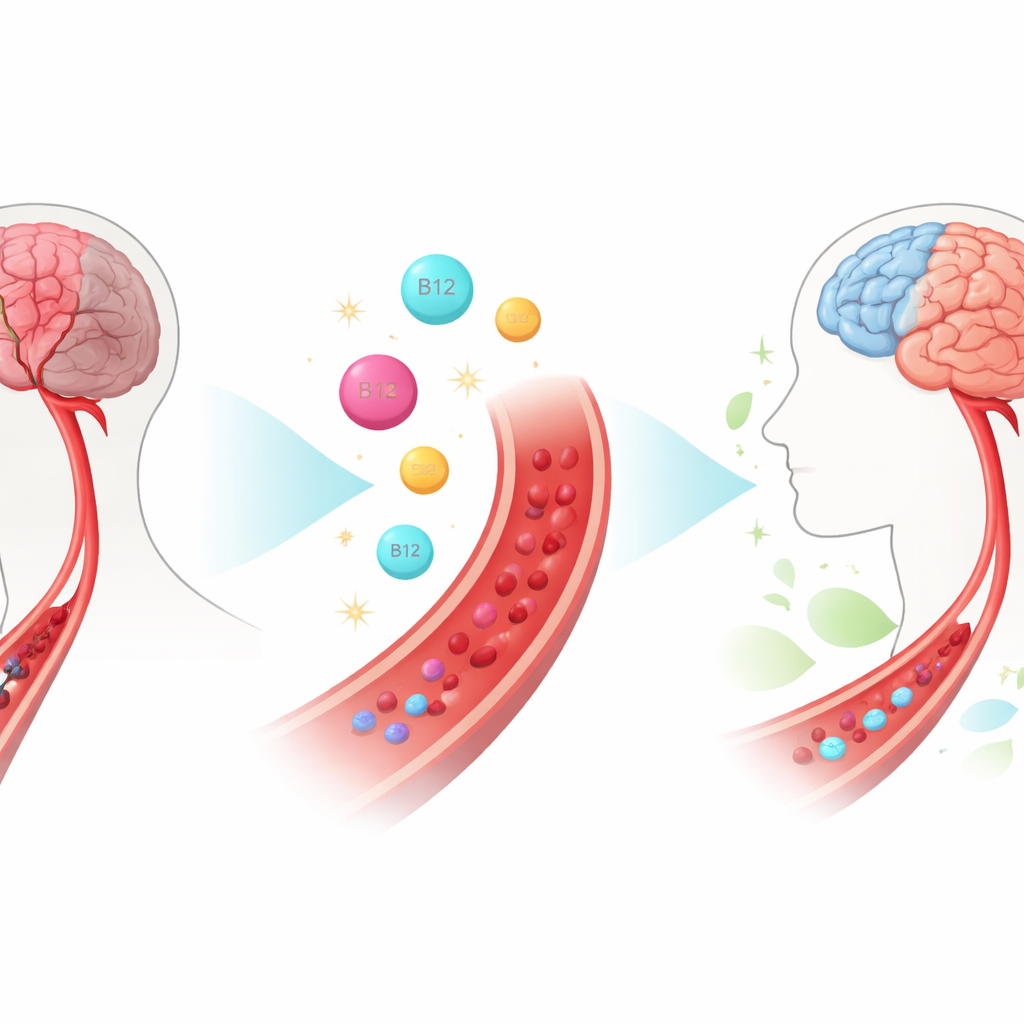
Connecting a Common Vitamin to a Complex Disease
Ischemic stroke is not caused by a single fault but by a tangled web of events: blood clots form or fail to dissolve, blood vessels and their protective lining are damaged, inflammation flares, and brain cells starve and die. Traditional lab experiments can struggle to capture all these moving parts at once. The researchers turned instead to “network pharmacology,” an approach that uses large biological databases and computer models to chart how a compound might interact with hundreds of human proteins and pathways at the same time. They gathered known and predicted protein targets of cobalamin and compared them with thousands of genes linked to ischemic stroke, then focused on the overlapping set that might explain how this vitamin influences stroke biology.
Key Players in Blood, Vessels, and Brain
From this overlap, the team identified 95 potential therapeutic targets and then narrowed in on several core proteins that sat at the “hubs” of the interaction network. These included albumin (the main carrier protein in blood), proteins involved in dissolving clots and regulating bleeding (such as plasminogen and SERPINE1), structural and adhesive proteins that affect blood vessel stability (like fibronectin), and molecules tied to blood pressure, fat handling, and inflammation (including angiotensinogen, apolipoprotein E, and SPP1). Many of these are already known to shape stroke risk and outcome: for example, low albumin predicts worse recovery, and imbalances in clotting and clot breakdown can both starve the brain of oxygen or trigger bleeding. The computer analysis suggests that cobalamin could influence all of these processes at once by binding to these central proteins.
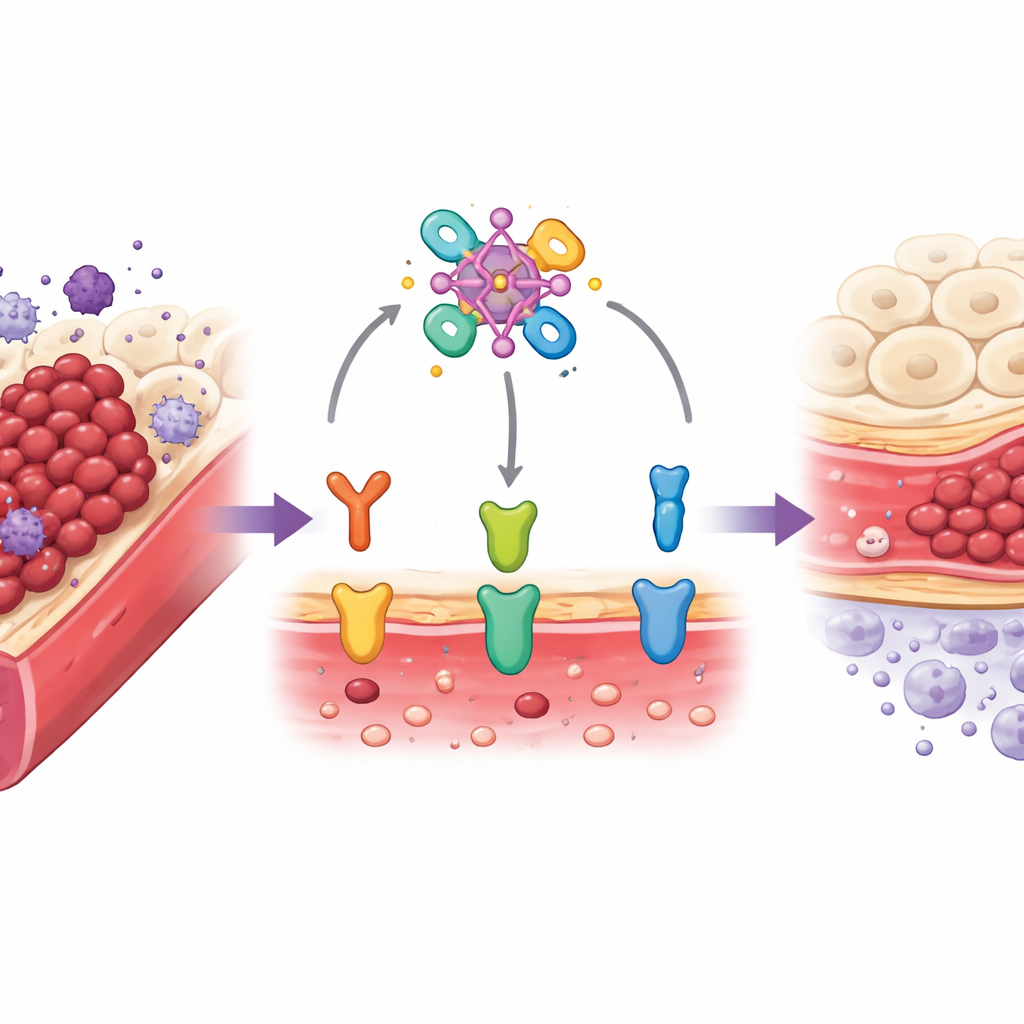
How the Vitamin May Calm the Storm
To go beyond statistics, the researchers used molecular docking and detailed molecular dynamics simulations—essentially high-resolution computer “movies” of molecules in motion—to see how cobalamin might physically fit into these target proteins. They found especially strong and stable binding between cobalamin and albumin and between cobalamin and TIMP1, a natural inhibitor of enzymes that can damage the blood–brain barrier. These simulated complexes changed shape very little over time, suggesting that the interactions could be robust in the body. At the network level, the vitamin’s targets clustered in three major biological themes: coagulation and clot breakdown, inflammatory responses, and fat and cholesterol metabolism. Pathway analysis further highlighted complement and coagulation cascades and the PI3K/Akt signaling route—pathways already known to control cell survival, inflammation, and blood vessel integrity after stroke.
Promises and Practical Hurdles
The study also examined how well cobalamin might move through the body. Computer models of absorption and distribution showed that vitamin B12 is a very large, highly charged molecule. It dissolves well in water but crosses biological barriers poorly, including the gut wall and especially the blood–brain barrier. The simulations predicted low passive uptake from the intestine, strong binding to blood proteins, and very limited ability to slip into the brain on its own. This means that even if cobalamin has powerful protective interactions with key proteins, simply taking a pill may not deliver enough of the vitamin to injured brain tissue at the right time without specialized delivery methods or combination approaches.
What This Could Mean for Patients
Overall, the findings paint a picture of cobalamin as a multitasking ally during ischemic stroke, with the potential to steady blood clotting, dampen harmful inflammation, protect the blood–brain barrier, and support healthier fat and cholesterol handling—all by engaging a set of central proteins and cell-signaling routes. These insights come entirely from computational work, so they do not yet prove benefit in real patients, and they highlight practical obstacles such as getting enough vitamin into the brain. Still, by mapping where and how cobalamin might intervene in the stroke cascade, the study provides a roadmap for future lab experiments, clinical trials, and possibly new delivery systems that could turn a familiar vitamin into a more targeted tool for protecting the brain.
Citation: Zhou, L., Cai, Y., Wu, H. et al. Neuroprotective mechanisms of cobalamin in ischemic stroke insights from network pharmacology and molecular simulations. Sci Rep 16, 11559 (2026). https://doi.org/10.1038/s41598-026-41564-6
Keywords: ischemic stroke, vitamin B12, neuroprotection, blood clotting, brain inflammation