Clear Sky Science · en
The effect of seed priming on yield and germination properties of quinoa (Chenopodium quinoa Willd)
Why Better Seeds Matter for Future Food
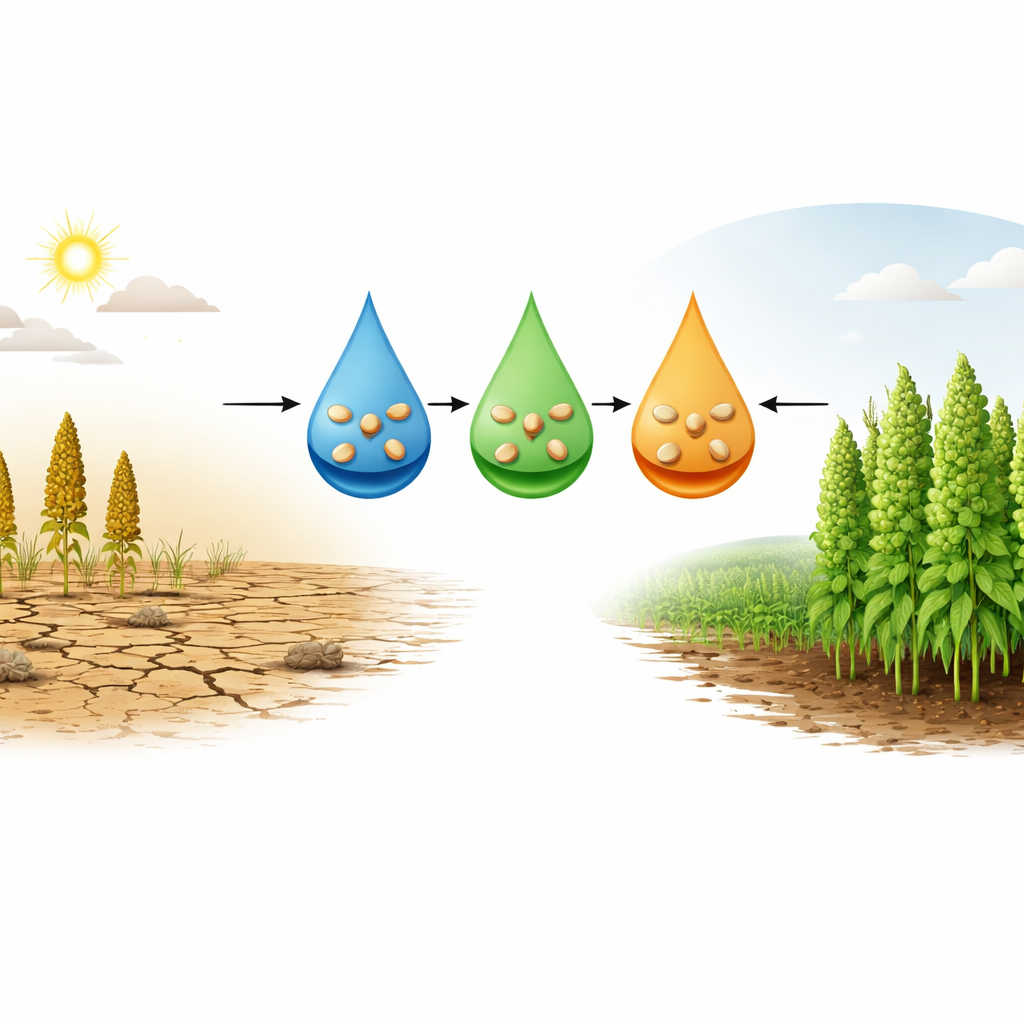
As the world gets hotter and drier, farmers need crops that can still grow reliably and produce enough grain to feed a rising population. Quinoa has attracted attention because it tolerates poor soils, salt, and drought better than many staples like wheat or rice. Yet quinoa seeds are tiny and sometimes slow or uneven to sprout, making it hard to establish strong fields. This study asks a practical question with big implications: can a simple pre-planting treatment of seeds give quinoa a better start and, in the end, more grain on the plate?
Giving Seeds a Head Start
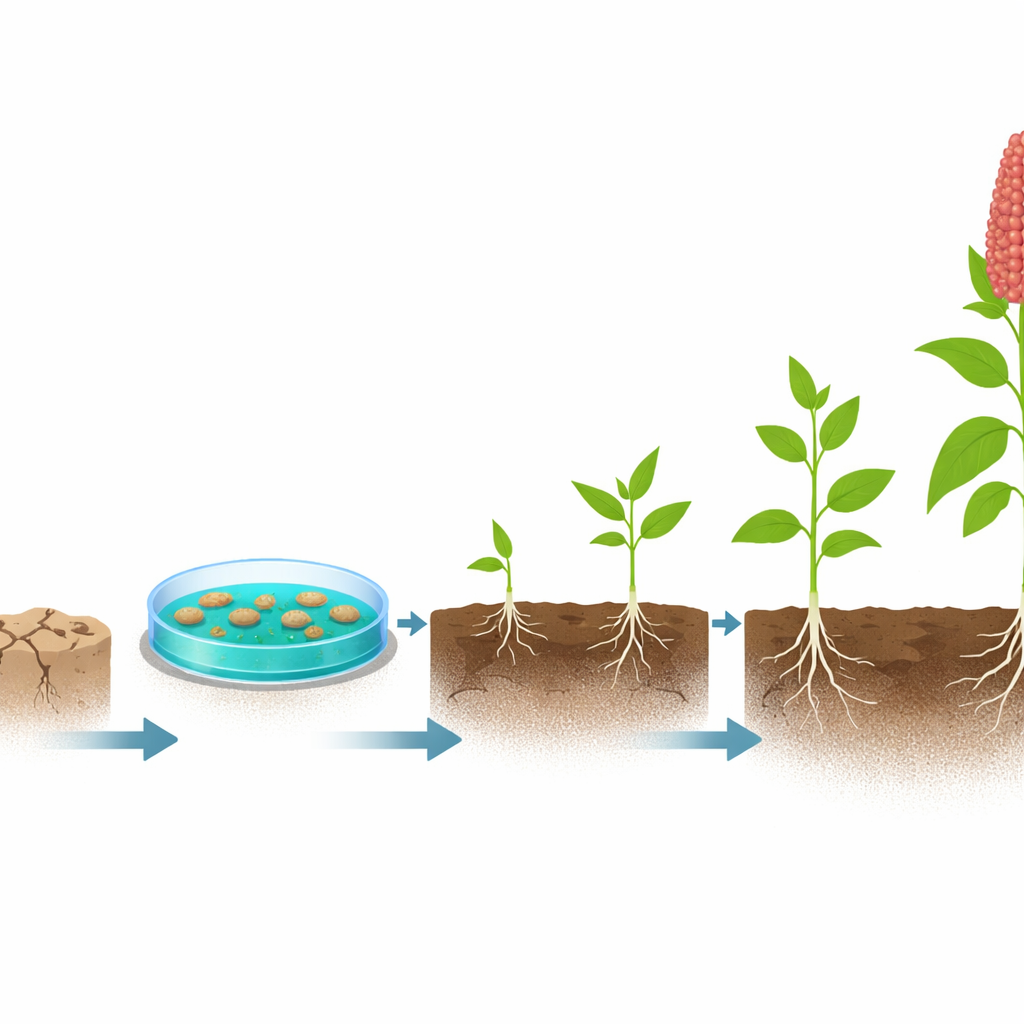
The researchers tested a technique known as seed priming, where seeds are soaked in specific solutions before planting and then dried back to normal storage condition. This partial “wake-up call” can jump-start the early steps of germination without letting the seed fully sprout yet. In this work, quinoa seeds of the variety Titicaca were primed with several common farm-friendly compounds: potassium chloride, potassium nitrate, zinc sulfate, gibberellic acid (a plant hormone), polyethylene glycol, salicylic acid (a signaling molecule found in many plants), humic acid, plain water, or left untreated as a control. The team did not stop at a single test; they followed the same seed lots through three stages—laboratory dishes, greenhouse pots, and real field plots in semi-arid western Iran—to see whether any early advantages lasted all the way to harvest.
From Petri Dish to Young Plants
In the controlled laboratory tests, some primed seeds clearly outperformed the untreated ones. Seeds soaked in potassium chloride showed the highest percentage of successful germination and produced the longest shoots, meaning more vigorous early growth. Gibberellic acid also helped seeds sprout faster, while plain water soaking (hydropriming) gave modest benefits. In contrast, seeds treated with polyethylene glycol lagged behind, germinating less often and more slowly. When the researchers moved to the greenhouse and let seedlings grow for 45 days, they again saw that certain treatments boosted plant growth. Salicylic acid produced the heaviest shoots and roots, and several other priming solutions increased root weight compared with untreated plants, indicating better belowground development that can help plants find water and nutrients later on.
Field Results on Real Farms
The crucial test came in field plots under the Mediterranean-like climate of Kurdistan Province, where winters are cold and moist and summers are dry. Here, the scientists measured total plant biomass, the weight of the flowering structures, the grain harvested, and how efficiently plants turned their growth into seed yield. Almost all priming treatments improved at least one yield trait compared with unprimed seeds. Salicylic acid stood out by producing the highest total biomass and grain yield, meaning more food per square meter. Potassium chloride, on the other hand, gave one of the best harvest indices, a measure of how much of the plant’s effort ends up as usable grain rather than stems and leaves. Even treatments that were less impressive in the lab sometimes still delivered modest benefits in the field, showing how complex the journey is from seed to harvest.
Linking Early Growth to Final Harvest
By comparing traits across all three experiments, the study found that strong early performance tends to translate into better yields at the end of the season. Seeds that germinated quickly and produced longer shoots and roots often led to plants with higher biomass and more grain. Heavier seedlings in the greenhouse were linked with better field yield, and fields with greater total growth also had heavier flower clusters and more harvested grain. These relationships suggest that what happens in the first days after sowing—the invisible drama under the soil surface—can strongly influence how much food a field eventually produces months later.
What This Means for Farmers and Food Security
For farmers, the takeaway is both simple and powerful: treating quinoa seeds before planting can be an inexpensive way to secure better stands and higher yields, especially in stressful environments. Among all the options tested, potassium chloride emerged as a top choice for improving germination and early growth, while salicylic acid was particularly effective at boosting final grain output in the field. Not every priming solution worked well—polyethylene glycol, for example, tended to hinder germination—so choosing the right treatment matters. Overall, the study shows that a short, one-time preparation of seeds can help unlock more of quinoa’s natural toughness, offering a practical tool to support food production in a warming, water-scarce world.
Citation: Ahmadi, P., Hosseinpanahi, F., Siosemardeh, A. et al. The effect of seed priming on yield and germination properties of quinoa (Chenopodium quinoa Willd). Sci Rep 16, 11332 (2026). https://doi.org/10.1038/s41598-026-41546-8
Keywords: quinoa, seed priming, germination, drought stress, crop yield