Clear Sky Science · en
Non-monotonic effects and spatial spillovers of urban green space on chronic infectious disease dynamics in China
Why city parks matter for long-term diseases
When we think about parks and tree-lined streets, we usually picture cleaner air and places to relax. But this study asks a deeper question: can the way a city is greened actually change how long-lasting infections like tuberculosis and hepatitis spread? Using two decades of data from 300 Chinese cities, the researchers show that green space is not a simple cure-all. In fact, at first it can make infection risks worse before later becoming a powerful shield for public health.
A rising health challenge in a changing nation
China is undergoing rapid urban growth while still fighting stubborn infectious diseases that linger for years, such as tuberculosis and chronic viral hepatitis. These conditions continue to affect millions of people, even as hospital systems improve and major outbreaks like SARS and COVID-19 are brought under control. The burden is not evenly shared: some cities and regions carry far higher case numbers than others, creating clusters of illness that strain local health services and threaten progress toward long-term health goals such as the Healthy China 2030 plan.
The double-edged nature of city green space
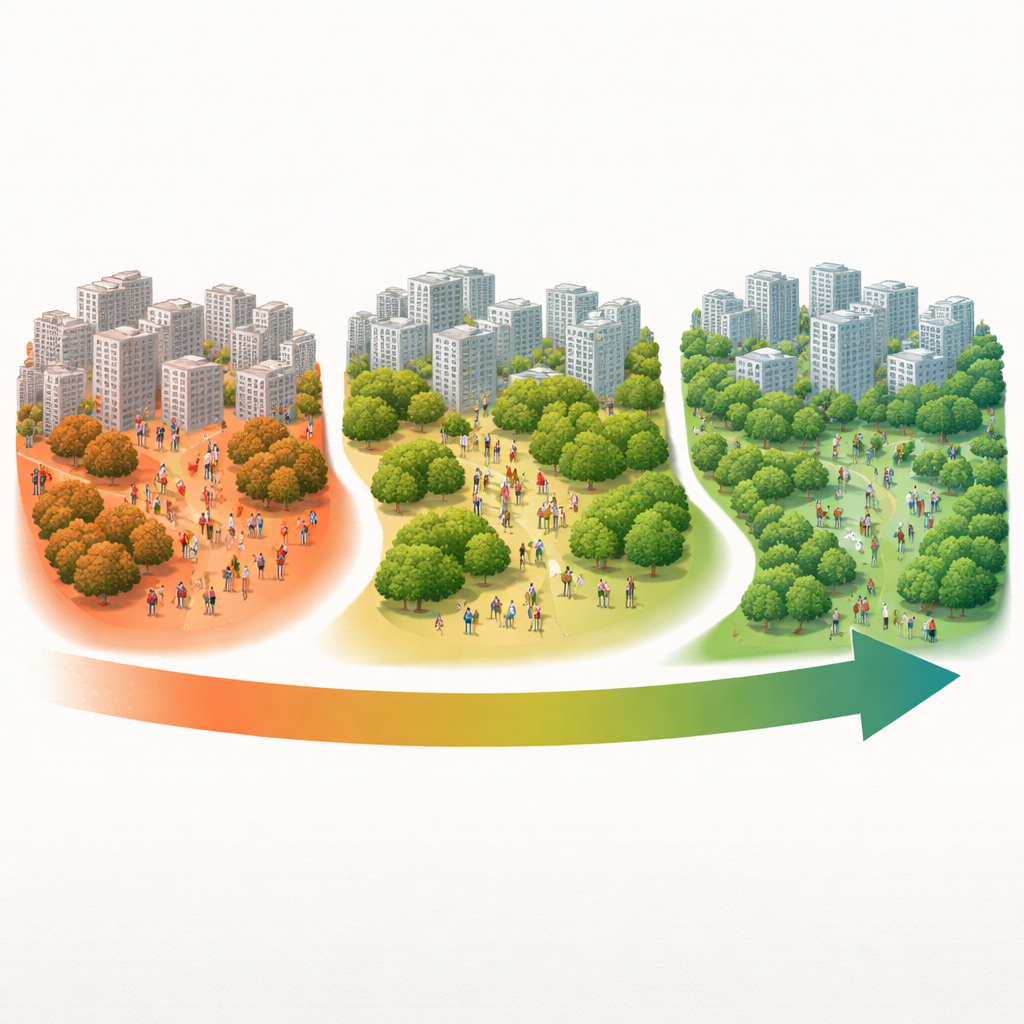
Urban green space in this study includes parks, roadside trees, and other vegetated areas within city boundaries. Earlier research shows that greenery can clean the air, cool overheated districts, lower stress, and encourage exercise, all of which should support stronger immune systems. Yet parks and plazas also draw people together. In cities where green areas are scarce and fragmented, a new park can become a magnet for crowds from surrounding neighborhoods. The authors find that in these early stages of greening, people pack into a few attractive spots, increasing close contact and, with it, the chance for respiratory infections to pass from person to person.
From risky window to protective shield
To untangle these competing forces, the researchers used advanced spatial models on data from 2003 to 2023. They tracked how green coverage in each city related to the incidence of chronic infectious diseases locally and in neighboring cities. The results reveal a non-linear pattern, which the authors describe as a shift from a “pathogenic window” to “resilience.” When overall green coverage is low, adding more green space is linked to higher levels of chronic infection, mainly because of crowding in a few shared spaces. As coverage grows into a middle range, the harmful and helpful effects roughly balance. Once greenery passes a higher tipping point—about one-third of the built-up area—the relationship reverses: green space now strongly suppresses infections. At this stage, connected belts of trees and parks improve air quality, stabilize local climate, and support healthier daily routines, all of which make communities more resistant to long-term infections.
Health benefits that spill across city borders
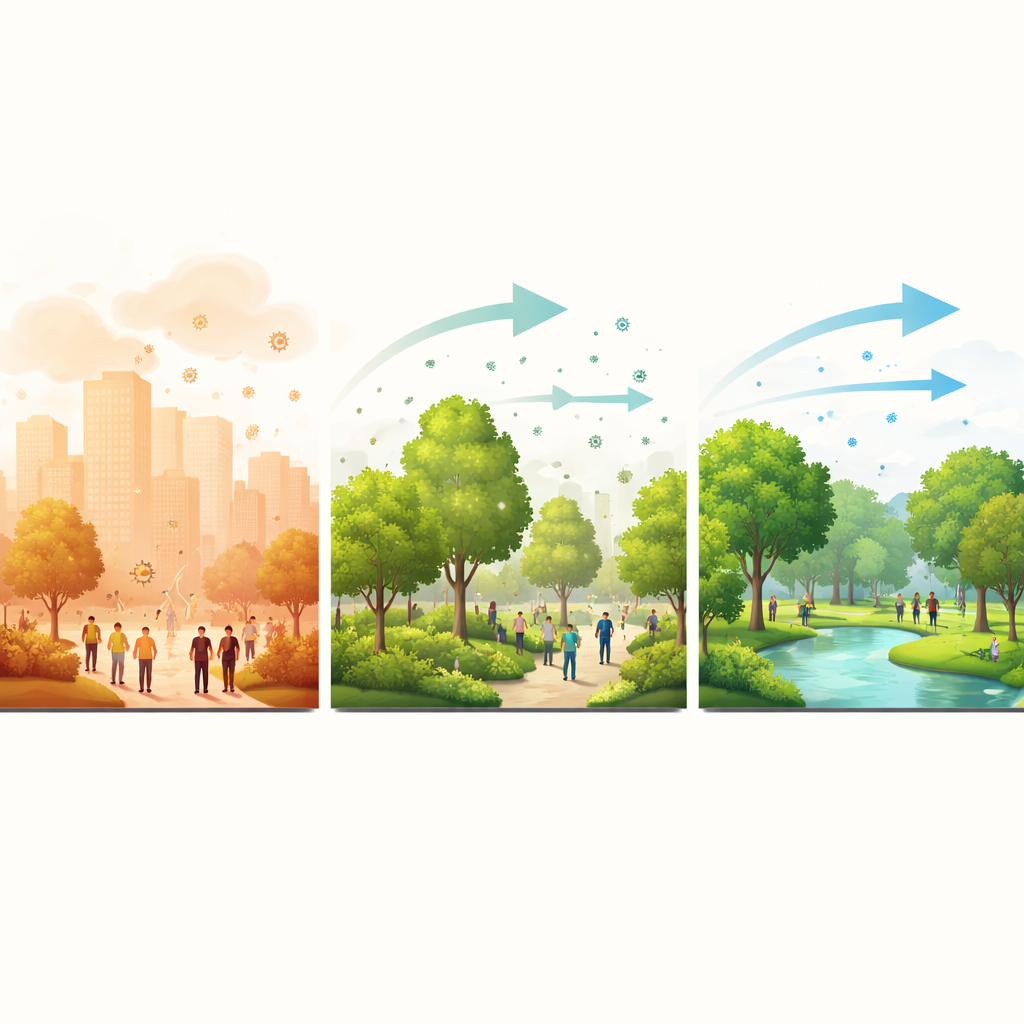
The study also shows that what happens in one city does not stay there. Using a model that accounts for how nearby places influence one another, the authors detect strong “spillover” effects. Well-planned green systems in economically linked cities help reduce chronic infections beyond their own limits, likely by improving regional air conditions, offering shared recreation destinations, and spreading planning ideas and health policies. At the same time, inadequate or uneven greening can push risks onto less favored areas, highlighting how environmental planning can either ease or deepen health inequalities depending on how fairly green resources are distributed.
What this means for building healthier cities
For non-specialists, the main takeaway is that planting a few more trees in an already crowded city is not enough—and can even be counterproductive—if green space remains too limited and uneven. The study suggests that city planners and health officials should think in phases. In cities with very little green, early efforts need to go hand in hand with careful design to avoid crowding, good hygiene in parks, and strong health services. Over the longer term, the goal should be continuous, well-connected green networks that cover a substantial share of the urban landscape and link across city borders. Once that scale is reached, green space becomes not just decoration, but part of the city’s immune system, helping populations withstand the steady pressure of chronic infectious diseases.
Citation: Zheng, X., Wang, Y., Wang, B. et al. Non-monotonic effects and spatial spillovers of urban green space on chronic infectious disease dynamics in China. Sci Rep 16, 10355 (2026). https://doi.org/10.1038/s41598-026-41543-x
Keywords: urban green space, chronic infectious diseases, public health, China cities, environment and health