Clear Sky Science · en
Statistical optimization of high specific surface area zinc oxide synthesized through carbonation and thermal decomposition using response surface methodology
Why tiny surfaces matter
From cleaning dirty water to powering next‑generation electronics, much of modern technology depends on what happens at the surface of materials. Zinc oxide is a workhorse ingredient in sunscreens, sensors, catalysts and antimicrobial coatings, and it works best when its surface is as large and accessible as possible. This paper explores a practical way to turn ordinary zinc oxide powder into a highly porous form with far more surface area, and shows how statistical tools can be used to fine‑tune the recipe so that manufacturers can reliably get the structure they want.
Turning simple powder into a porous sponge
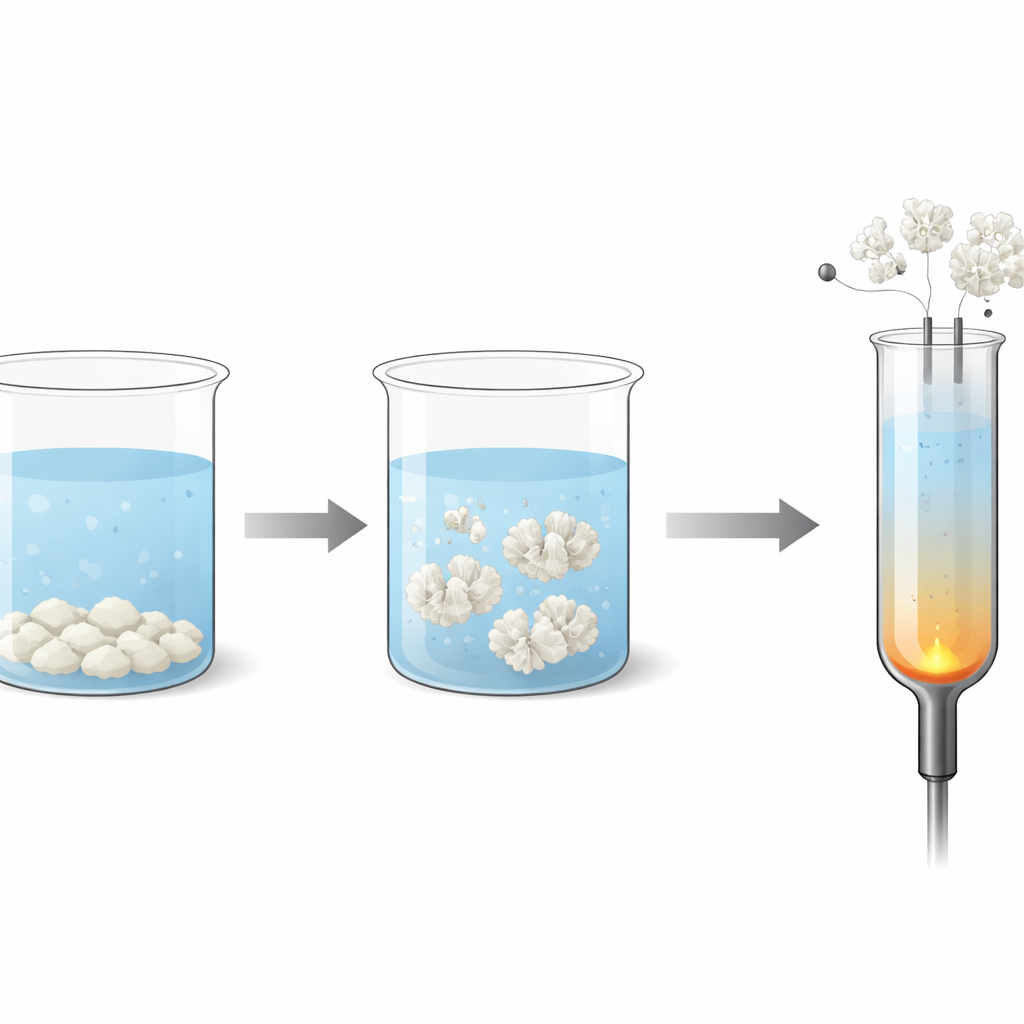
The researchers start with a common, low‑surface‑area zinc oxide powder and transform it through a two‑step chemical journey carried out in water. First, they bubble carbon dioxide gas through a warm, slightly alkaline suspension of the powder. In this environment, zinc ions released from the solid react with dissolved carbon dioxide to form an intermediate compound called hydrozincite, which grows as plate‑like particles. Second, they gently heat this precursor so that it breaks down back into zinc oxide, but now with a network of pores where carbon dioxide and water once sat. The end product is a light, sponge‑like zinc oxide with a surface area several times larger than the starting material.
Testing many recipes with smart statistics
Instead of changing one ingredient at a time, the team used a strategy borrowed from industrial process design called response surface methodology. They chose four knobs to turn: the temperature of the suspension, how long carbon dioxide was bubbled through it, the starting alkalinity (pH) and how much water was used per gram of solid. With just 27 carefully planned experiments, this design allowed them to see not only how each factor affected surface area, but also how combinations of factors helped or hurt. The statistical model they built could predict the surface area of the final zinc oxide for any setting within the tested ranges, and matched real measurements with only about seven percent error.
Finding the sweet spot for roughness
The analysis revealed that higher temperatures, longer carbonation times and more concentrated suspensions generally encouraged the growth of a more open, porous structure, up to a point. For example, raising the temperature tended to increase surface area by helping new particles form without clumping too soon, but pairing very high temperature with long reaction times or very high pH produced denser grains that reduced porosity. Likewise, using too much water diluted the system and cut down on the number of tiny nuclei that seed the porous network. By balancing these effects, the model pointed to an optimal recipe: a moderately hot suspension, a relatively short carbonation step, a mildly alkaline pH and a fairly high water‑to‑solid ratio.
Peering into the pores
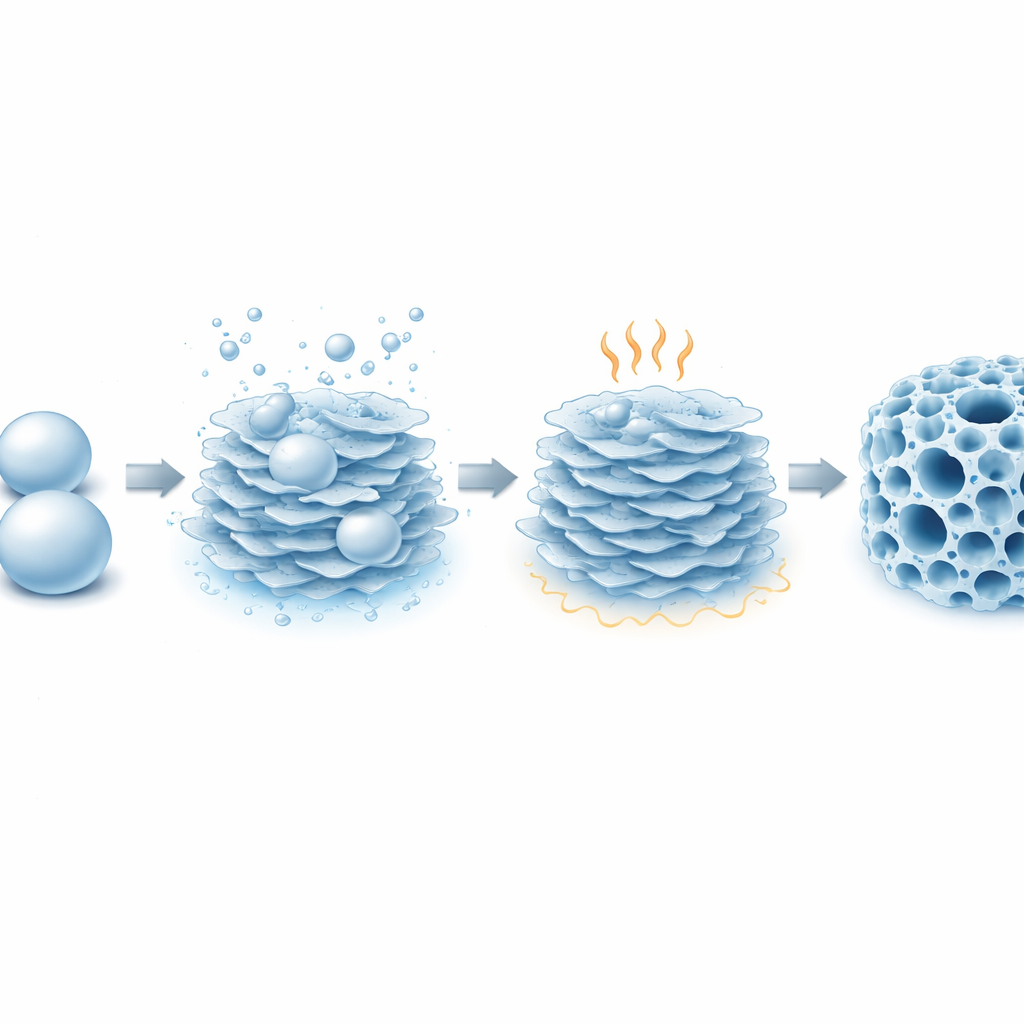
To confirm that this optimized recipe really produced the desired structure, the team turned to a suite of characterization tools. Gas adsorption measurements showed the hallmark signature of a material rich in mesopores—channels tens of billionths of a meter wide—along with larger voids that ease the flow of molecules in and out. Electron microscope images revealed that the zinc oxide was built from interconnected plates, leaving slit‑like spaces between them. X‑ray and infrared tests traced the conversion from hydrozincite to crystalline zinc oxide, demonstrating that the intermediate fully decomposed while the plate‑like framework survived, locking in the porous architecture.
What this means for real‑world uses
In everyday terms, the study shows how to turn a fairly ordinary industrial powder into a finely textured version that behaves more like a microscopic sponge. By using a simple recipe—carbon dioxide, water, a mild base and moderate heating—and guiding it with statistical optimization, the authors created zinc oxide with much more usable surface for the same amount of material. That extra surface can boost performance in applications where molecules must touch and react with zinc oxide, such as pollutant removal, chemical catalysis or antimicrobial coatings. Just as important, the statistical approach offers a blueprint for other industries that want to tune the inner structure of materials efficiently and reproducibly, without endless trial and error.
Citation: Kouchenani, G., Rezaei, M. Statistical optimization of high specific surface area zinc oxide synthesized through carbonation and thermal decomposition using response surface methodology. Sci Rep 16, 10471 (2026). https://doi.org/10.1038/s41598-026-41539-7
Keywords: zinc oxide nanoparticles, high surface area materials, carbonation synthesis, porous nanomaterials, statistical process optimization