Clear Sky Science · en
Green corrosion protection of copper in chloride media with Calystegia sepium extract using electrochemical and GC-MS/MS analyses
Turning a Problem Weed into a Helpful Shield
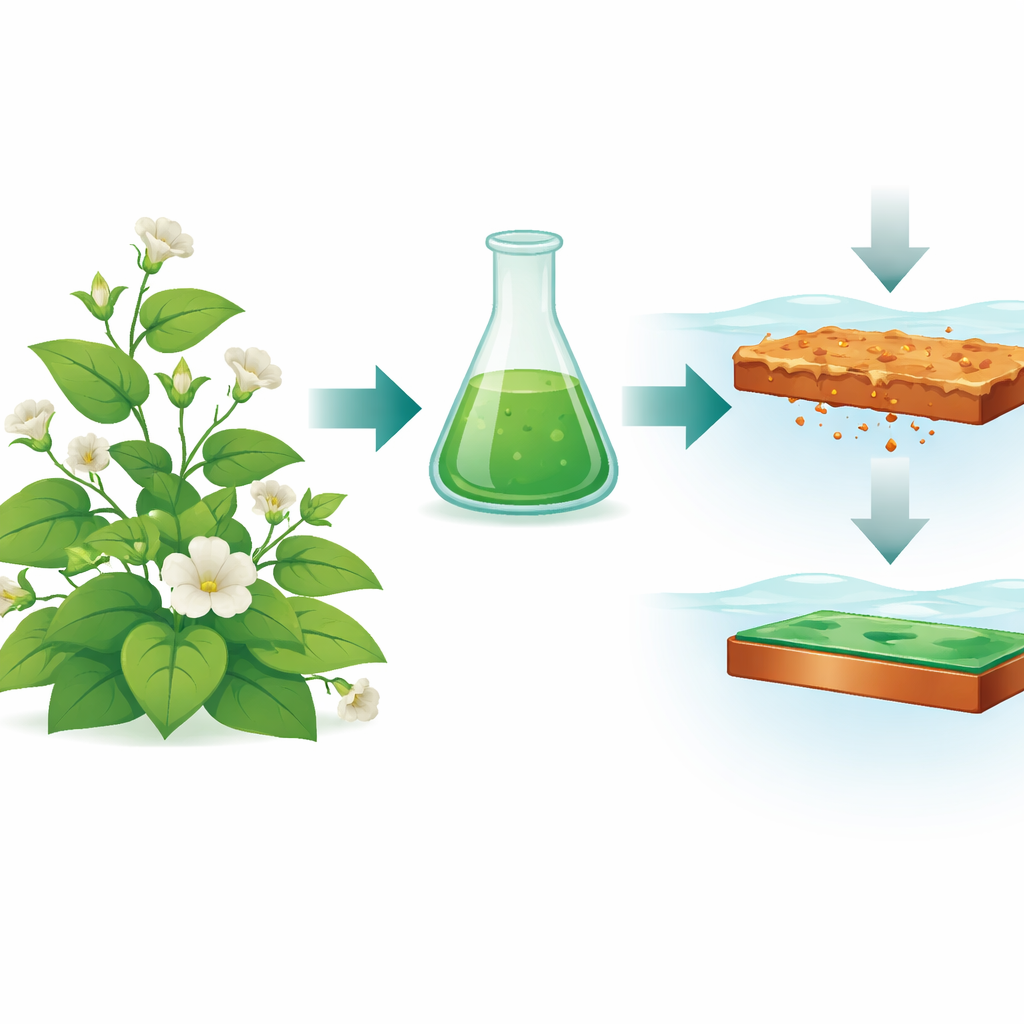
Many of the metals that power modern life quietly dissolve away when they meet salty water, costing industries trillions of dollars and sometimes causing dangerous failures. Copper, used in everything from power plants to electronics, is especially vulnerable in chloride-rich environments such as seawater or cooling systems. This study explores an unexpected ally against that damage: hedge bindweed, a notoriously invasive weed. By transforming this plant into a green protective coating for copper, the researchers show how an agricultural nuisance can become a sustainable tool for corrosion control.
Why Copper Needs Protecting
Copper is prized for its excellent ability to conduct heat and electricity, which makes it a workhorse material in wiring, heat exchangers, and pipelines. Under everyday conditions, it naturally forms a thin oxide film that slows down rust-like processes. In salty, neutral water—like solutions containing sodium chloride (NaCl)—that film can be disrupted. Chloride ions attack the surface, help form unstable copper–chloride species, and trigger localized damage known as pitting. Traditional organic chemicals can slow this corrosion by sticking to the metal and blocking attack, but many are toxic or difficult to handle, driving a search for safer, plant-based alternatives.
From Stubborn Vine to Protective Potion
Hedge bindweed is infamous among farmers for its fast growth, deep roots, and tendency to choke crops, yet it is rich in natural organic molecules. The researchers collected hedge bindweed, cleaned and dried it, and prepared a water-based extract to keep the process simple and environmentally friendly. They then exposed polished copper samples to a salty solution similar in strength to seawater, with and without different amounts of this plant extract. To probe what was happening at the metal surface, they used standard electrochemical tests that track how easily corrosion reactions proceed, alongside simple weight-loss measurements that show how much copper is actually dissolved over time.
How the Green Barrier Works
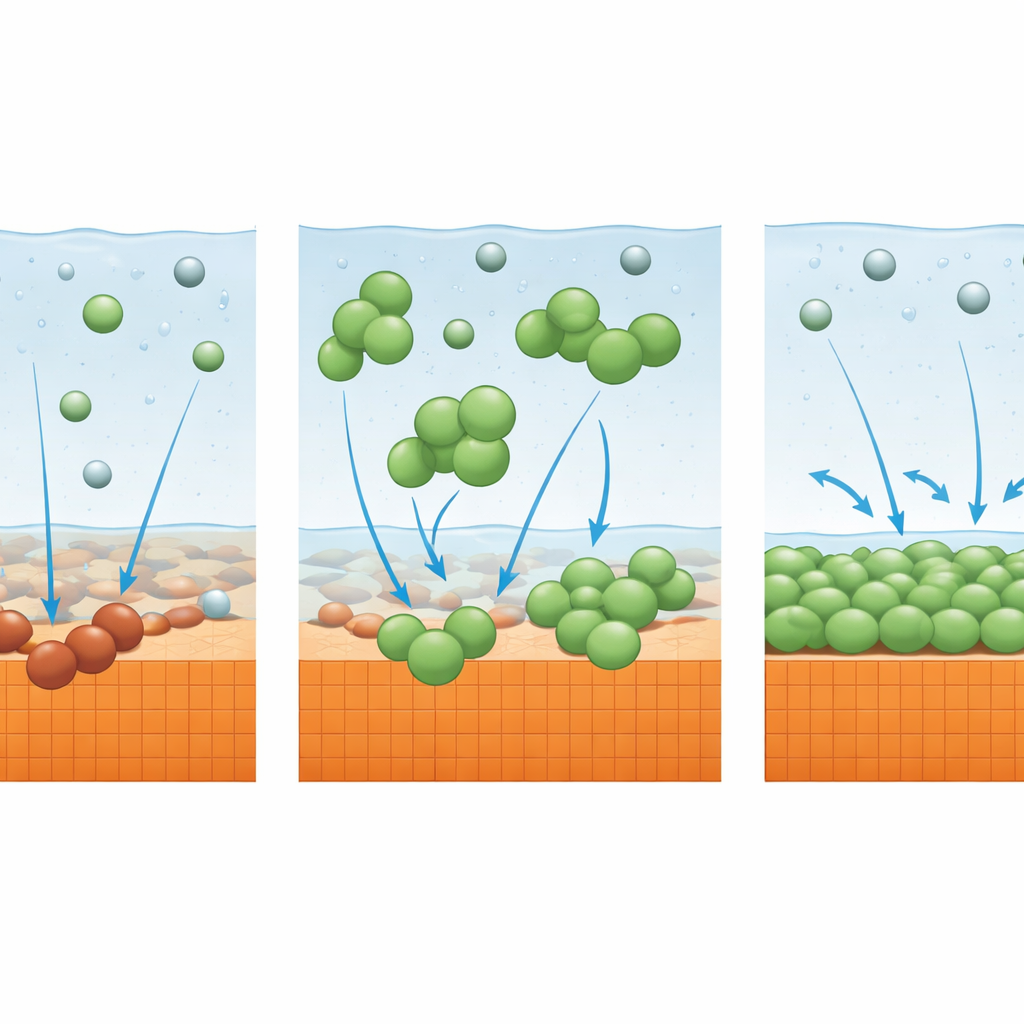
The tests revealed that the hedge bindweed extract greatly slows copper’s breakdown. At an optimal concentration, the extract cut the corrosion rate by more than 90 percent, as confirmed independently by both electrochemical measurements and direct weight loss. Even at higher temperatures—up to about 65 °C—the extract still provided roughly half of its room-temperature protection, suggesting it is robust enough for warm industrial systems. Detailed chemical analysis of the extract identified several small molecules containing oxygen, nitrogen, and sulfur atoms, features known to help such compounds attach to metal surfaces. Additional experiments showed that adding the extract increased the apparent energy barrier for corrosion and lowered the electrical “capacitance” at the copper–solution interface, both signs that a protective organic film was forming.
Seeing the Protective Film in Action
Microscope images offered a direct before-and-after view of the copper surface. In plain salt solution, the metal quickly developed rough patches and dark spots characteristic of corrosion damage. When the hedge bindweed extract was present, the surface remained far smoother and showed far fewer defects, even after a full day in the salty environment. Elemental analysis of the surface backed this up: untreated samples accumulated chloride and oxygen from corrosive attack, whereas treated samples showed more carbon and oxygen linked to the plant-based film that covered the metal. Further modeling of how the extract molecules arrange themselves suggested that they form a single, fairly uniform layer on the copper, held mainly by physical attraction rather than strong chemical bonds—a reversible but effective blanket that keeps aggressive ions at bay.
What This Means for Industry and the Environment
Altogether, the study demonstrates that a simple water extract of hedge bindweed can act as a highly efficient, thermally tolerant, and largely physical shield against copper corrosion in salty media. For a lay audience, the bottom line is straightforward: an unwanted weed can be repurposed into a protective “skin” for copper equipment, cutting material loss and helping prevent failures. Because the extract is water-based and derived from a plant that is already a widespread nuisance, it offers a double benefit—reducing reliance on hazardous synthetic inhibitors while turning an agricultural problem into a useful industrial resource.
Citation: Alemnezhad, M.M., Hosseini, M. & Panahimehr, M. Green corrosion protection of copper in chloride media with Calystegia sepium extract using electrochemical and GC-MS/MS analyses. Sci Rep 16, 11267 (2026). https://doi.org/10.1038/s41598-026-41526-y
Keywords: copper corrosion, green inhibitors, plant extracts, saline environments, surface protection