Clear Sky Science · en
The diagnostic value of CDC20 for malignant pleural effusion of lung adenocarcinoma
Why this chest fluid matters
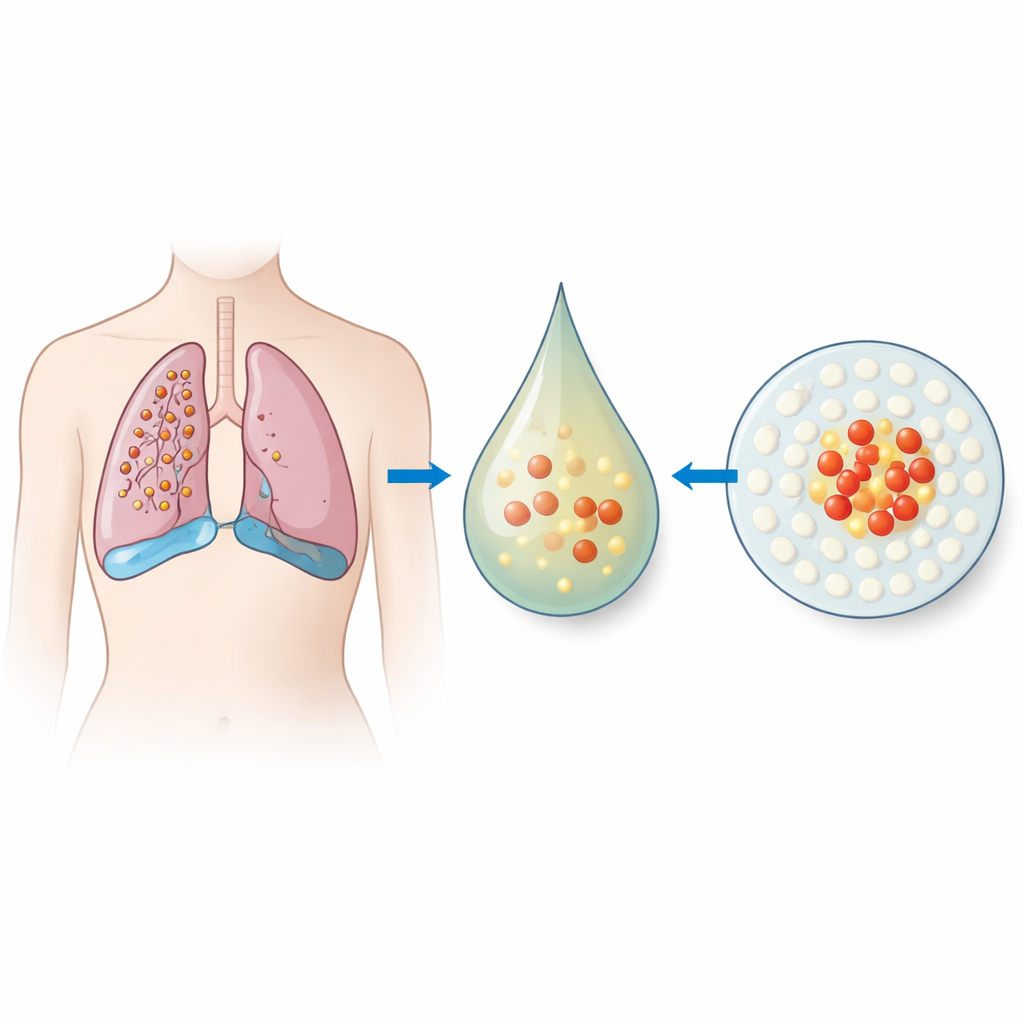
Lung cancer remains one of the deadliest cancers worldwide, in large part because it is often found late and spreads quickly. Many patients with lung adenocarcinoma, the most common type of lung cancer, develop a buildup of fluid around the lungs known as pleural effusion. When this fluid is caused by cancer cells, it signals an advanced stage of disease and a poor outlook. Doctors can test this fluid to look for cancer cells, but existing methods sometimes miss them. This study explores whether a molecule called CDC20 can serve as a new, more reliable marker to tell malignant (cancer-related) pleural effusion from harmless fluid and to help diagnose lung adenocarcinoma more accurately.
Searching for a clearer signal
The researchers began by mining a large public cancer database (GEPIA), which compares gene activity in tumors and nearby normal tissue. They looked for genes that were consistently more active in lung adenocarcinoma than in healthy lung. One standout was CDC20, a protein that helps control how cells divide. Earlier work had linked CDC20 to many cancers, but its importance in lung adenocarcinoma and in the fluid around the lungs had not been fully explored. The team found that CDC20 levels were not only higher in lung adenocarcinoma tissue than in normal lung, but that high CDC20 was also associated with worse patient survival, hinting that it might be both a diagnostic and prognostic clue.
Testing tumor tissue in the lab
To confirm what the database suggested, the team examined real-world samples: tumor tissue and nearby normal lung from 92 patients with lung adenocarcinoma who had undergone surgery. Using a staining technique that highlights specific proteins under the microscope, they measured CDC20 alongside two well-known lung adenocarcinoma markers, TTF-1 and Napsin A. CDC20 was strongly and frequently present in tumor tissue but rarely in normal lung. Its pattern of expression closely matched that of TTF-1 and Napsin A. Moreover, high CDC20 levels were linked to larger tumors, more advanced local spread (higher T stage), and invasion into the pleura, suggesting that tumors expressing more CDC20 tend to be more aggressive.
From tumor to fluid: spotting cancer cells in effusion
Because pleural effusion is so common in advanced lung adenocarcinoma, the authors next asked whether CDC20 could help distinguish malignant pleural effusion from fluid caused by noncancerous conditions. They collected pleural effusion samples from 30 patients with lung adenocarcinoma and 30 patients without cancer. After processing the fluid into cell blocks and staining them, they again measured CDC20 along with TTF-1 and Napsin A. CDC20 was positive in 90% of the cancer-related effusions but in only about 7% of noncancerous effusions, a sharp contrast that points to strong diagnostic potential. TTF-1 and Napsin A also performed well, but CDC20’s pattern was particularly striking and aligned with what was seen in the tumor tissue.
How well does the new marker perform?
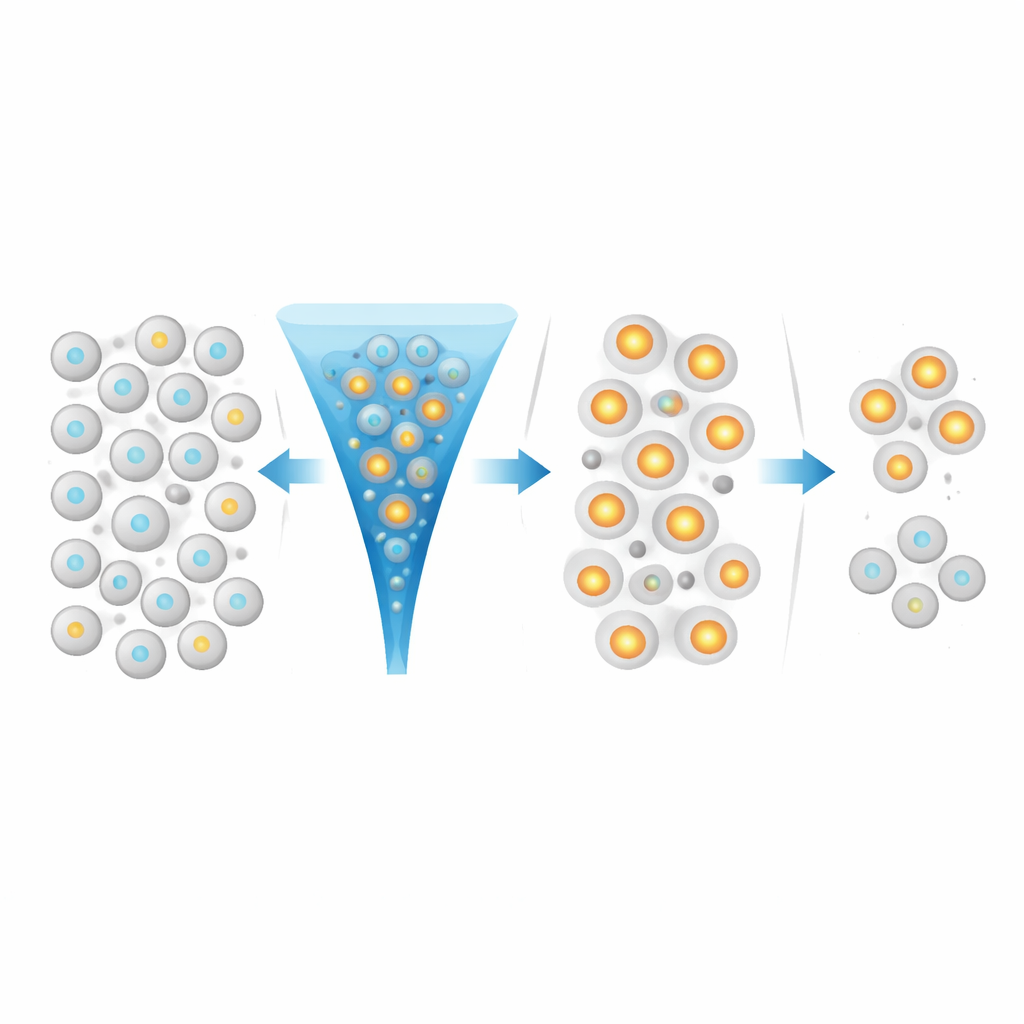
To put numbers on diagnostic accuracy, the team used receiver operating characteristic (ROC) curves, a standard way to compare how well tests distinguish disease from non-disease. For identifying lung adenocarcinoma in pleural effusion, the area under the curve for CDC20 was higher than for TTF-1 or Napsin A, indicating that CDC20 was the single strongest test among the three in this dataset. CDC20 showed both high sensitivity (correctly picking up most malignant cases) and high specificity (rarely flagging noncancerous fluid as malignant). While the sample size was modest and larger studies are needed to confirm the findings, combining CDC20 with established markers may further boost confidence in diagnoses made from pleural fluid.
What this could mean for patients
For people with suspected lung adenocarcinoma, especially those too frail for invasive lung biopsies, having a reliable test based on pleural fluid alone could make diagnosis faster, safer, and more accurate. This work suggests that CDC20 is a promising addition to the diagnostic toolkit, useful in both tissue biopsies and pleural effusion samples. By helping pathologists more clearly distinguish malignant from benign fluid and by reflecting tumor aggressiveness, CDC20 could guide earlier and more tailored treatment decisions. The authors argue that with further validation, CDC20 may become both a valuable diagnostic marker and a potential treatment target in the fight against lung cancer–related pleural effusion.
Citation: Liu, Y., Wu, L., Chen, J. et al. The diagnostic value of CDC20 for malignant pleural effusion of lung adenocarcinoma. Sci Rep 16, 11786 (2026). https://doi.org/10.1038/s41598-026-41506-2
Keywords: lung adenocarcinoma, malignant pleural effusion, CDC20 biomarker, pleural fluid cytology, cancer diagnostics