Clear Sky Science · en
Properties and nitrate leaching mitigation effect of thermally treated biomass-a case study of tropical and subtropical islands
Turning Farm Waste into Island Protection
Many tropical and subtropical islands depend on tourism and fishing, yet their soils often leak nitrogen fertilizer into groundwater, rivers, and coral reefs. This study explores whether common farm and tree wastes—such as leftover sugarcane stalks and pruned branches—can be gently baked into new soil additives that keep valuable nutrients in farmers’ fields while protecting surrounding waters from pollution.
Why Island Soils Lose So Much Fertilizer
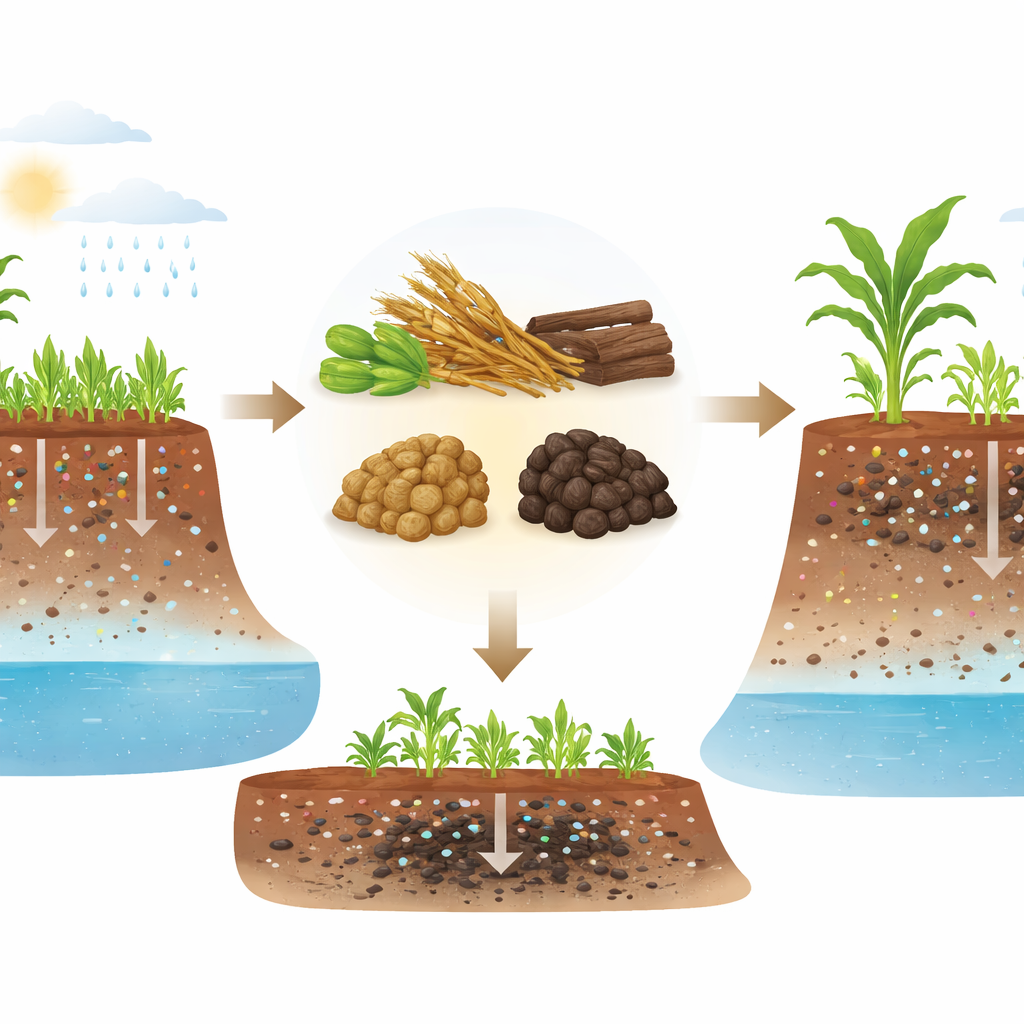
On warm, rainy islands, soils are typically old, acidic, and poor in nutrients. Farmers compensate by applying large amounts of nitrogen fertilizer. In these hot, wet conditions, organic matter breaks down quickly and nitrate, a mobile form of nitrogen, is easily washed downward and out of reach of plant roots. This nitrate can accumulate in drinking water and fuel algal blooms that threaten coral reefs and coastal ecosystems. At the same time, islands often waste local organic materials such as manure, sugarcane residue, and tree trimmings that could potentially help rebuild soil health.
Cooking Plant Waste into New Soil Helpers
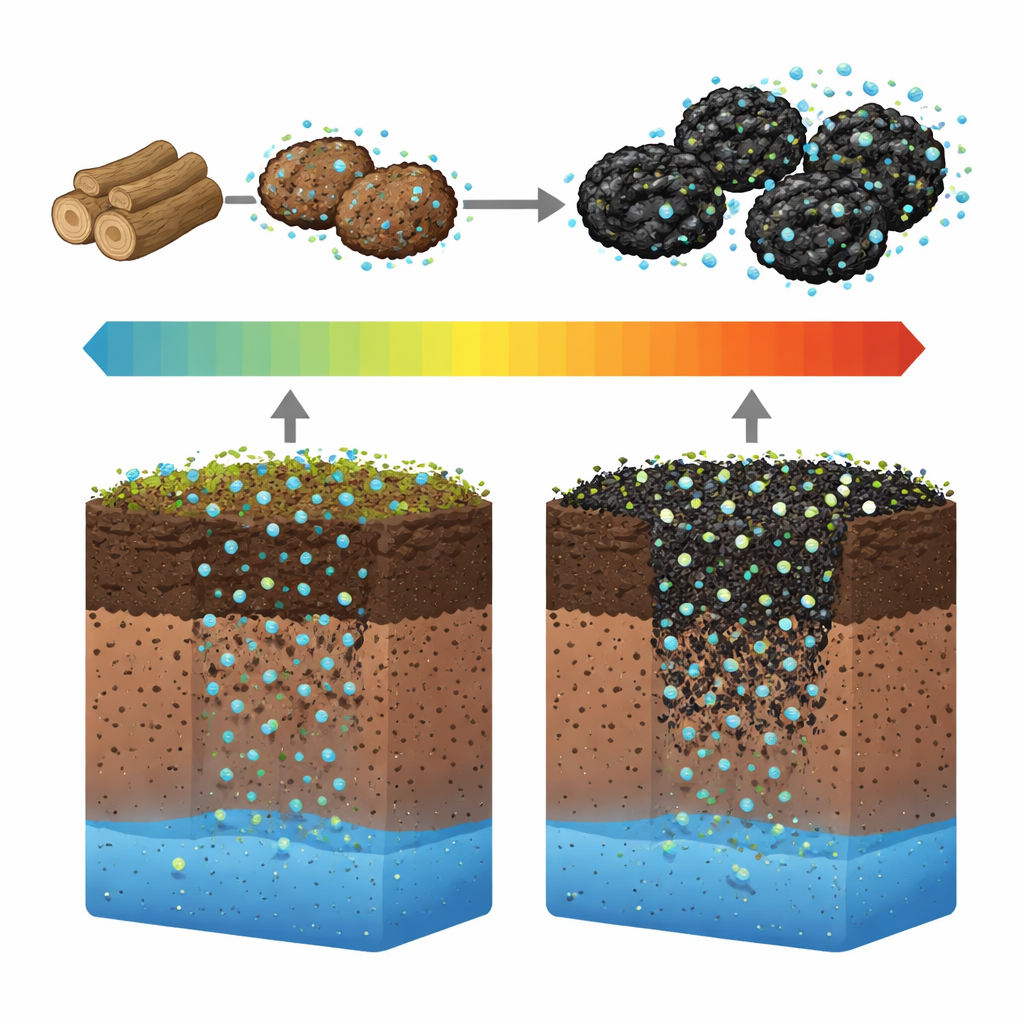
The researchers focused on two plentiful materials from a subtropical island in Japan: sugarcane residue (bagasse) and branches of a common coastal tree, Alexandrian laurel. They heated these materials in low-oxygen conditions over a wide range of temperatures, from just above the boiling point of water to red-hot levels of 800 °C. At lower temperatures, the material became what is known as torrefied biomass—still rich in organic matter but slightly altered. At higher temperatures, it turned into biochar, a charcoal-like substance with a hard, carbon-rich structure and many tiny pores. The team carefully measured how heating changed each material’s acidity, surface chemistry, and internal surface area.
What Happens to Nitrate in Water
The first set of tests asked a simple question: if you shake these treated materials with a nitrate-rich solution, do they pull nitrate out of the water? The answer was yes—but only modestly, and mainly for the gently heated materials around 200–300 °C. These low-temperature products removed roughly 3–7% of the nitrate. They were slightly acidic and still carried many water-loving chemical groups, which helped attract nitrate. In contrast, the very hot, charcoal-like materials sometimes even released a little nitrate, likely because they contained some nitrate of their own.
What Happens to Nitrate in Soil Columns
The second set of experiments was closer to real farming. The researchers mixed each treated material into acidic island soil, packed the soil into columns, and then poured nitrate solution through from the top, mimicking rainfall and fertilizer. They tracked how much nitrate emerged at the bottom over time. Remarkably, only the most intensely heated material—the 800 °C biochar from either feedstock—noticeably reduced nitrate loss, cutting leaching by about 30%. These very hot products had the largest internal surface area and a highly porous, graphite-like structure that physically trapped nitrate as water flowed past, slowing its escape into deeper layers and groundwater.
Short-Term Limits and Long-Term Promise
Not all treated materials were helpful in this short experiment. Those produced below about 500 °C did not reduce nitrate leaching; some even made it worse, likely because they could pick up nitrate but could not hold it tightly as water moved through the soil. Yet these same lower-temperature products retained more slowly decomposing organic matter than raw plant waste, suggesting they might improve soil fertility and structure over years rather than days. The authors note that as these materials age in soil, their chemistry and pore structure will change, potentially enhancing their benefits.
What This Means for Island Communities
For now, the study shows that extremely hot, porous biochar made from local farm and tree waste can significantly slow nitrate loss from acidic island soils, while low-temperature products mainly offer short-term nitrate capture in water and possible long-term soil improvement. Turning leftover sugarcane stalks and tree branches into carefully heated carbon materials could therefore become a double win: cutting fertilizer pollution that threatens groundwater and coral reefs, and creating value from resources that would otherwise be discarded. However, the authors emphasize that longer field trials are needed to find the best treatment temperatures and application methods for real farms on tropical and subtropical islands.
Citation: Hamada, K., Nakamura, S. & Yoshida, T. Properties and nitrate leaching mitigation effect of thermally treated biomass-a case study of tropical and subtropical islands. Sci Rep 16, 11861 (2026). https://doi.org/10.1038/s41598-026-41496-1
Keywords: nitrate leaching, biochar, torrefied biomass, tropical island soils, sugarcane residue