Clear Sky Science · en
Pilot tests of continuous gas extraction with improved L-shaped wells from mining and goaf areas
Turning a Mine Hazard into a Clean Energy Source
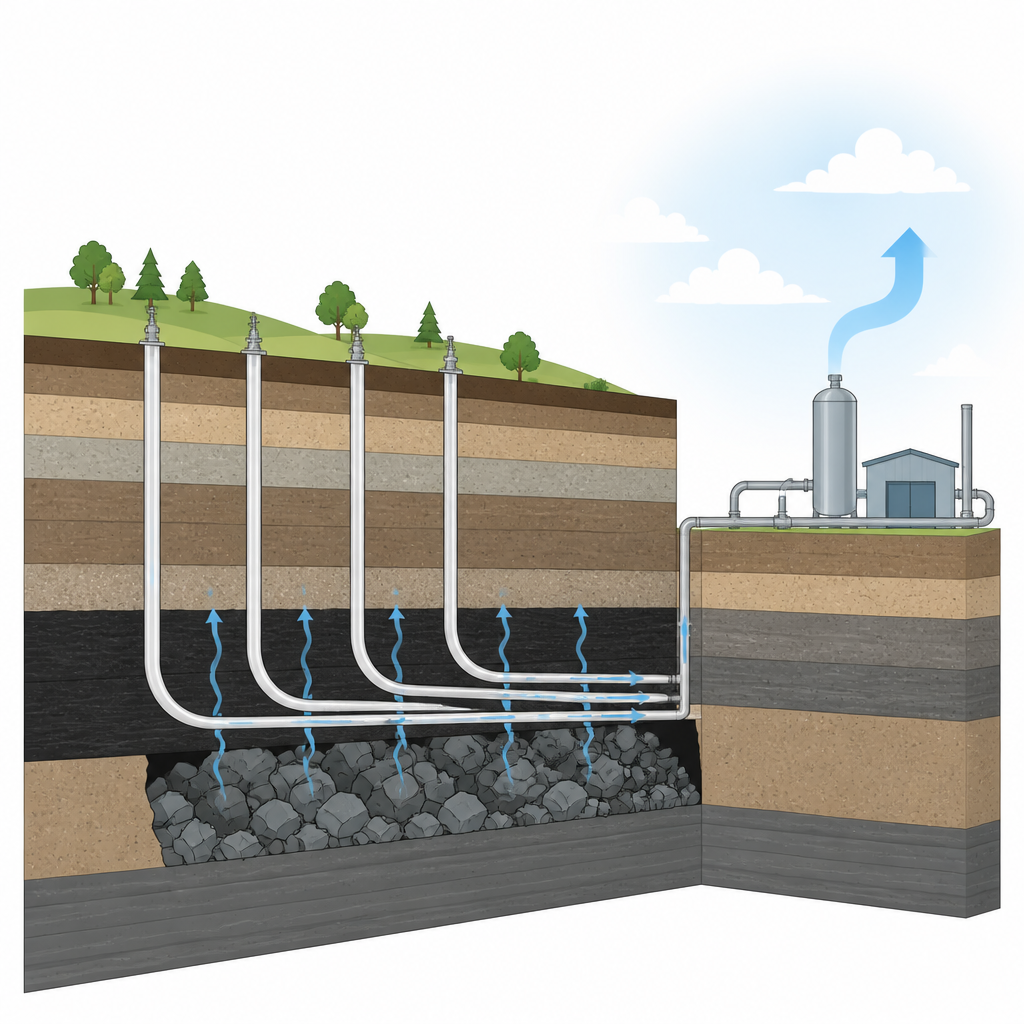
Coal mines do not just produce coal. They also release large amounts of methane, a flammable gas that can cause deadly explosions underground and adds to climate change when it escapes into the air. This study explores how a special type of curved "L-shaped" well drilled from the surface can be redesigned so that a single well safely and efficiently collects methane both while a coal seam is being mined and long after the miners have left.
Why Methane in Coal Mines Matters
For coal producing regions, methane is both a danger and a resource. High gas levels can trigger sudden outbursts in working tunnels and feed slow burning fires in old, collapsed areas known as goafs. At the same time, this methane is essentially natural gas that can be used as fuel if it is captured. Many countries already drill boreholes into coal seams before and after mining to reduce risks and collect gas, but results vary widely. In China, for example, average output per gas well is low and stable production often lasts only a short time, which makes investments hard to recover.
How L Shaped Wells Are Supposed to Help
L shaped wells are drilled downward from the surface and then steered horizontally so that their long side runs above or near the coal seam. This layout lets a single well reach across an entire mining panel without interfering with underground operations. In theory, such wells can drain methane from disturbed rock above the active mining face, and later from the broken rock and leftover coal in the goaf. The authors examined three such wells in major coal mines in Shanxi Province, tracking how much gas they produced first during mining and then after the panels were abandoned.
What Went Wrong in Real Mines
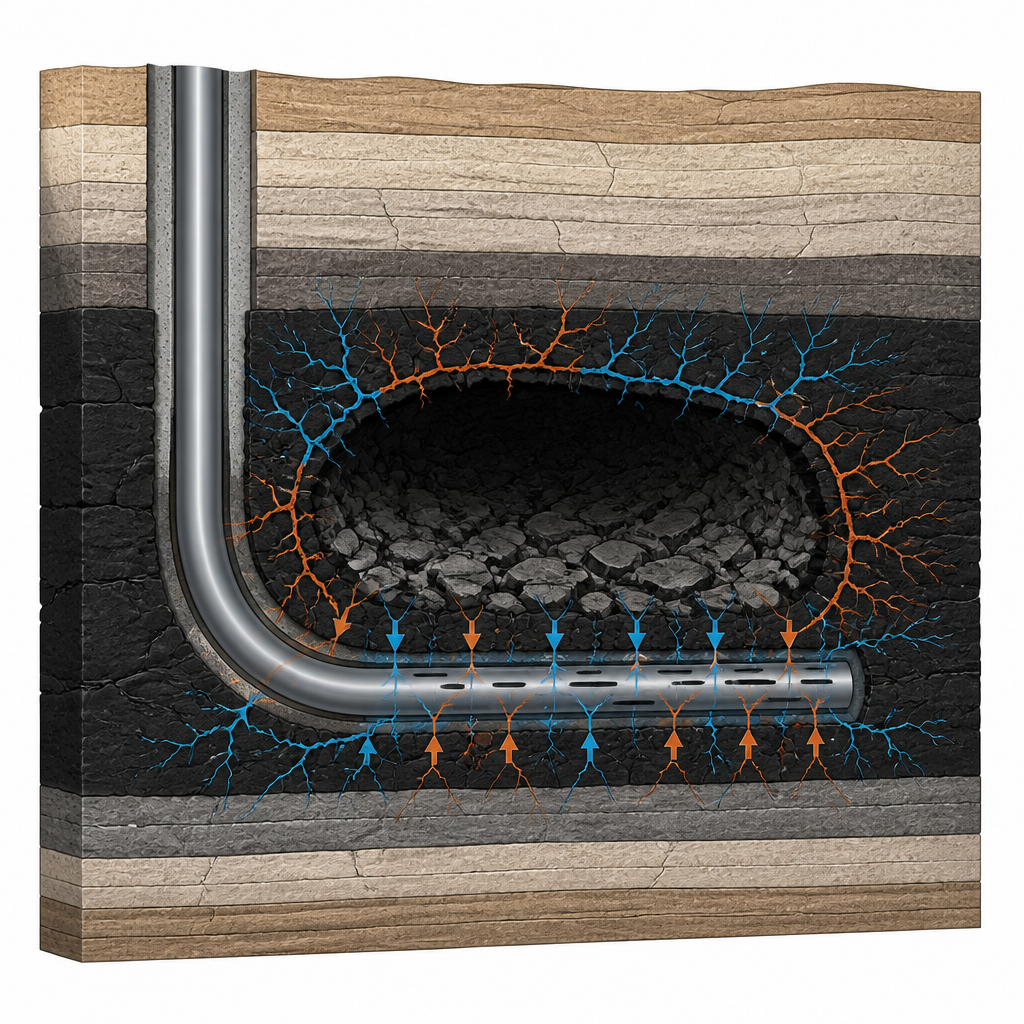
Only one of the three test wells produced enough methane over time to be considered profitable. Detailed measurements showed that in the two disappointing cases, the horizontal section of the L shaped well sat too far above the network of cracks that actually carry gas released from the coal. Without a stable flow path between the broken coal and the well, gas production quickly dropped. In addition, the lower part of each well was left as an open hole without cement to support it. As the overlying rock settled and shifted after mining, this section became prone to bending and deformation, which further disrupted gas flow and shortened the useful life of the wells.
Designing One Well for Two Jobs
Drawing on observations, rock mechanics theories and computer simulations, the researchers proposed a new "one well, two purposes" design. Instead of a simple single horizontal line, the long section is split into two parts placed at different heights within the main gas carrying fracture zone above the mined seam. About 60 percent of the length lies in the lower part of this zone, where cracks are wide and gas flows easily, while the remaining 40 percent sits slightly higher in stronger rock that better resists squeezing and collapse. The wellbore itself is upgraded to a large diameter, two section structure with careful segmented or multi stage cementing in the vertical and inclined parts, while a slotted screen pipe in the horizontal section allows gas to enter without leaving the rock unsupported.
Keeping Gas Flowing from Mine to Goaf
The improved layout is matched with a flexible pumping strategy. During active mining, when gas pressure is high and fresh cracks are forming, strong negative pressure is applied at the surface to draw methane out quickly and keep the working face safe. After mining stops and the goaf settles, suction is reduced to avoid pulling in too much air while still capturing the slower ongoing release of gas from leftover coal and nearby seams. Because the same L shaped well now stays mechanically stable and well connected to the fracture network, it can produce for around six years, covering both phases with an overall gas recovery comparable to that of separate wells designed for each stage.
What This Means for Mines and the Environment
In simple terms, the study shows that careful placement and construction of L shaped wells can turn a short lived, risky gas control tool into a long term, dual use energy well. By sitting the horizontal section where rock fractures actually carry methane, and by reinforcing the wellbore so it survives ground movement, a single well can safely drain gas while miners work and continue to capture methane from the goaf afterward. This makes better use of drilling budgets, helps prevent explosions and fires, and cuts methane emissions from coal mining, turning more of a hidden hazard into a useful fuel.
Citation: Zhang, J., Qin, Y., Li, G. et al. Pilot tests of continuous gas extraction with improved L-shaped wells from mining and goaf areas. Sci Rep 16, 16597 (2026). https://doi.org/10.1038/s41598-026-41494-3
Keywords: coalbed methane, L shaped wells, coal mining, methane drainage, goaf gas