Clear Sky Science · en
A high-performance onboard computing architecture for autonomous satellite mission planning
Smarter Satellites Above Our Heads
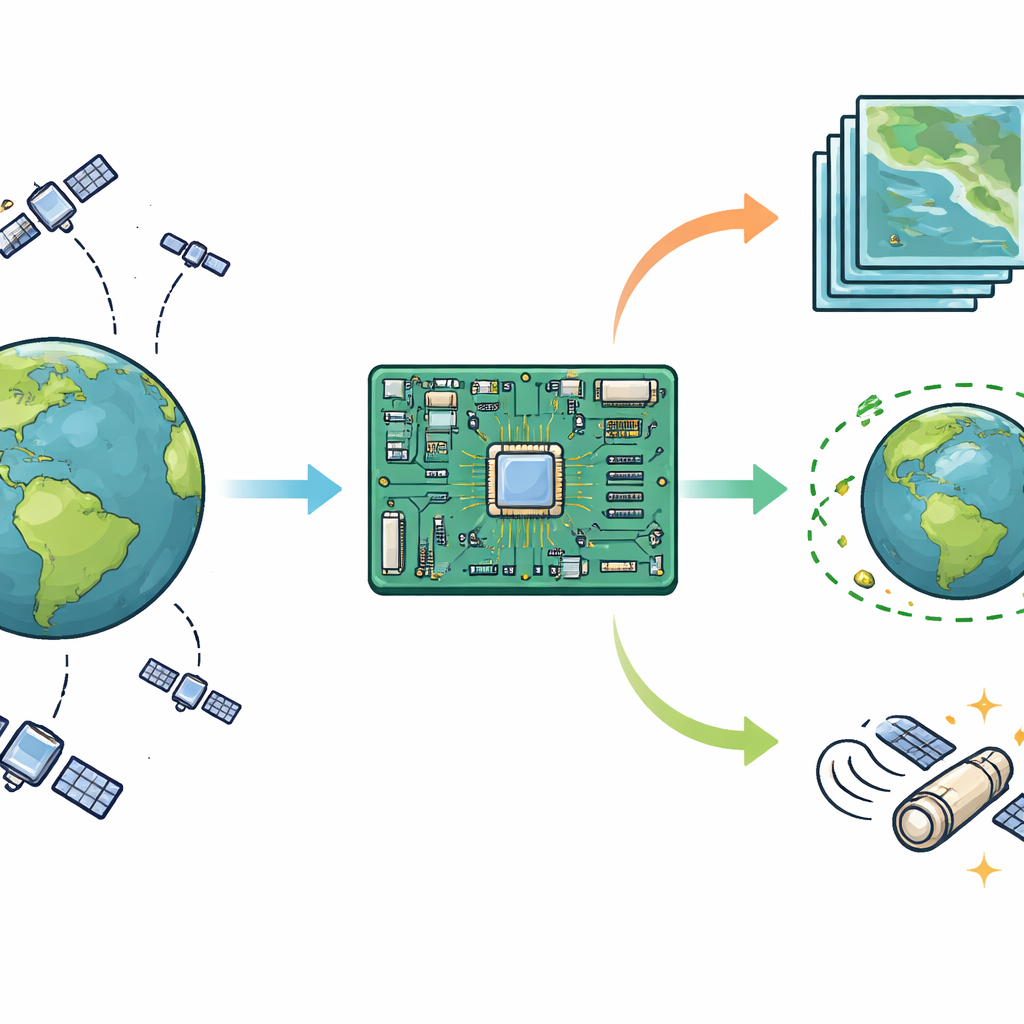
Many of the satellites watching Earth today still depend heavily on people on the ground to tell them what to do and when to do it. That slow back‑and‑forth can be a problem when clouds spoil a photo, debris threatens a spacecraft, or a new event on Earth needs quick attention. This paper describes a new kind of onboard "brain"—called a Mission Planning Board—that lets satellites plan more of their own work in space, react faster to change, and keep themselves healthy over years in a harsh environment.
Why Satellites Need to Think for Themselves
Traditional satellites follow detailed daily plans sent from the ground. Because contact windows are short and signals take time, this approach struggles with surprises: an unexpected storm blocking the view, a failed sensor, or a piece of debris drifting into a flight path. At the same time, modern missions collect huge volumes of data and may fly in groups, further complicating scheduling. Researchers around the world have developed clever planning algorithms to cope with this complexity, but most of them assume there is a powerful, flexible computer on board—which many current satellites lack. The work in this paper tackles that missing piece by building a practical, space‑ready computer platform tailored to autonomous planning.
A New Onboard Brain Built for Space
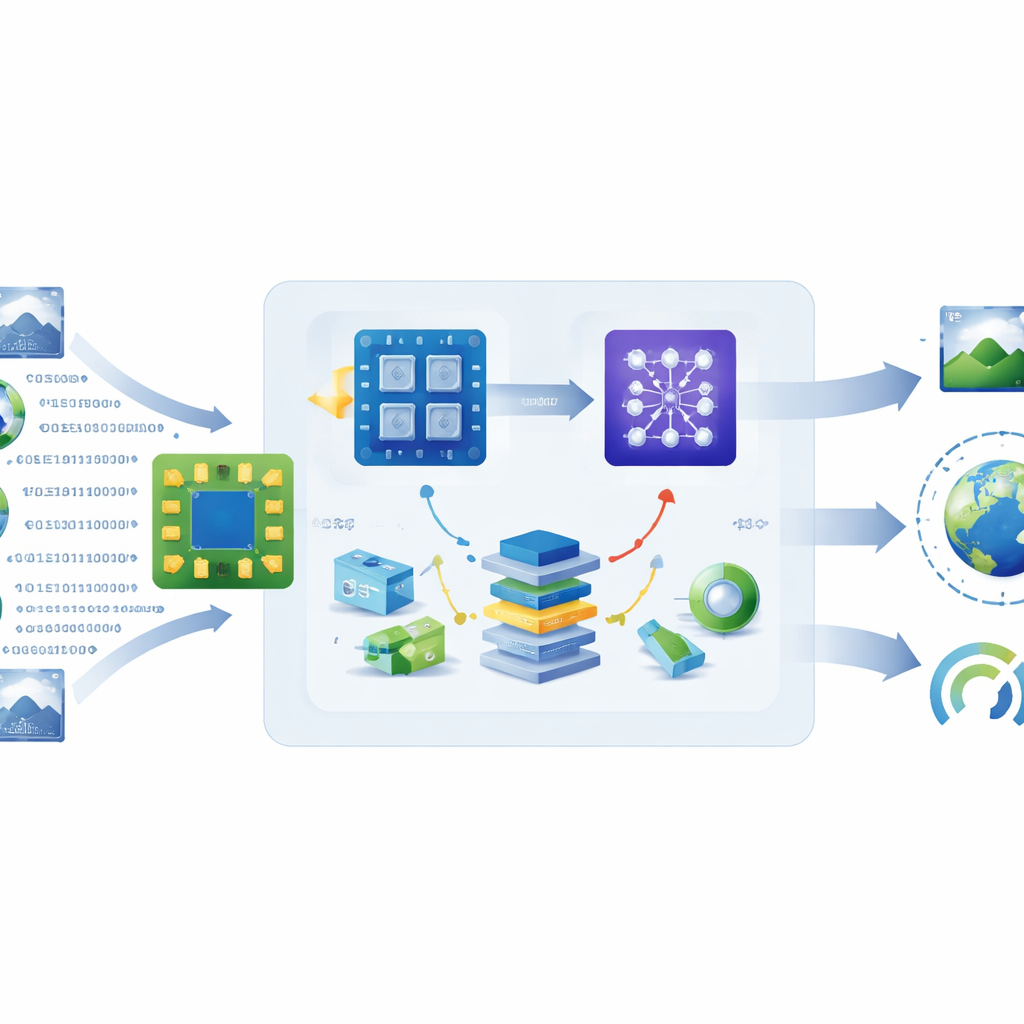
The Mission Planning Board (MPB) is a single circuit board designed to slide into a satellite like any other avionics card, but it packs the capabilities of a small server. At its heart is a radiation‑tolerant high‑performance processor chosen after detailed comparisons with several alternatives. Around it are fast memory chips, solid‑state storage, a flexible interface chip, and a dedicated "intelligent" accelerator for heavy data‑processing tasks. The board connects to the rest of the spacecraft through standard links, so it can receive images, health readings, and timing signals, then return decisions and status reports. Although it could run many different planning methods, the focus here is on making the underlying hardware solid, adaptable, and ready for long missions.
Software Built Like a Stack of Apps
To make this hardware useful, the authors designed a layered software structure that resembles a smartphone more than a traditional satellite computer. A small startup program first checks redundant memories, brings the system to life, and loads the main operating system, which is based on Linux. Above this, a collection of applications handles commands, telemetry, health monitoring, mission planning, and data fusion, all installed and updated as separate "apps". A programmable interface chip takes care of the most time‑critical links—such as high‑speed data streams and precise timing pulses—so that the main processor can concentrate on higher‑level decisions. This separation means new planning or analysis tools can be added in orbit without redesigning the core system.
Staying Reliable in a Hostile Environment
Space is unforgiving: electronics face radiation that can flip bits in memory, wide temperature swings, and the impossibility of hands‑on repair. The MPB addresses this with multiple layers of protection. Key components are radiation‑tolerant; working memory and long‑term storage use error‑correcting codes; vital software such as the boot program and operating system is stored in three independent copies and checked by “two‑out‑of‑three” voting before use. Communication paths are duplicated so the system can switch buses if one fails. The board’s physical design manages heat through conductive paths and coatings, while electromagnetic shielding and careful grounding reduce interference with other spacecraft systems.
Putting the Board to the Test
The team ran the Mission Planning Board through a mix of lab and environmental tests intended to mimic real missions. On the bench, the board repeatedly booted, loaded its operating system, executed applications, and exchanged data with simulated satellite computers and payloads over different types of links. It then endured temperature cycling and vacuum conditions similar to those in orbit, continuing to function without unexpected resets or corrupted data. Early in‑orbit use has shown similarly stable behavior, though the authors deliberately avoid claiming specific gains for any one planning algorithm. Instead, they show that the platform can host such algorithms reliably.
What This Means for Future Space Missions
In plain terms, this work is about giving satellites a stronger, more trustworthy computer foundation so that smarter software can run on top of it. The Mission Planning Board does not, by itself, decide the "best" way to schedule images or dodge debris; rather, it supplies the processing power, flexible interfaces, and safety features needed for those advanced methods to work in space over many years. By carefully balancing speed, robustness, and the ability to update software in orbit, the design offers a template for the next generation of more independent, responsive satellites that can do more with fewer instructions from Earth.
Citation: Rao, J., Zhao, W., Ma, M. et al. A high-performance onboard computing architecture for autonomous satellite mission planning. Sci Rep 16, 10082 (2026). https://doi.org/10.1038/s41598-026-41483-6
Keywords: autonomous satellites, onboard computing, mission planning, spacecraft reliability, Earth observation