Clear Sky Science · en
Isolated para-aortic lymph node recurrence from colorectal cancer treated by radiotherapy: a systematic review and meta-analysis
Why this hidden comeback matters
Most people know that colorectal cancer can come back in the liver or lungs, but far fewer have heard of its return in a deep cluster of abdominal glands called para-aortic lymph nodes. When this rare "comeback" happens, doctors have had little evidence to guide treatment. This study pulls together the best available data to ask a practical question that matters to patients and clinicians alike: can carefully targeted radiation to these nodes control the disease and help people live longer, without causing serious harm?
A rare but serious type of return
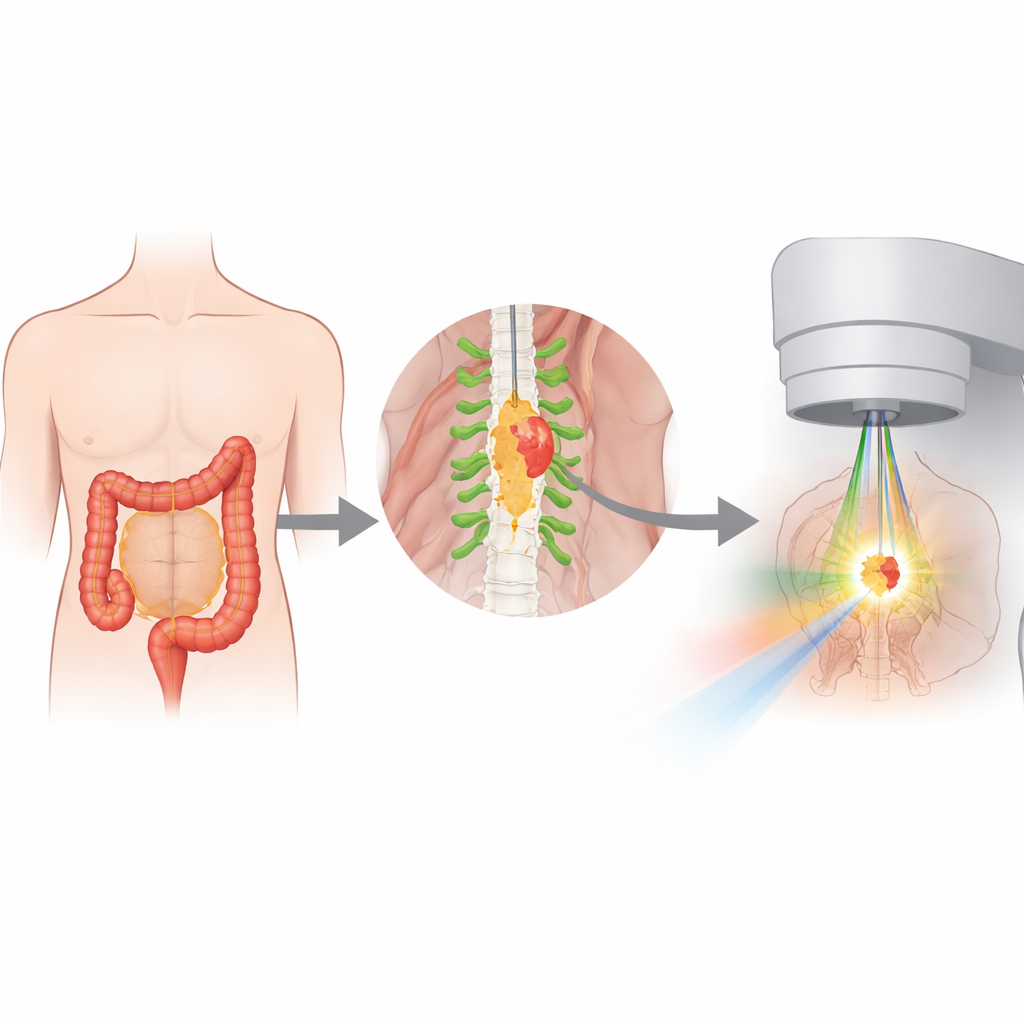
Colorectal cancer is one of the world’s most common cancers and a leading cause of cancer death. Even after apparently successful surgery, up to half of patients may eventually face a recurrence. Most relapses appear in the liver, lungs, or nearby lymph nodes. A much smaller group—about 1–2% after curative surgery—develops new cancer deposits in para-aortic lymph nodes, which lie deep in the back of the abdomen alongside the main body artery. Because these nodes sit near vital blood vessels and organs, they are difficult to reach surgically and there is no widely accepted playbook for how best to treat them.
Looking across global experience
To answer this gap, the authors performed a systematic review and meta-analysis, a method that combines results from multiple studies to see overall patterns. They combed four major medical databases up to April 2025 and carefully filtered more than 2,000 papers down to just five that specifically reported on adults with isolated para-aortic lymph node recurrence from colorectal cancer treated with modern forms of radiotherapy. Together, these studies covered 220 patients treated between 2002 and 2023 in several countries and used techniques such as three-dimensional conformal radiotherapy, intensity-modulated radiotherapy, stereotactic body radiotherapy, and, in some cases, carbon-ion beams.
What the numbers say about control and survival
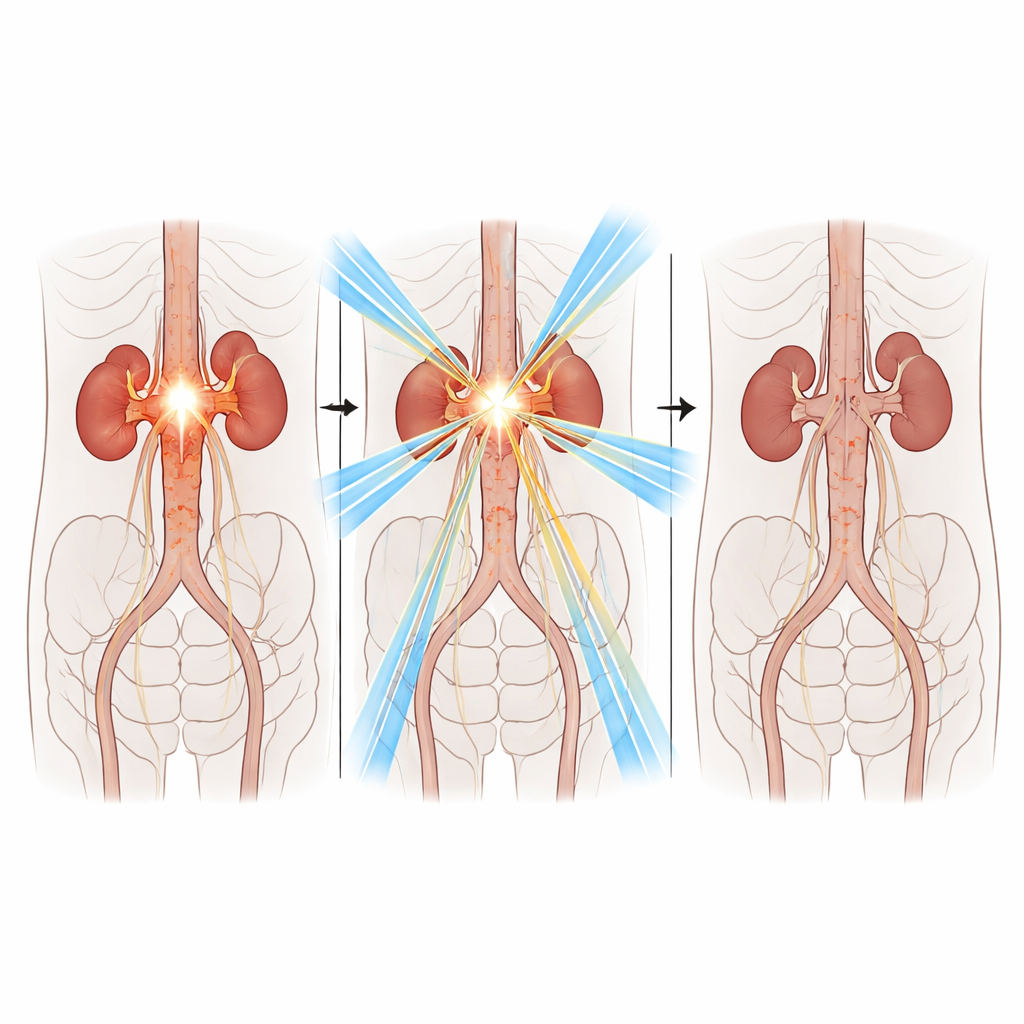
Across these studies, most patients received substantial radiation doses tailored to the small target area, often alongside chemotherapy. When the authors pooled the data, they found that local control—the chance the treated lymph nodes did not grow back—was high: about 84% of patients had no growth in the treated area at one year, and about 69% remained locally controlled at three years. Overall survival was also encouraging for such an advanced situation: roughly 91% of patients were still alive at one year and 64% at three years. The disease did continue to spread elsewhere in many cases, with only about one in five patients free from any progression at three years, underscoring that this form of relapse is a warning sign of a system-wide threat even when the visible spots are few.
Who might benefit most and how safe is it?
By examining patterns across studies, the researchers also searched for clues about which patients fared better. Interestingly, those whose original tumor was in the rectum tended to live longer than those with colon primaries, and women showed better long-term control of disease spread than men. Paradoxically, patients whose original cancers were at an earlier local stage sometimes did worse once this specific type of recurrence appeared, a reminder that biology can be more important than initial stage labels. On the safety side, modern radiotherapy looked reassuring: severe short-term side effects occurred in about 8% of patients—most often blood count changes or digestive upset—and serious long-term problems were extremely rare, with only a single reported case of a severe bowel blockage.
What this means for patients and care teams
For people facing a deep-seated, isolated return of colorectal cancer in para-aortic lymph nodes, these findings offer a measure of hope and clarity. While this situation still signals a high risk that cancer may appear elsewhere, precisely delivered radiation can very often control the known spots, with survival at three years approaching that reported for complex surgery but with far fewer serious complications. The authors conclude that, for carefully selected patients within a broader plan that also addresses the whole body with systemic treatment, modern radiotherapy is a realistic, organ-sparing option that can extend life and keep local symptoms at bay.
Citation: Chun, SJ., Kim, H., Jung, J. et al. Isolated para-aortic lymph node recurrence from colorectal cancer treated by radiotherapy: a systematic review and meta-analysis. Sci Rep 16, 11980 (2026). https://doi.org/10.1038/s41598-026-41478-3
Keywords: colorectal cancer, lymph node recurrence, radiotherapy, oligometastatic disease, meta-analysis