Clear Sky Science · en
Characterizing alterations in attention networks under high mental workload
Why Too Much Mental Work Matters
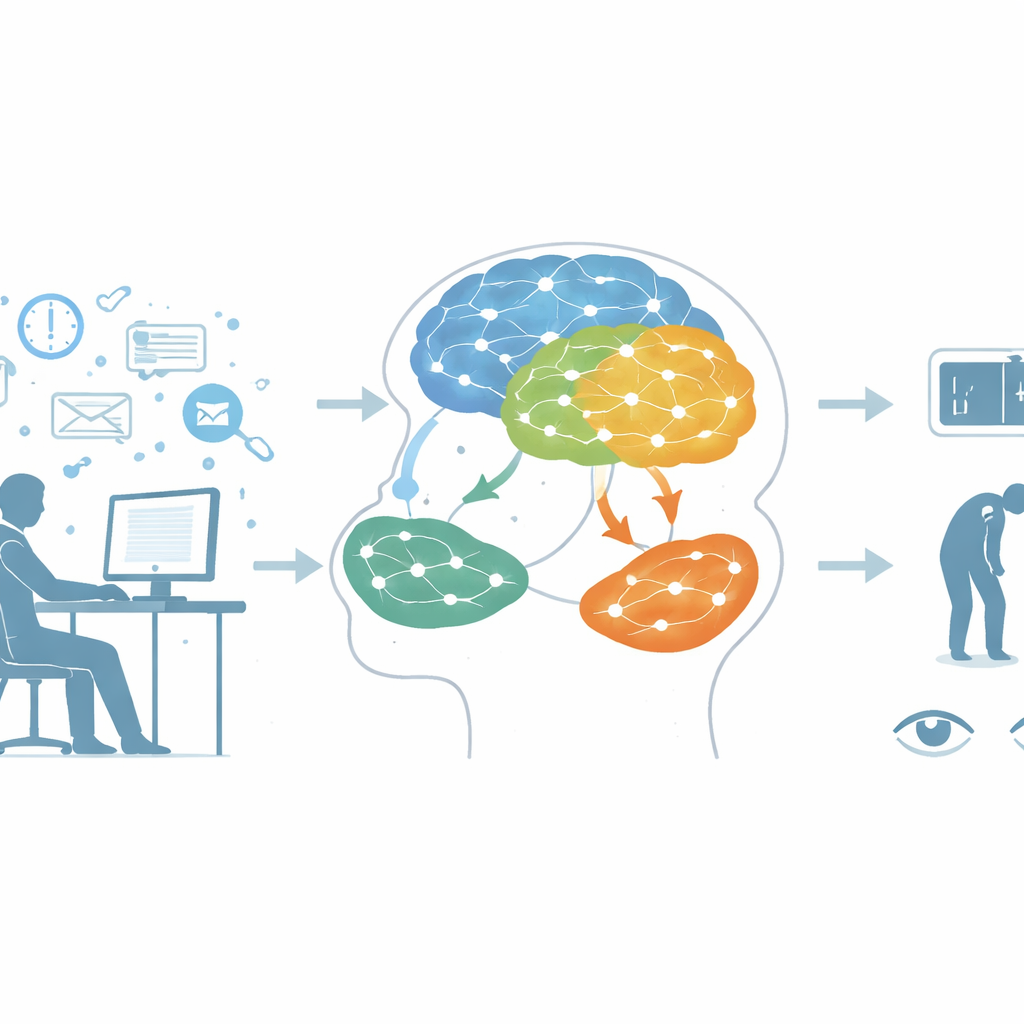
Many people today—pilots, surgeons, drivers, soldiers, and even students—spend long stretches of time doing demanding mental tasks under time pressure. We know this can make us feel tired and distracted, but it is less clear how exactly such high mental workload reshapes the brain’s attention systems. This study set out to measure how intense, prolonged thinking affects different parts of our attention, how this shows up in eye movements, and how people themselves feel while under strain. The findings help explain why performance can suffer even when we try our best to stay focused.
How the Researchers Tested Mental Strain
The team worked with 92 healthy young men from a medical university. To push their mental limits, they used a demanding computer-based challenge called the 1-back Stroop task. In this task, volunteers had to juggle several things at once: remembering where items had appeared, ignoring misleading word meanings, and paying attention to color and position under strict time limits. The task lasted an hour without real breaks, which is long enough to drain mental energy. Before and after this high workload period, the participants completed another task that measures three key attention systems—staying alert, shifting focus, and handling conflicting information. At each stage the researchers also asked how tired, stressed, bored, and distracted the participants felt.
Looking Inside the Brain’s Attention Systems
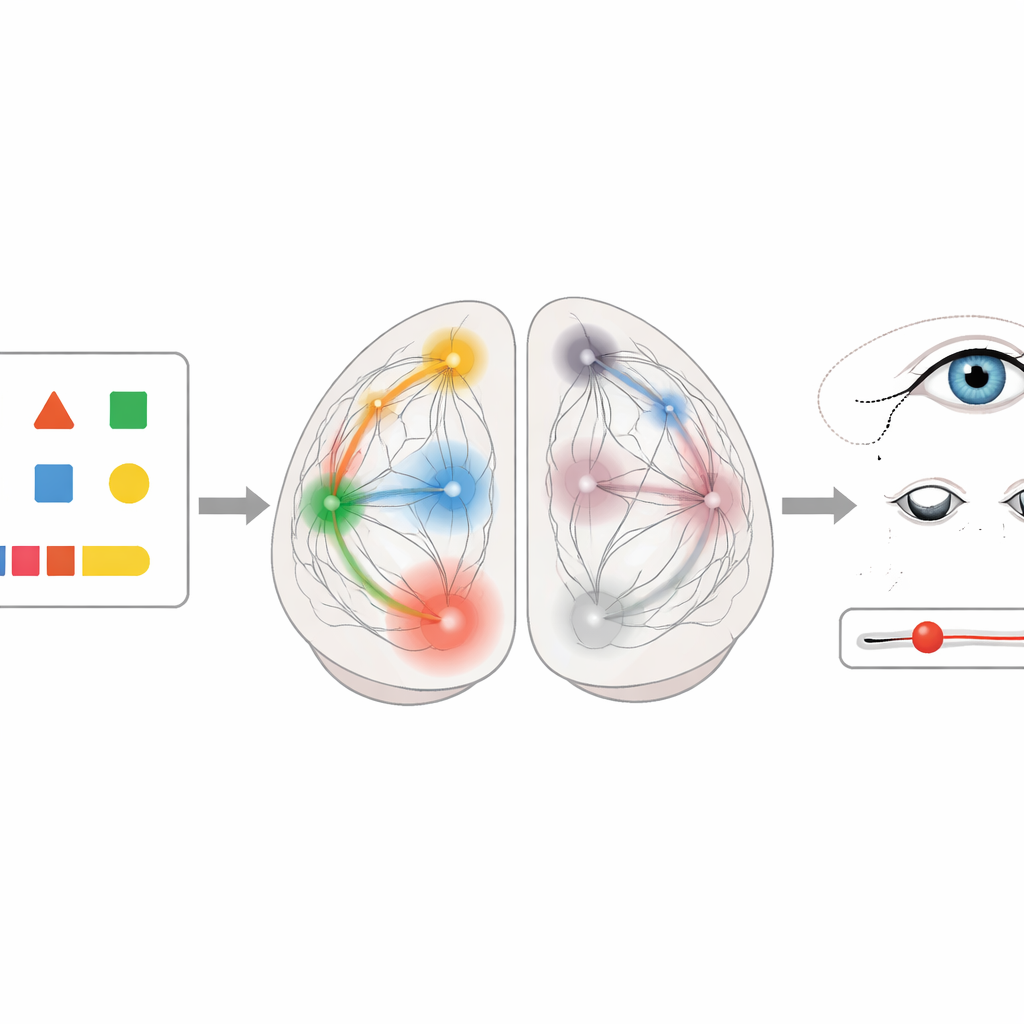
The attention test, called ANT-R, separates attention into three parts. The “alert” system keeps us ready to detect new events. The “orienting” system helps us shift and lock our gaze on important things. The “executive control” system helps us resolve conflicts, such as when the center arrow points one way but surrounding arrows point the other. By comparing reaction times before and after the heavy mental task, the researchers could see which systems slowed down. After the high workload, people became slower to make use of warning cues that normally speed responses, showing weaker alertness. They also had more trouble dealing with conflicting or misleading information, signaling a drop in high-level control. A specific part of orienting—quickly moving and re-engaging attention when cues were vague—also became less efficient.
What Eyes and Feelings Revealed
Beyond button-press speed, the researchers tracked where and how the eyes moved during the attention test. They found that after the intense mental work, the quick jumps of the eyes between points—called saccades—lasted longer, and people blinked more often. Longer eye movements and more frequent blinks suggest it took more effort to shift focus and that it was harder to maintain a sharp, continuous watch on the screen. At the same time, self-reported ratings of mental fatigue, effort, stress, boredom, and mind wandering all rose sharply. People not only felt more drained and tense, they also reported that their thoughts drifted away from the task more often, even though the number of correct answers stayed about the same.
What the Findings Mean for Real Work
Taken together, the behavioral data, eye measurements, and self-reports paint a coherent picture. Prolonged high mental workload saps the brain’s ability to stay alert, to smoothly redirect attention, and to sort out conflicting signals. The eyes become slower and more restless, and people feel more fatigued, stressed, bored, and prone to daydreaming. This study also shows that the 1-back Stroop task is a powerful way to reliably induce high mental workload in the lab, and that the ANT-R task can sensitively detect resulting changes in attention. For everyday life and high-risk jobs, the message is clear: even when overt performance seems stable, the inner systems that keep us safe and accurate can quietly degrade under sustained mental pressure, highlighting the need for better monitoring, rest schedules, and intervention strategies.
Citation: Wu, L., Ouyang, A., Tang, X. et al. Characterizing alterations in attention networks under high mental workload. Sci Rep 16, 11310 (2026). https://doi.org/10.1038/s41598-026-41477-4
Keywords: mental workload, attention networks, mental fatigue, eye tracking, cognitive performance