Clear Sky Science · en
A hybrid model for image forgery detection using deep learning with block and keypoint methods
Why Hidden Changes in Photos Matter
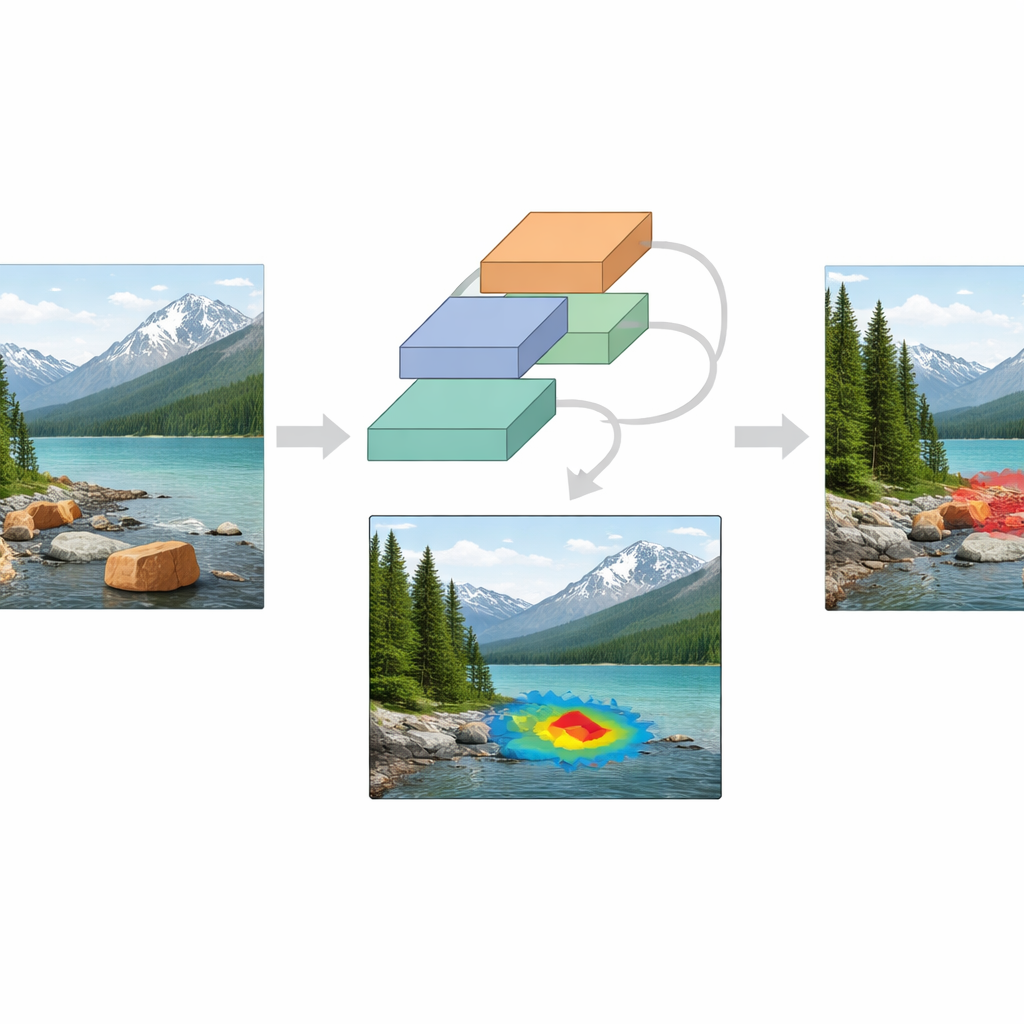
Photos shape what we believe about the world, from news and politics to medical evidence and courtroom decisions. Yet modern editing tools can alter an image so convincingly that even trained eyes may not notice. This paper introduces a new method, called HDBK, that spots a common kind of trickery known as copy–move forgery—where part of a picture is copied and pasted elsewhere in the same image to hide or duplicate objects. The goal is to give investigators a tool that is both accurate and fast enough to be useful in real-world forensic work.
A Growing Problem of Trust in Digital Photos
Every year, billions of photos are taken and shared across phones, social media, and professional systems. At the same time, easy-to-use editing apps let almost anyone remove people from a scene, clone objects, or subtly change important details. In copy–move forgery, a suspicious person might cover up evidence by copying a clean patch of road over skid marks, or duplicate a crowd to make an event look larger. Because these copied regions come from the same image, they naturally match its lighting, color, and texture, making them especially hard to notice by eye or with simple software checks.
Old Tools and Their Weak Spots
Existing detection methods look for clues in different ways. Block-based methods slice the image into many small patches and compare them to find suspiciously similar regions. This can work, but checking every possible pair of patches is slow and struggles when forgers rotate or resize the copied parts, or blur and compress the image afterward. Keypoint-based methods instead search for distinctive points—like corners or textured spots—and compare those, which is faster and more tolerant to geometric changes. However, they often fail on smooth or tiny forged areas that contain few distinctive points. Deep learning, where neural networks learn their own features from data, can spot forgeries at both the whole-image and pixel levels, but typically demands large, carefully labeled datasets that are expensive to create for forensic work.
A Three-Step Hybrid Strategy
The authors propose HDBK, a hybrid system that blends the strengths of deep learning, block analysis, and keypoint matching while reducing their individual weaknesses. In the first step, three well-known neural networks—VGG16, MobileNet, and EfficientNetB0—are combined into a single triple-branch model. Trained on a benchmark of authentic and forged images, this ensemble quickly decides whether an image is likely forged and produces a heatmap: a color overlay that highlights the regions the network finds suspicious. Instead of relying on hand-drawn masks during training, the system learns from image-level labels alone, then uses internal feature maps to localize likely tampered areas.
Zooming In to Pinpoint the Fake
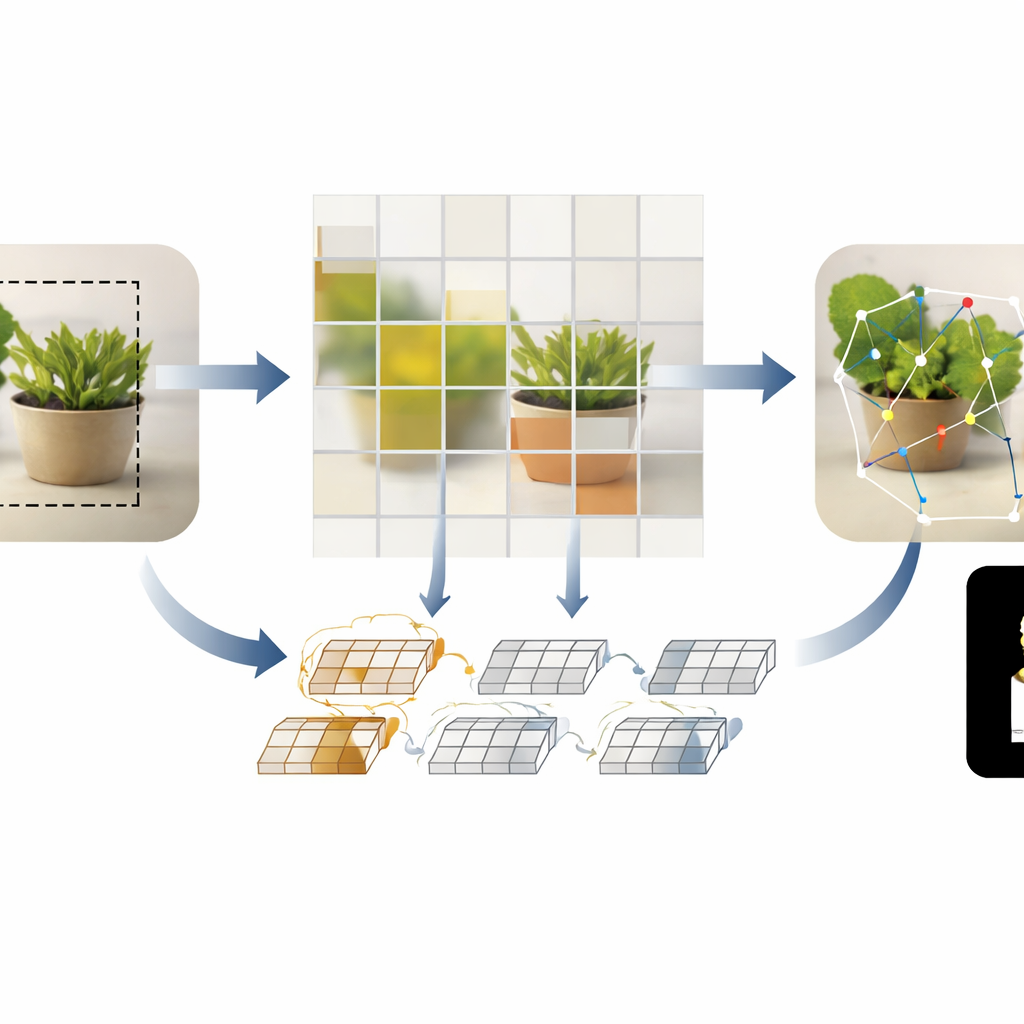
Once the heatmap isolates a suspicious region, HDBK narrows its search. A block around the likely forged area is selected, removed from the image, and a smarter block-based search is launched to find where that content was copied from. Instead of exhaustively comparing every possible block, the method uses a genetic algorithm—an optimization technique inspired by evolution—to explore only the most promising block positions and sizes. The quality of each candidate is measured by how many matching feature points it shares with the suspected block, using three keypoint detectors (SIFT, SURF, and FAST) in combination. After the best match is found, the system links corresponding keypoints and draws a tight polygon around both the source and pasted regions, refining the shapes with morphological filters to produce a clean binary mask of the tampered area.
How Well the Method Performs
To test HDBK, the authors used the CoMoFoD dataset, a widely used collection of copy–move forgeries that includes challenging cases: small and smooth copied areas, rotations, scaling, blurring, added noise, brightness changes, and aggressive JPEG compression. At the image level, the hybrid deep network correctly classified forged versus authentic images with about 99% accuracy, outperforming several other modern models. At the pixel level, where every pixel is judged as genuine or forged, HDBK achieved high overall accuracy and a strong overlap with ground-truth masks, while keeping false alarms very low. Even under tough conditions such as heavy blur, noise, and compression, the system maintained robust performance, revealing both the location and shape of the falsified regions.
What This Means for Everyday Photo Trust
In simple terms, this research offers a smarter detective for digital images. By first using deep networks to roughly highlight where something looks wrong, and then using optimized block search and keypoint matching to trace exactly what was copied and where it came from, HDBK can reliably uncover hidden edits that might sway legal judgments, news stories, or medical diagnoses. While extremely tiny or textureless forgeries still pose a challenge, and more work is needed to extend the method beyond copy–move to other types of tampering, this hybrid approach marks an important step toward restoring trust in what we see on our screens.
Citation: Mehrjardi, F.Z., Zarchi, M.S. A hybrid model for image forgery detection using deep learning with block and keypoint methods. Sci Rep 16, 11169 (2026). https://doi.org/10.1038/s41598-026-41473-8
Keywords: image forgery detection, copy-move manipulation, deep learning, digital forensics, image authenticity