Clear Sky Science · en
AI-driven adaptive vibration control in smart plate systems: a sustainable approach for next-generation sports engineering
Smarter Sports Gear for Happier Joints
Anyone who has felt a tennis racket buzz painfully after a hard shot knows that sports equipment can shake as much as it helps. Those tiny shocks, repeated thousands of times, can cause discomfort, fatigue, and even injury. This study explores a new way to build “smart” racket structures that sense and tame those vibrations in real time using advanced materials and artificial intelligence, promising gear that plays better, lasts longer, and is kinder to the human body.
Why Vibrations Matter in Everyday Play
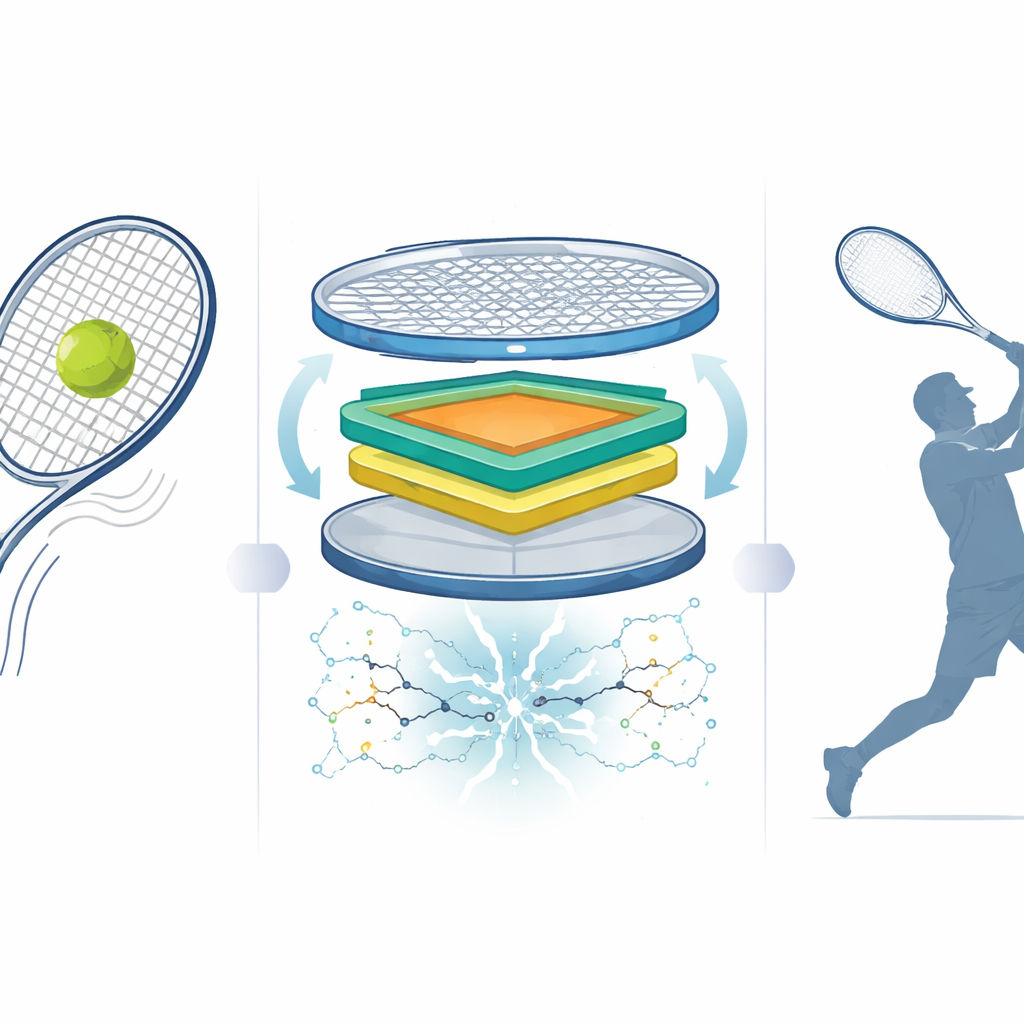
When a ball strikes a racket, the impact sends waves of motion through the frame and into the player’s arm. If those vibrations are strong or poorly controlled, they can make the racket feel harsh, reduce shot accuracy, and strain muscles and joints. Traditional design tweaks—changing shapes, adding dampers, or using softer materials—can help, but they are often tuned for a narrow range of conditions. In real games, impact locations, swing speeds, and temperatures are constantly changing. The authors argue that next-generation sports equipment needs to be both structurally strong and dynamically “smart,” able to sense how it is shaking and adapt on the fly.
A Sandwich Structure Hidden in the Racket
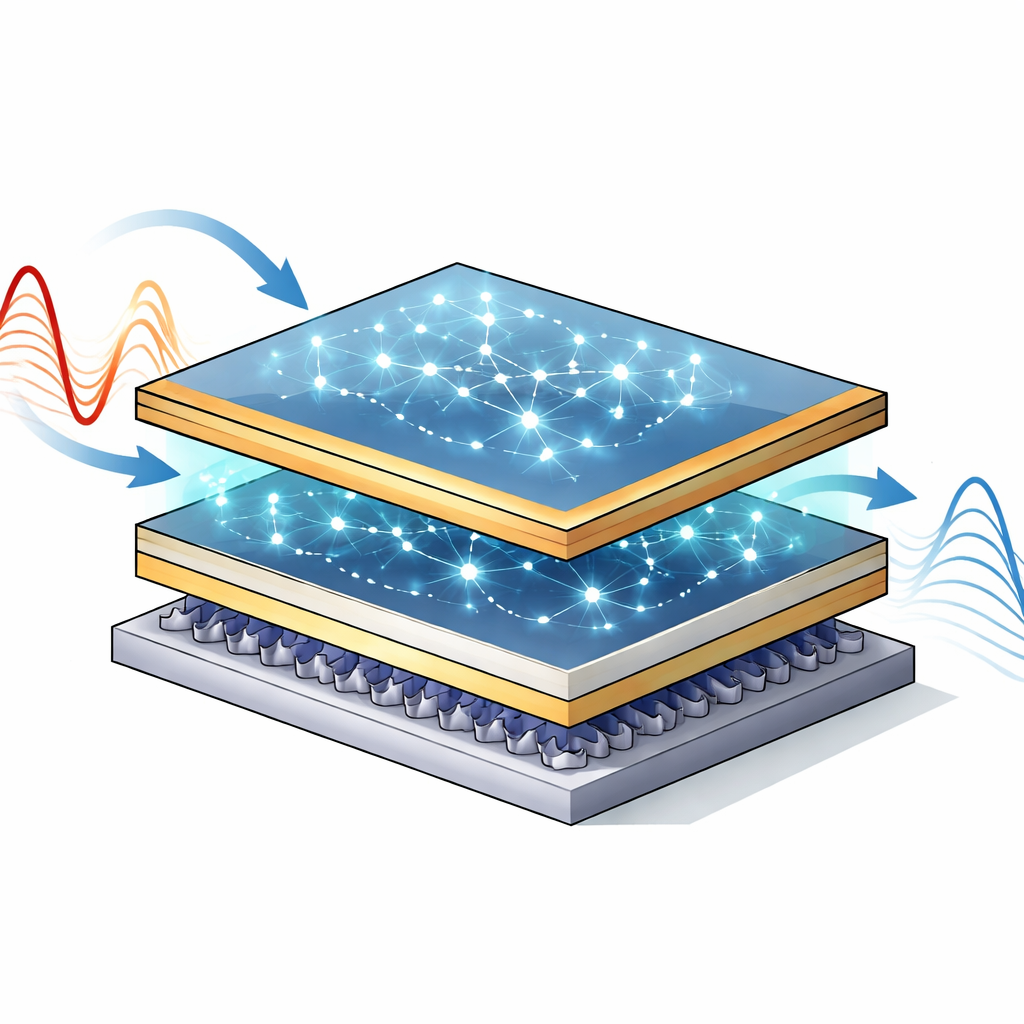
At the heart of the proposed solution is a layered, or “sandwich,” plate that can be embedded in parts of the racket. The thick middle layer is made from a coarse‑aggregate ultra‑high‑performance concrete, a tough, durable material that keeps the structure stiff and long‑lasting. On the top and bottom of this core sit thin sheets of piezoelectric material—special ceramics that convert mechanical vibration into electrical signals and, when driven by a voltage, can flex to counteract motion. This whole stack rests on an elastic foundation that behaves like a combination of springs and a soft shear layer, mimicking the way the plate interacts with its support. Together, these elements form a compact system that can feel the incoming shock, decide how to respond, and push back against the vibration.
Teaching the Structure to Think with AI
To control this smart plate, the researchers turn to physics‑informed neural networks (PINNs), a form of artificial intelligence that is trained not only on data, but also on the underlying physical laws. Instead of solving the vibration equations with traditional mathematical expansions, they embed the governing physics directly into a deep neural network. The network takes in space, time, and material parameters and outputs the plate’s motion and electrical response. A proportional–derivative (PD) controller then uses the sensor signals to decide how much voltage to feed back into the piezoelectric layers, strengthening effective damping when vibrations are large and relaxing when they fade. Because the AI model respects the physics of both the materials and the elastic foundation, it can adapt quickly to changing conditions while remaining stable and efficient.
Checking the System from the Inside Out
Reliability is critical for any method that might be used in real sports gear. The team first checks their model by comparing its predictions against well‑known benchmark problems for layered plates and plates on elastic foundations, finding close agreement in natural frequencies—the characteristic tones at which structures prefer to vibrate. They then explore how design choices such as plate geometry, foundation stiffness, material layout, and applied voltage affect vibration behavior. In all these tests, the AI‑driven controller greatly reduces vibration amplitudes and shortens the time it takes for the system to settle down, without demanding unsafe electric fields from the piezoelectric layers. To further build trust, they train a separate deep neural network purely on the AI model’s results and show, with very small errors, that both descriptions agree, adding an extra layer of verification.
What This Means for Future Sports Equipment
For non‑specialists, the main takeaway is simple: this work shows that you can build sports equipment that actively calms itself down. By combining a rugged concrete‑based core, responsive piezoelectric skins, and AI that knows the rules of physics, the authors create a compact plate that senses impact, reasons about its own motion, and counters unwanted vibrations in real time. In a tennis racket or similar gear, that could translate into crisper shots, less arm fatigue, and longer‑lasting equipment. More broadly, the same approach could inform sustainable, high‑performance designs in many fields where comfort, safety, and durability depend on keeping vibrations under control.
Citation: Lin, B., Wang, J., Safarpour, M. et al. AI-driven adaptive vibration control in smart plate systems: a sustainable approach for next-generation sports engineering. Sci Rep 16, 11632 (2026). https://doi.org/10.1038/s41598-026-41464-9
Keywords: smart sports equipment, vibration control, piezoelectric materials, physics-informed neural networks, tennis racket design