Clear Sky Science · en
An improved T–S fuzzy controller for energy management of parallel hybrid vehicles
Why smarter hybrids matter
Hybrid cars promise cleaner driving and lower fuel bills by combining a gasoline engine with an electric motor. But to truly deliver on that promise, the car has to constantly decide which power source should do how much work. This paper presents a new way to make those split-second decisions so that the engine runs in its “sweet spot” more often, fuel use drops, and the battery stays healthy—all without needing expensive onboard computers or detailed knowledge of the future driving route. 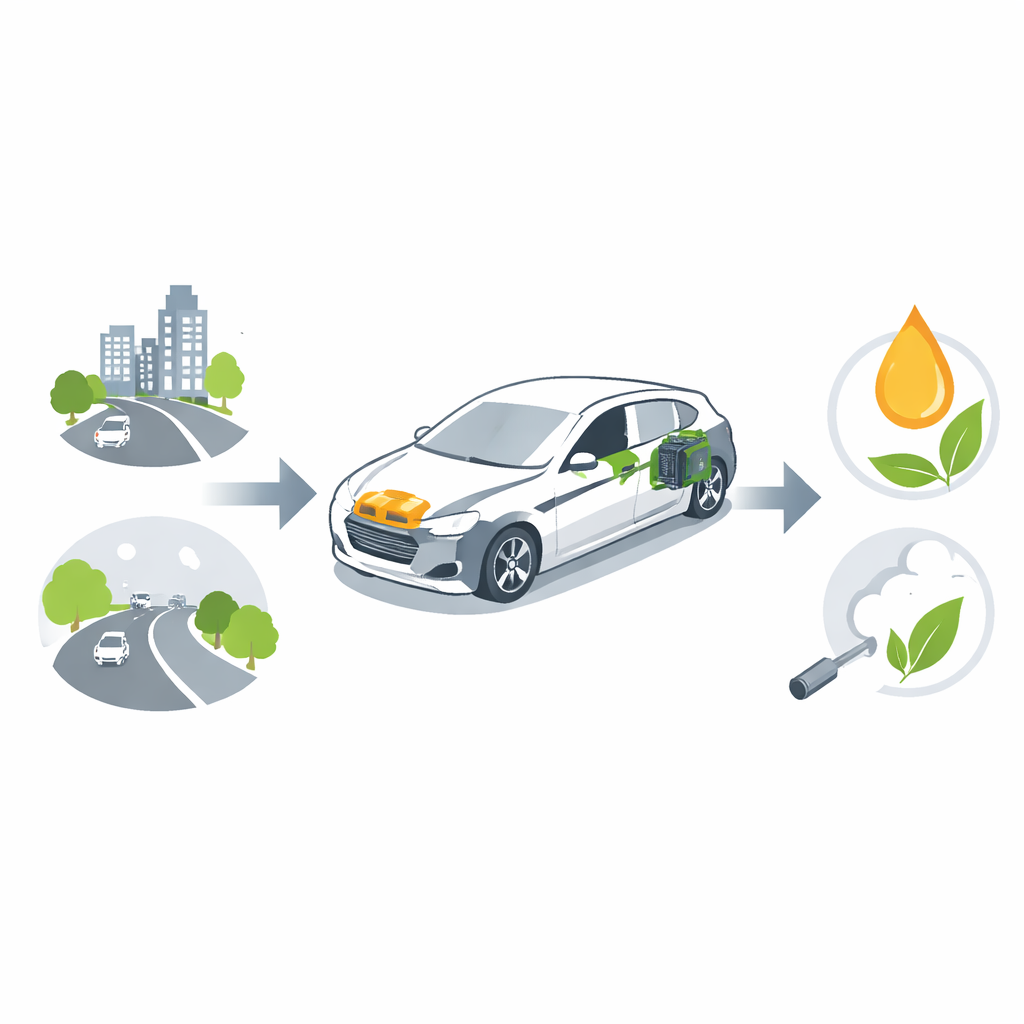
Sharing the work between engine and motor
In a parallel hybrid, both the engine and the electric motor can drive the wheels, either separately or together. The central challenge is an energy management system that decides, moment by moment, how much torque each should provide. Many past approaches chase perfect efficiency using heavy optimization or learning algorithms, but these can be slow, costly, and hard to put into everyday cars. The authors instead focus on a simpler, rule-based control that can run online in real time while still making smart choices about who does the work.
A rulebook based on human-like reasoning
The new controller is built on a type of fuzzy logic, a mathematical framework that mimics how humans use approximate rules such as “if demand is low, favor the motor; if demand is high, call on the engine.” Unlike earlier fuzzy systems that needed several inputs—such as speed, torque, and battery charge—this design uses the engine power as its main input, plus separate handling of the battery’s state of charge. By carefully shaping four broad “zones” of operating power, the controller can infer when the engine should run in its most efficient region and when the electric motor should step in, without juggling many variables at once. This reduction in inputs cuts the amount of calculation and lowers the hardware demands inside the car.
Keeping the engine in its sweet spot
To build the controller, the researchers first map how efficiently the engine turns fuel into motion at many different speeds and torques. This map shows small islands where the engine is especially efficient and large areas where it wastes fuel. The fuzzy rules are then tuned so that, whenever possible, the requested wheel power is met by operating the engine inside these efficient islands. If the driver asks for less torque than the engine’s preferred value, the controller slightly reshapes the demand so the engine still runs efficiently, with the electric motor picking up or absorbing the difference. When the driver demands more torque than the efficient region can provide, the controller allows the engine to leave its sweet spot but only as much as needed to keep up with traffic.
Balancing the battery while following real drives
The team tests their strategy on a detailed computer model of a typical mid-size sedan hybrid, including aerodynamic drag, rolling resistance, a lithium-ion battery, and an electric motor sized for everyday use rather than racing. They drive this virtual car through a long, stitched-together route that combines European, American, and London city driving patterns, capturing both stop-and-go streets and faster highways. The results show that the car closely tracks the target speed profile, while torque from the engine and motor follows their references with very small errors. Importantly, the battery’s charge level at the end of the drive remains close to where it started, proving that fuel savings are not achieved by quietly draining the battery. 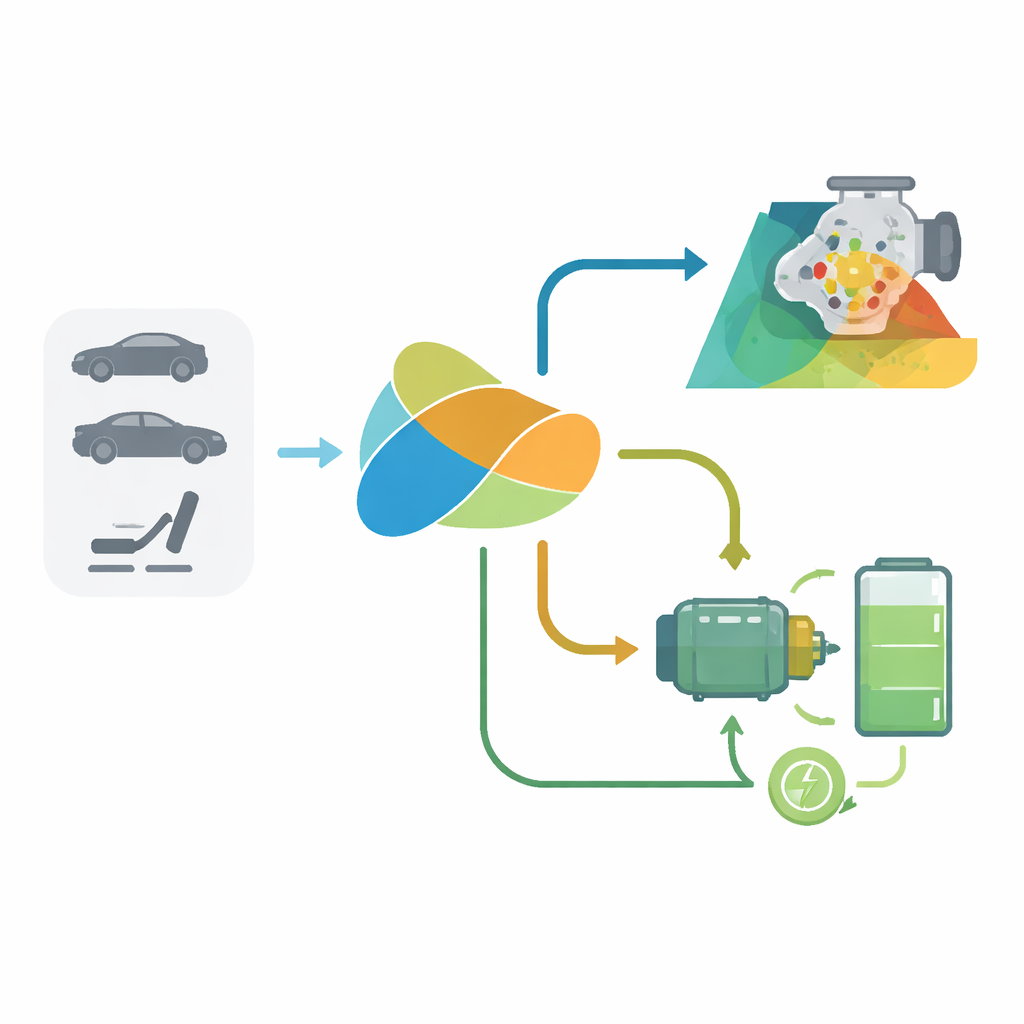
What this means for future cars
In the end, the proposed fuzzy controller cuts fuel consumption by about 3% compared with an earlier, already-advanced strategy, without added computational burden and while preserving battery charge. Because it relies on simple rules rather than detailed predictions of future traffic, it is easier to implement in real vehicles with low-cost hardware. For drivers, this kind of smart energy sharing could mean hybrids that are cheaper to build yet more efficient on the road, forming a practical step toward cleaner transportation without requiring a complete shift to all-electric cars.
Citation: Hokmabad, E.S., Rostami, N. & Sharifian, M.B.B. An improved T–S fuzzy controller for energy management of parallel hybrid vehicles. Sci Rep 16, 10428 (2026). https://doi.org/10.1038/s41598-026-41457-8
Keywords: hybrid vehicles, energy management, fuzzy control, fuel efficiency, electric powertrain