Clear Sky Science · en
LINC: a framework for maintaining high-quality passive data in digital phenotyping studies
Why your phone’s background data matters
Most of us carry a powerful sensor in our pockets: the smartphone. Beyond calls and messages, these devices quietly record where we go and how we move. Scientists are starting to use this "passive" information to better understand mental health in everyday life, a field called digital phenotyping. But there is a catch: if the phone stops recording, or records only in brief bursts, the picture of someone’s day becomes badly blurred. This paper introduces a practical playbook, called LINC, that helps research teams keep these invisible data streams flowing smoothly and reliably.
Turning everyday phone use into useful clues
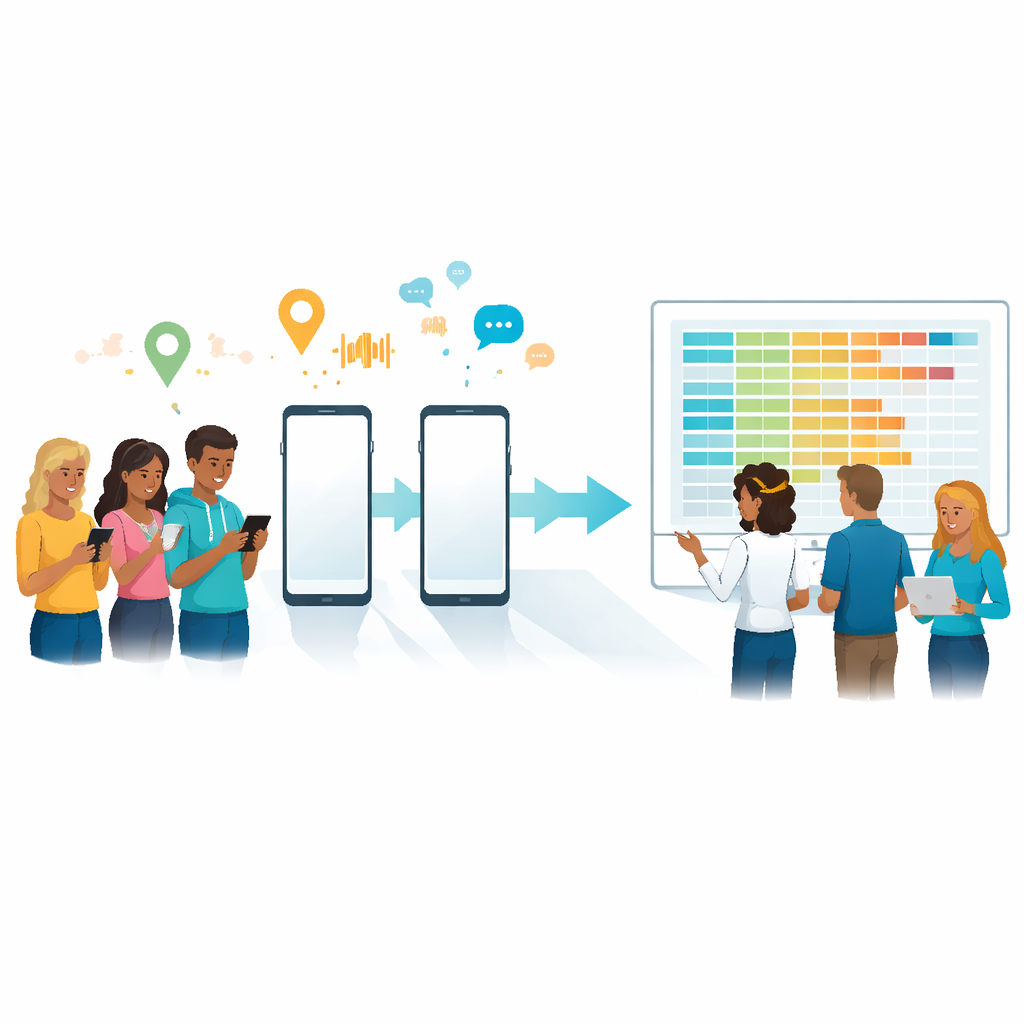
In digital phenotyping, volunteer participants install an app that collects sensor signals such as GPS location and motion. Over time, these traces can reveal patterns of routine, activity, and social behavior that may be linked to mood, anxiety, or relapse risk. However, past studies have struggled with large gaps in these data—sometimes missing half or more of what was expected. Those gaps can seriously distort basic measures like "time spent at home" or walking activity, leading to misleading scientific conclusions and, eventually, poor tools for patients and clinicians. Many teams have tried to patch holes after the fact with statistical tricks, but the authors argue that it is far better to prevent the holes in the first place.
A simple four-step game plan
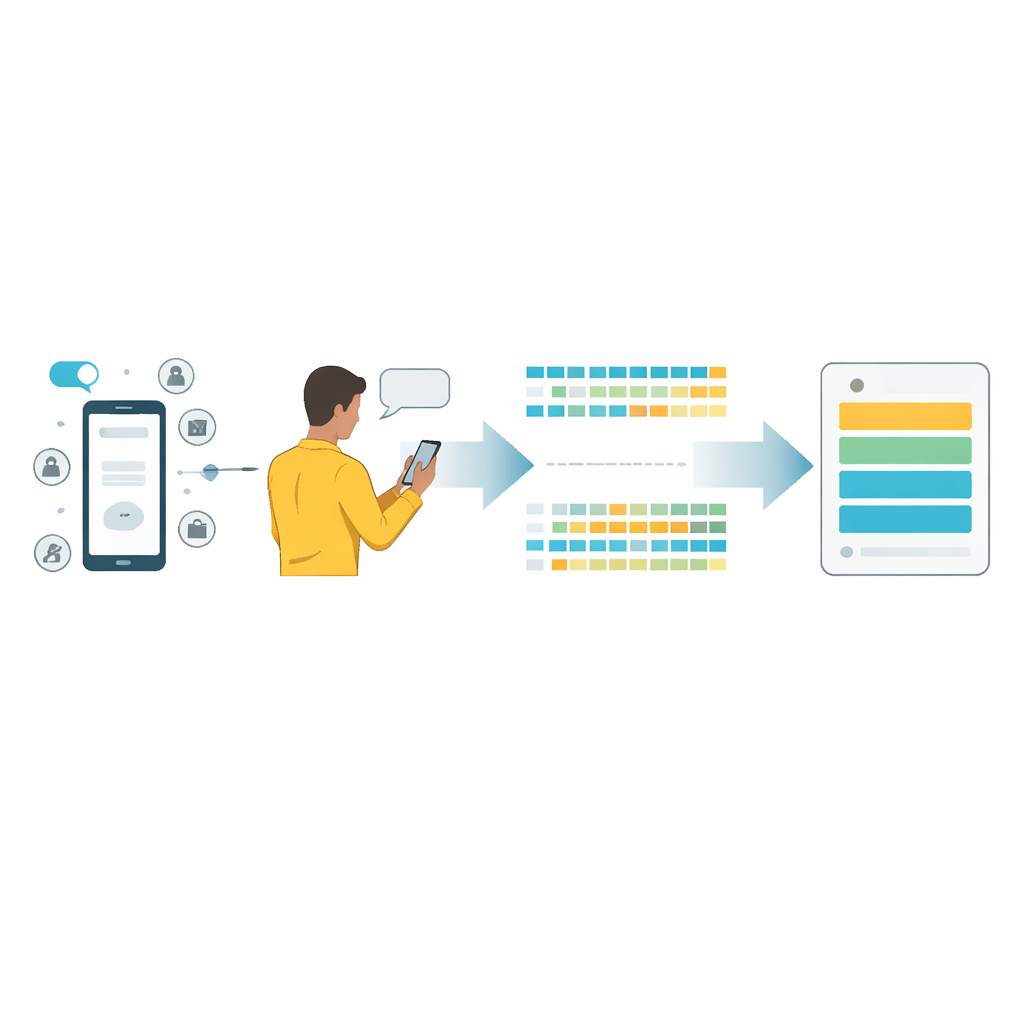
The authors propose LINC, a four-part framework designed to make high-quality passive data the norm rather than the exception. "Launch" focuses on careful setup: standard checklists guide staff and participants through phone settings such as location permissions and battery-saving modes that can silently shut sensors off. "Interact" emphasizes regular, light-touch use of the app—brief daily surveys and simple data summaries—so modern operating systems keep the app alive in the background. "Notify" adds daily automated checks that flag when data streams slow or stop, and "Correct" provides step-by-step troubleshooting guides and outreach messages so staff can work with participants to fix problems quickly. Importantly, these steps rely on practical tools, not advanced programming, so a wide range of research teams can adopt them.
Putting the plan to the test with young adults
To see whether LINC works in the wild, the team applied it to a study of 373 young adults, mostly college students, who took part in a two- to three-week project on social media use and mental health. A smartphone app collected location data and short daily surveys. The study reached remarkably complete coverage: on a typical day, 92 percent of ten-minute time slots contained at least one GPS reading, a level higher than reported in most previous studies using the same platform. Three out of four participants exceeded a quality level that earlier work had suggested is needed for stable, trustworthy measures. Many never needed troubleshooting, and those who did usually required only one or two contacts to restore healthy data streams, such as turning off low-power mode or reopening the app.
Why missing bits can warp the big picture
The authors then examined how data gaps change the story researchers tell. By taking an unusually complete GPS record from one participant and deliberately thinning it out, they showed that when readings are spaced 30 minutes apart or more, estimates of "time spent at home" can be off by several hours. Movement maps become fragmented, and important pauses—like a full workday in one location—are harder to detect. In a larger analysis, the team grouped days by their overall data quality and looked at how strongly home time related to other measures like step count, movement variety, and screen use. Above about 50 percent coverage, these relationships were steady and clear; below that threshold, they became weaker and far more erratic, not because behavior changed, but because the data were too spotty to support firm conclusions.
What this means for future smartphone studies
For readers, the takeaway is that background data from phones can be a powerful lens on mental health—but only if those data are complete enough to be trusted. The LINC framework offers a practical way to protect that quality by combining good setup, gentle daily engagement, continuous monitoring, and rapid problem-solving. Rather than leaning heavily on statistical guesswork to fill in missing information, LINC aims to keep the raw picture as intact as possible from the start. While more testing is needed in other groups and over longer time spans, this approach suggests that careful attention to the everyday details of phone use can make digital mental health research both more reliable and more useful.
Citation: Calvert, E., Lane, E., Flathers, M. et al. LINC: a framework for maintaining high-quality passive data in digital phenotyping studies. Sci Rep 16, 10160 (2026). https://doi.org/10.1038/s41598-026-41435-0
Keywords: digital phenotyping, smartphone sensing, data quality, mental health, passive monitoring