Clear Sky Science · en
Phytochemical responses of Dracocephalum kotschyi Boiss. to water deficit stress and different fertilizers
Why a thirsty herb matters
Across much of the world, people still rely on medicinal plants as their first line of healthcare. One such plant, Dracocephalum kotschyi—known locally as the “golden plant”—is prized in Iran for its antioxidant, anti-parasitic, and anti-inflammatory properties. But this rare species is under pressure from both overharvesting and increasing drought. The study summarized here asks a practical question with global relevance: can careful use of water and eco-friendly fertilizers actually make this endangered herb both tougher to drought and richer in health-promoting compounds?
Testing plants under real farm conditions
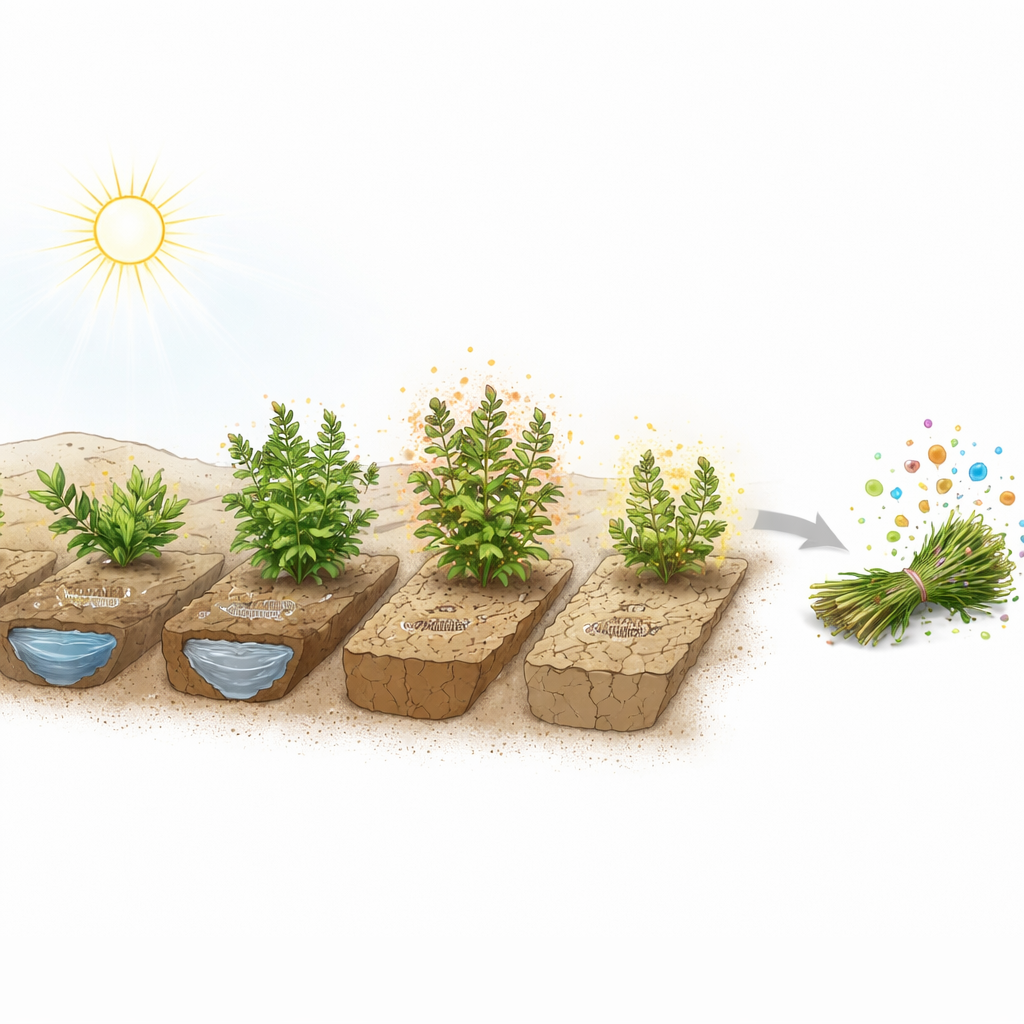
The researchers ran a two-year field experiment in a semi-arid region near Tehran, where hot, dry summers are the norm. They grew Dracocephalum plants under four watering schedules, ranging from well-watered to quite severe dryness. At the same time, they compared several fertilizer options: a conventional nitrogen fertilizer (urea), a microbial “biofertilizer” called Nitroxin, two organic composts made from worms and aquatic plants (vermicompost and azocompost), and a no-fertilizer control. By combining these treatments, they could see not just how drought alone affects the plants, but how different soil amendments might help them cope.
How plants defend themselves from stress
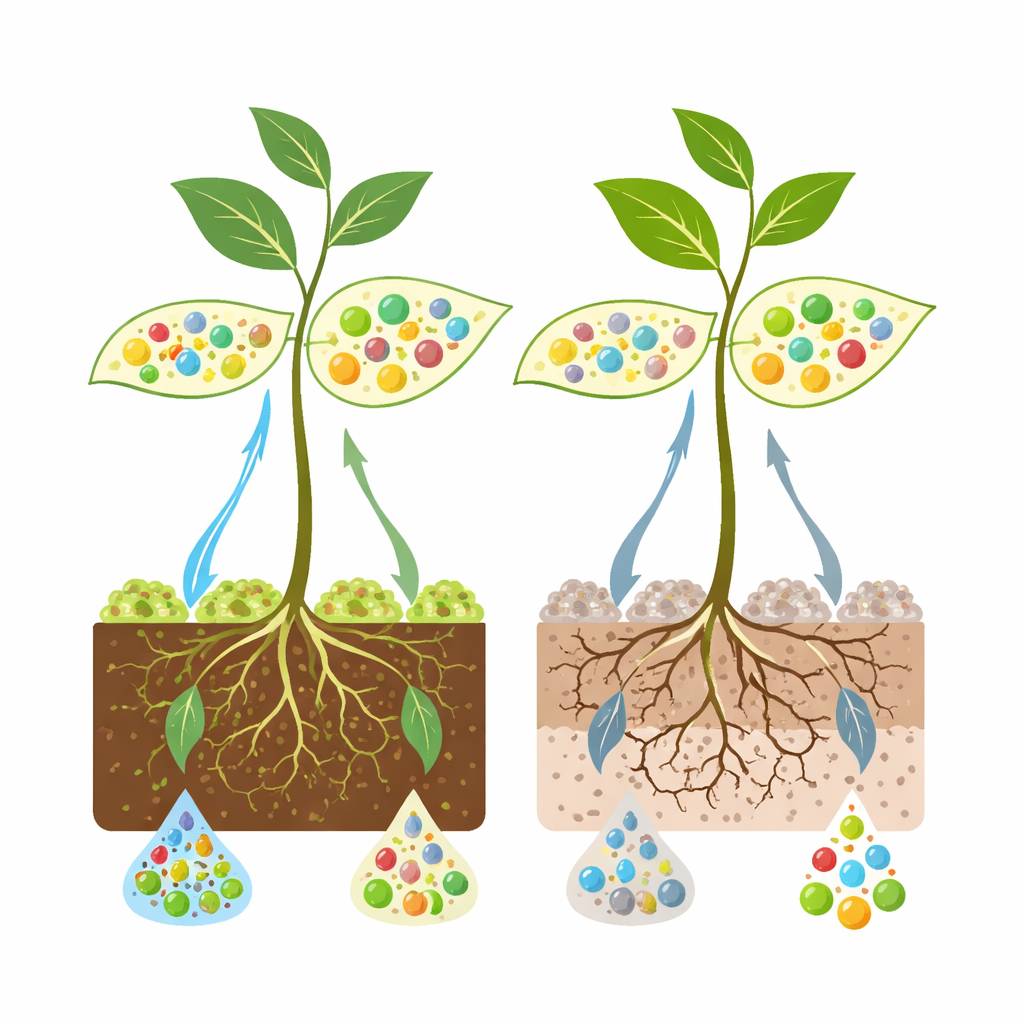
When plants lack water, their cells come under oxidative stress, a kind of chemical rusting driven by highly reactive oxygen molecules. To survive, plants ramp up a suite of defense tools: specialized enzymes that break down harmful molecules, small compounds that help retain water, and colorful substances like phenolics and flavonoids that act as natural shields. In this study, mild to moderate drought generally switched on those protective systems in Dracocephalum. The plants increased the activity of key enzymes, built up more proline (an amino-acid “cushion” against dryness), and produced higher levels of phenolics, flavonoids, and anthocyanins—the same families of compounds that make many culinary herbs and berries so valued for human nutrition.
Good compost versus conventional fertilizer
Not all fertilizers shaped this response in the same way. The two organic composts, especially azocompost, tended to smooth out the plants’ reaction to drought. Under mild and moderate water shortage, plants grown with these amendments showed strong, steady antioxidant activity and less damage to cell membranes, as indicated by lower levels of a breakdown product called MDA. Nitroxin, the microbial fertilizer, was particularly effective at boosting non-enzymatic protectants and water-balancing molecules such as proline. Urea, the standard chemical fertilizer, did stimulate some antioxidant enzymes but was less effective at limiting cellular damage under severe dryness. Overall, the best combination for both resilience and biochemical richness was moderate drought paired with organic amendments, especially azocompost.
When stress becomes too much
The study also revealed a tipping point. While a little stress seemed to “train” the plants to defend themselves, very severe drought began to overwhelm these systems. Under the harshest treatment, total protein levels fell and signs of lipid peroxidation—damage to fatty components of cell membranes—increased, even when fertilizers were used. This suggests that there is an optimal window where water limitation can encourage the plant to channel resources into protective and medicinal compounds, but beyond that window, the plant’s general health declines and its ability to maintain high-quality chemistry is compromised.
What this means for medicine and farming
For nonspecialists, the message is surprisingly hopeful: by pairing moderate water-saving irrigation with organic and microbial fertilizers, farmers can both conserve water and grow medicinal plants with stronger natural defenses and richer phytochemical profiles. In Dracocephalum kotschyi, such integrated management raised levels of health-relevant compounds while helping the plants tolerate dry conditions, offering a way to cultivate this endangered species without exhausting its wild populations. The work points toward a broader principle: carefully managed “good stress,” supported by living soils, can make medicinal herbs more robust and potentially more beneficial for human use.
Citation: Heidarzadeh, A., Modarres-Sanavy, S.A.M. & Mokhtassi-Bidgoli, A. Phytochemical responses of Dracocephalum kotschyi Boiss. to water deficit stress and different fertilizers. Sci Rep 16, 11951 (2026). https://doi.org/10.1038/s41598-026-41394-6
Keywords: medicinal plants, drought stress, organic fertilizers, antioxidant defenses, secondary metabolites