Clear Sky Science · en
Rhizosphere and endophytic bacterial communities of the endangered alpine modest primrose and their plant growth-promoting potential
Why tiny partners matter for a rare mountain flower
High in the Korean mountains, a small purple flower clings to life in thin, rocky soils. This alpine modest primrose is officially endangered, and it is notoriously hard to grow from seed. The study summarized here asks a deceptively simple question with big implications: can naturally occurring soil bacteria around these plants be harnessed to help them germinate, grow, and ultimately survive both in the wild and in conservation gardens?

Life on the edge in the high mountains
Alpine ecosystems are harsh places for plants. Temperatures swing, soils are poor in nutrients, and suitable habitat is scattered in small, isolated patches. The alpine modest primrose grows only in moist rock crevices above about 800 meters in parts of Korea, where its populations are fragmented and declining. On top of this, its seeds are deeply dormant and slow to wake up, and the plant does not easily make new shoots from its roots or stems. These traits make traditional conservation methods, such as collecting seeds and raising plants in nurseries, especially challenging. The authors explored a different angle: the living community of microscopic partners that surround and inhabit the roots.
A hidden community around the roots
The researchers sampled wild primroses growing in mountain valleys and companion plants maintained in a conservation garden. From each, they collected three zones: the loose soil nearby, the thin layer of soil clinging to roots, and the root interiors themselves. Using DNA sequencing of a marker gene common to bacteria, they mapped which bacterial groups were present and how diverse they were. They found that the soils, especially the zones near the roots, hosted thousands of different bacterial types, forming a rich underground community. By contrast, the inside of the roots contained far fewer kinds of bacteria, suggesting that the plant acts as a filter, allowing only select partners to move in. Interestingly, primroses grown under cultivation harbored a more varied and abundant internal root community than their wild counterparts, likely because milder, more nutrient-rich soils reduce the pressure to be highly selective.
Different soils, different microscopic neighbors
The team also compared which broad bacterial groups dominated in each habitat. In both wild and cultivated soils, a familiar set of major bacterial lineages was present, but in different proportions, reflecting differences in acidity and nutrients between the rocky mountain soils and the managed garden beds. Inside the roots, however, the picture changed dramatically: one large bacterial group overwhelmingly dominated, indicating strong screening by the plant. At finer scales, the wild plants tended to associate with bacteria adapted to acidic, nutrient-poor conditions, while cultivated plants hosted more species that thrive in richer environments. Some bacterial types were found only inside roots and almost never in the surrounding soil, underlining that the root interior is a special, highly selective habitat rather than a simple reflection of the soil.
Turning helpful bacteria into growth allies
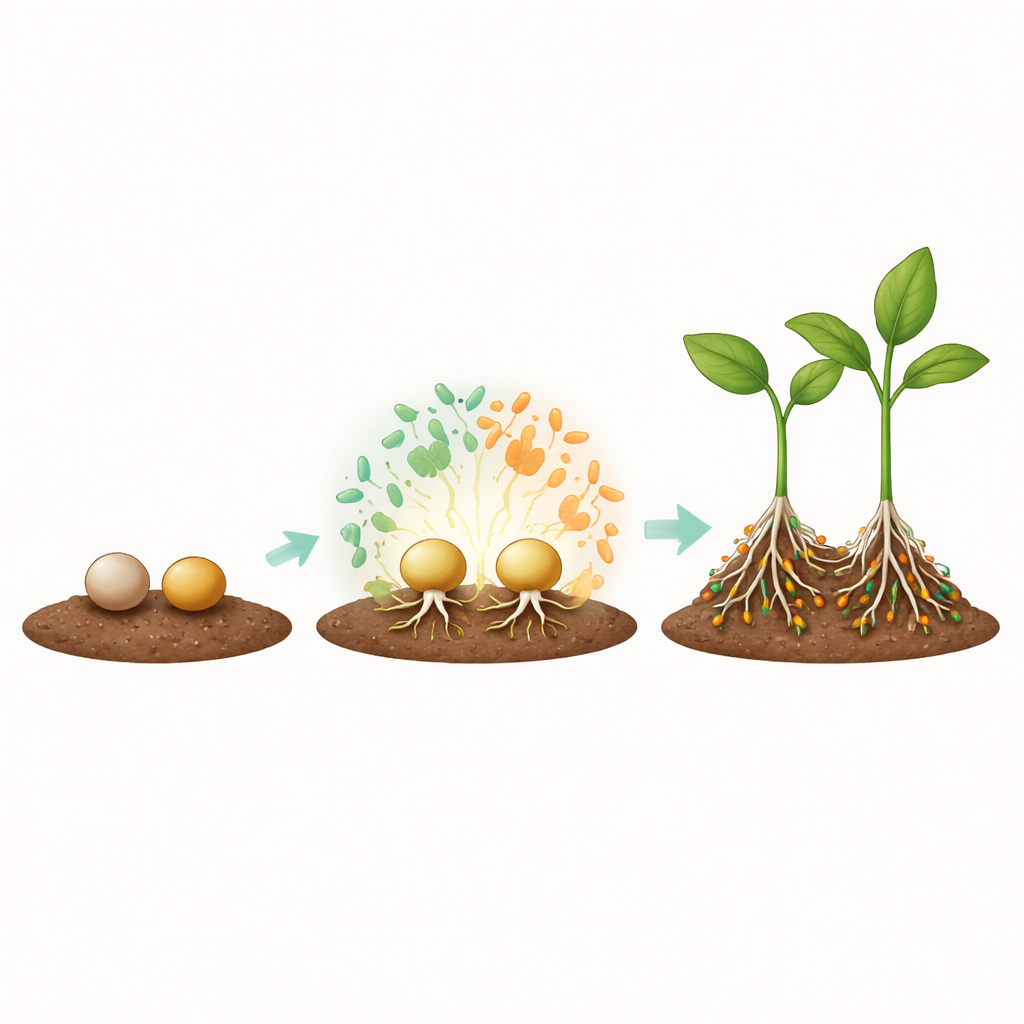
Beyond describing this underground world, the researchers wanted to know whether any of these root-associated bacteria could actively help plants grow. They isolated individual bacterial strains from the primrose roots and tested them on seeds of a closely related primrose species and on Arabidopsis, a standard laboratory plant. Two strains stood out: one from the genus Leifsonia and one from the genus Chryseobacterium. When seeds were coated with either strain, germination started earlier, and the resulting seedlings had longer roots and shoots and heavier biomass compared with untreated seeds. When both strains were applied together, the effect was even stronger, pointing to a synergistic partnership between the microbes themselves.
How friendly microbes give seeds a head start
Follow-up laboratory tests revealed that one of the key strains produced substances similar to plant hormones that shape root growth and help plants access nutrients such as iron and organic matter. The other strain, although not showing the classic hallmarks of a growth-promoting microbe in standard assays, still boosted germination, hinting at more subtle ways microbes can influence seeds, such as altering dormancy signals or softening the seed coat. The fact that the same two strains improved the performance of both primrose and Arabidopsis suggests that their benefits may apply broadly across different plant species. These findings are especially encouraging for alpine plants, whose seeds often remain dormant for long periods and are difficult to raise in nurseries.
What this means for saving an endangered flower
In everyday terms, this work shows that the endangered alpine modest primrose is not struggling alone: it lives in partnership with an underground network of bacteria that change between wild and cultivated settings. By identifying specific helpful strains that can jump-start seed germination and boost early growth, the study offers practical tools for conservationists trying to raise more plants for reintroduction and ex situ collections. More testing in real field conditions is still needed, but the results suggest that carefully chosen native bacteria could become part of future "microbial starter kits" that help rare mountain plants survive a changing world.
Citation: Dutta, S., Khanh, N.V. & Lee, Y.H. Rhizosphere and endophytic bacterial communities of the endangered alpine modest primrose and their plant growth-promoting potential. Sci Rep 16, 14184 (2026). https://doi.org/10.1038/s41598-026-41389-3
Keywords: alpine plants, plant microbiome, root bacteria, seed germination, conservation