Clear Sky Science · en
Optical characterization analysis of surface modified-plastics (SMP) induced by atmospheric cold plasma system
Why smarter plastic surfaces matter
Plastics are everywhere—from water bottles and food wrappers to medical devices and electronics. Yet their very strength and chemical stability make them hard to glue, print on, or coat. This study explores a gentle way to "tune" the outer skin of common plastics using a small, low-cost plasma device. By changing only the surface, the authors aim to make everyday plastics easier to bond, paint, and recycle, without creating chemical waste or altering the bulk material.
Turning gas into a surface-tuning tool
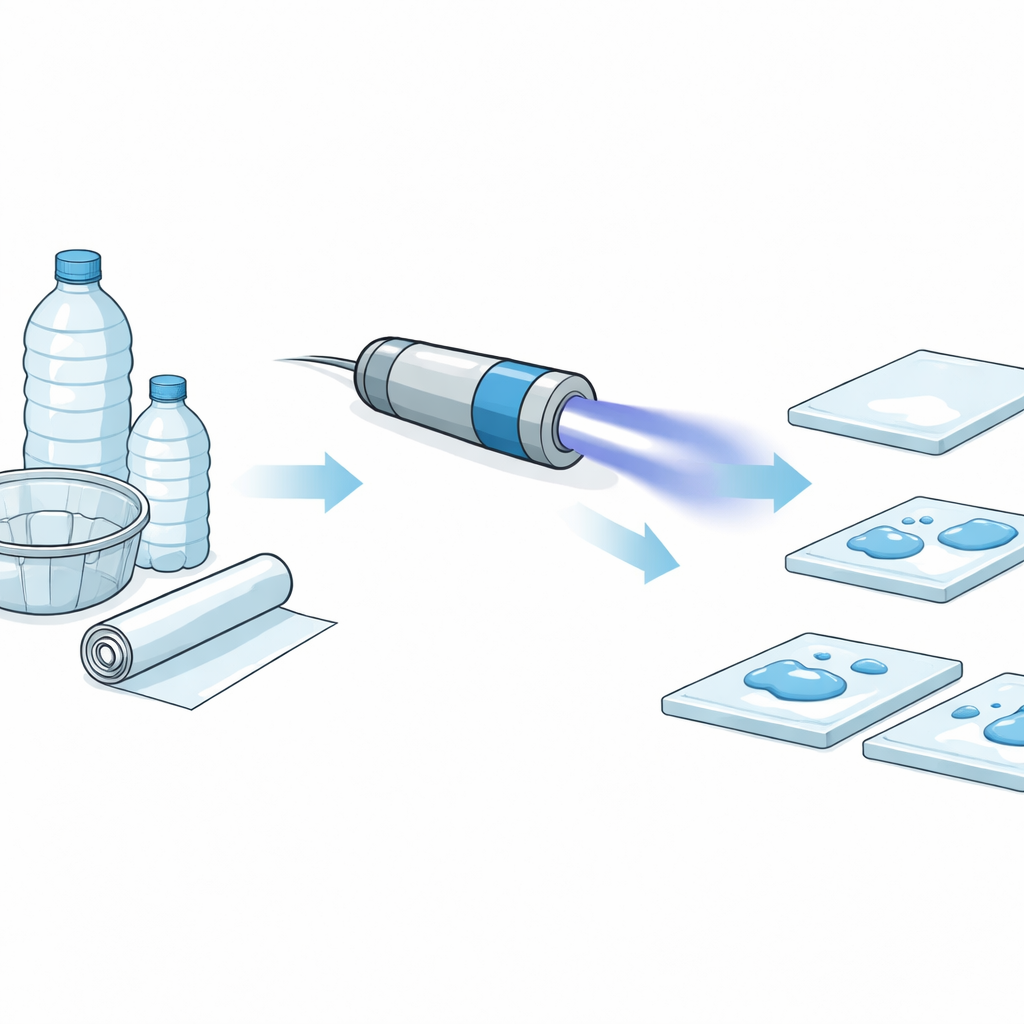
The researchers built an atmospheric cold plasma system that works in open air and runs on a relatively simple, energy-efficient electronic driver called zero-voltage switching. Inside a quartz tube, a metal electrode and a grounded coil create a stable, glowing jet of ionized gas—plasma—from a mix of argon, nitrogen, and oxygen. This jet is directed toward plastic samples placed at a fixed distance. Because the plasma is “cold” compared to industrial flames, it can alter the very top layer of a material without melting or burning it, making it attractive for sensitive polymers.
Testing five everyday plastics
The team selected five widely used plastics: polypropylene (PP), polystyrene (PS), polyvinyl chloride (PVC), polyethylene terephthalate (PET), and high-density polyethylene (HDPE). Identical square pieces of each plastic were cleaned and then exposed to the plasma for either five or ten minutes. To see what changed, the scientists used electron and atomic-force microscopes to look at the surface landscape, infrared light to probe chemical bonds, and water droplets to test how easily the surface could be wetted. These complementary tools allowed them to connect changes in surface shape and chemistry with how well the plastics attract liquids.
From smooth and water-repelling to textured and water-loving
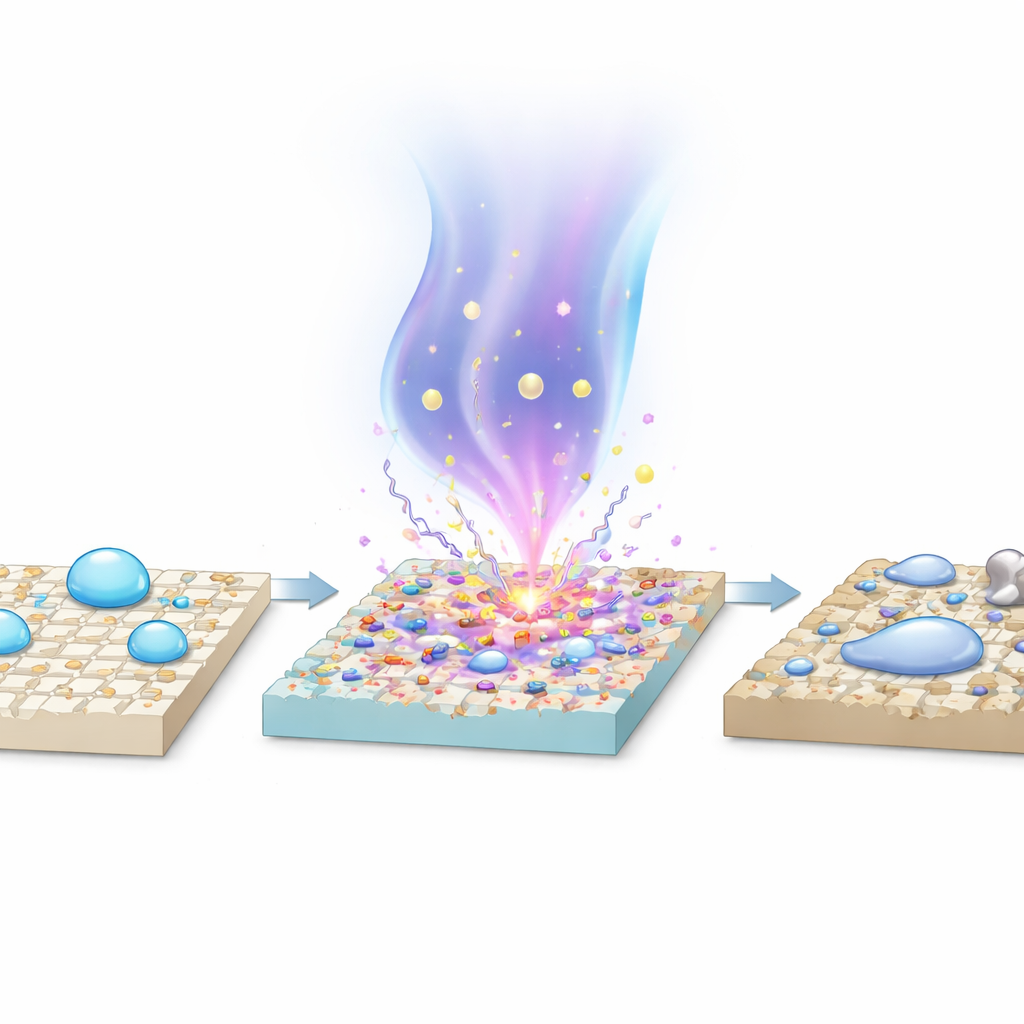
Under the microscopes, untreated plastics appeared mostly smooth. After plasma treatment, PP and HDPE in particular developed a much rougher, more textured surface, while PVC and PET showed moderate roughening and PS changed the least. Infrared measurements revealed that new oxygen-bearing groups—such as those containing hydroxyl and carbonyl bonds—appeared on the treated surfaces. These chemical features make the surface more polar and thus more attractive to water. Contact angle tests, which track whether a droplet beads up or spreads out, confirmed this shift: for PP, the contact angle fell from a very water-repellent 108 degrees to about 47 degrees after ten minutes, and all five plastics became noticeably more wettable with treatment time.
Balancing texture and chemistry
The study shows that better wetting is not driven by roughness alone. PP and HDPE became the roughest but did not always show the largest gain in wettability; PET and PVC, with smaller changes in texture, sometimes gained more in how well water spread. This indicates that the plasma’s main impact is to graft new chemical groups onto the outermost nanometers of the surface, while roughness plays a supporting role. Importantly, elemental analysis found no significant changes deep in the material, confirming that only a thin surface layer is modified, preserving mechanical strength and other bulk properties.
What this means for future plastics
By demonstrating a compact, relatively inexpensive plasma jet that can reliably tune the outer skin of several common plastics, this work points toward cleaner and more flexible manufacturing routes. Such treated surfaces should bond better with inks, paints, adhesives, and barrier coatings, and may improve recycling processes that rely on layered materials sticking together. For a layperson, the takeaway is simple: with a controlled blast of energetic gas, it is possible to give familiar plastics new, useful surface traits—like better “grip” for liquids and coatings—without changing what they are made of inside.
Citation: Tabafa, M.N.H., Bonto, A.P., Esmeria, J.M. et al. Optical characterization analysis of surface modified-plastics (SMP) induced by atmospheric cold plasma system. Sci Rep 16, 11099 (2026). https://doi.org/10.1038/s41598-026-41387-5
Keywords: plasma-treated plastics, surface wettability, polymer adhesion, cold plasma processing, plastic surface modification