Clear Sky Science · en
A novel oxidation strategy using a palladium nanocatalyst for stabilizing bisacodyl in polyethylene glycol suppositories
Why this medicine story matters
Many people, especially children, older adults, and patients after surgery, rely on rectal suppositories when swallowing pills is difficult. One common ingredient in these products is bisacodyl, a stimulant laxative used worldwide. The challenge is that bisacodyl breaks down in slightly acidic surroundings, while one of the most convenient and affordable suppository bases, a waxy material called polyethylene glycol (PEG), naturally contains just enough acidity to slowly damage the drug. This study explores an inventive chemistry trick that gently reshapes PEG so it no longer harms bisacodyl—potentially making these medicines more stable, cheaper, and easier to manufacture.
The problem inside a tiny medicine
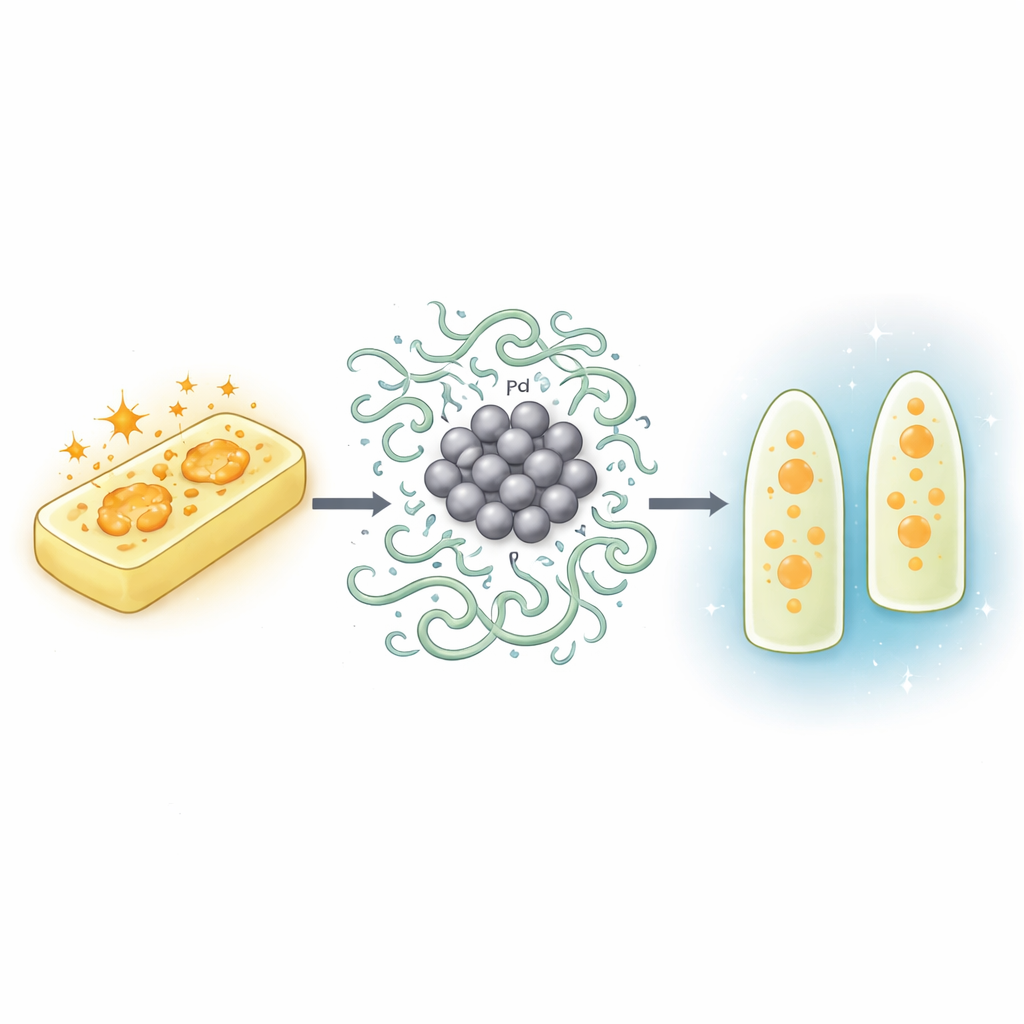
Suppositories look simple from the outside, but on the inside they are carefully engineered structures. The solid base carries the drug, melts or dissolves after insertion, and controls how quickly the medicine is released. Fatty bases like cocoa-butter-type fats are gentle on drugs such as bisacodyl, but they can be costly and sometimes tricky to store because they soften in warm conditions. PEG bases, in contrast, are stable, safe, and inexpensive. However, the very tips of the PEG chains carry small acidic groups that can nibble away at sensitive drugs over time. When bisacodyl is mixed into ordinary PEG, laboratory tests show its main signal peak shrinking and several new peaks appearing—chemical fingerprints of breakdown products. The effect is worse with lower‑weight PEGs, which have more chain ends and therefore more reactive acidic tips.
A clever way to tame a restless material
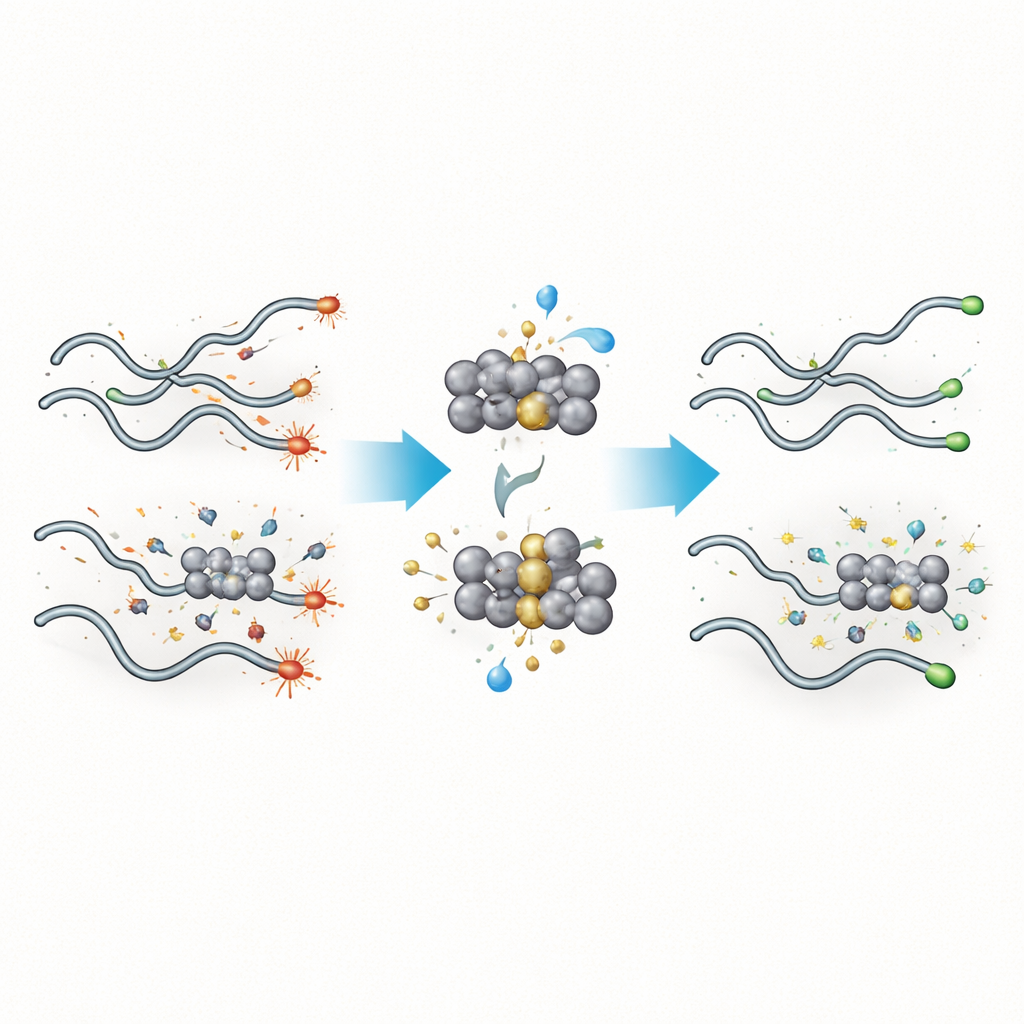
The researchers asked a simple but powerful question: what if the PEG could be slightly reshaped before it ever meets the drug, so those troublesome acidic tips are removed for good? Instead of relying on harsh industrial oxidizing agents like nitric or chromic acid, which create many unwanted by‑products and waste, they turned to a modern tool of green chemistry—a solid palladium nanocatalyst known as UMCM‑1‑NH2‑F2C‑Pd. In water, under a stream of oxygen and gentle heating, this catalyst encourages the ends of the PEG chains to change into non‑proton‑donating groups. In practical terms, the base keeps its useful body—its water‑loving backbone that dissolves nicely in bodily fluids—but loses the tiny acidic "teeth" that had attacked bisacodyl.
Putting the new base to the test
To see whether this chemical makeover really improves medicines, the team prepared several bisacodyl suppository recipes: three with regular PEGs of different sizes, one with a traditional fatty base (Witepsol), one with regular PEG plus a helper solvent called propylene glycol diacetate (PDA), and one with the newly oxidized PEG. High‑performance liquid chromatography, a technique that separates and measures chemical components, revealed a clear pattern. Suppositories made with ordinary PEG showed multiple impurity peaks and a reduced bisacodyl signal, confirming ongoing breakdown. The Witepsol‑based product, by contrast, preserved a clean, single bisacodyl peak even after six months of storage. Remarkably, the oxidized‑PEG formulation behaved like the Witepsol one: both at the start and after half a year, bisacodyl remained intact with no extra peaks, indicating strong long‑term stability.
Short‑term fixes versus lasting solutions
The PDA‑containing formulation offered an instructive comparison. At first, PDA acted as a shield, soaking up acidity from the PEG so that bisacodyl stayed protected and its chromatographic signal looked clean. Over six months, however, the protection faded. As the sacrificial additive was gradually used up, bisacodyl once again began to decompose and impurity peaks re‑emerged. This contrasted sharply with the oxidized PEG, whose permanently altered chain ends no longer supplied harmful protons. Because the backbone of PEG was left largely untouched, the researchers expect that this modified base will still dissolve quickly in rectal fluids and release the drug efficiently, retaining the key performance benefits that made PEG attractive in the first place.
What this means for patients and makers
In everyday terms, the study shows that a modest, targeted chemistry tweak can turn a problematic but otherwise excellent material into a much better partner for a fragile medicine. By pre‑treating PEG with a palladium nanocatalyst and oxygen, the scientists removed the hidden acidity that had been quietly degrading bisacodyl. The resulting oxidized PEG supports suppositories that remain stable for months, much like those made with more expensive fatty bases, while keeping the cost and processing advantages of PEG. Beyond this one laxative, the approach points toward a broader strategy: instead of abandoning a useful ingredient whenever it conflicts with a sensitive drug, formulators may be able to gently redesign the ingredient itself, opening new options for safer, longer‑lasting, and more affordable medicines.
Citation: Kouhdareh, J. A novel oxidation strategy using a palladium nanocatalyst for stabilizing bisacodyl in polyethylene glycol suppositories. Sci Rep 16, 11149 (2026). https://doi.org/10.1038/s41598-026-41382-w
Keywords: bisacodyl suppositories, polyethylene glycol, drug stability, palladium nanocatalyst, pharmaceutical formulation