Clear Sky Science · en
Global protein profiling of human milk using pre-enriched RNA-sequence libraries
Why What Is in Breast Milk Matters
Breast milk is often called a baby’s first vaccine and first meal in one. It is packed with proteins that help newborns grow, fight infections, and shape the community of microbes in their gut. Yet, despite its importance, the detailed mix of proteins in human milk—and how this mix changes from mother to mother and over time—has been hard to measure. This study introduces a new way to look at the full landscape of milk proteins and asks how they vary with time after birth, a mother’s body weight, and whether she is having her first baby or has given birth before.
A New Way to Read the Protein Landscape
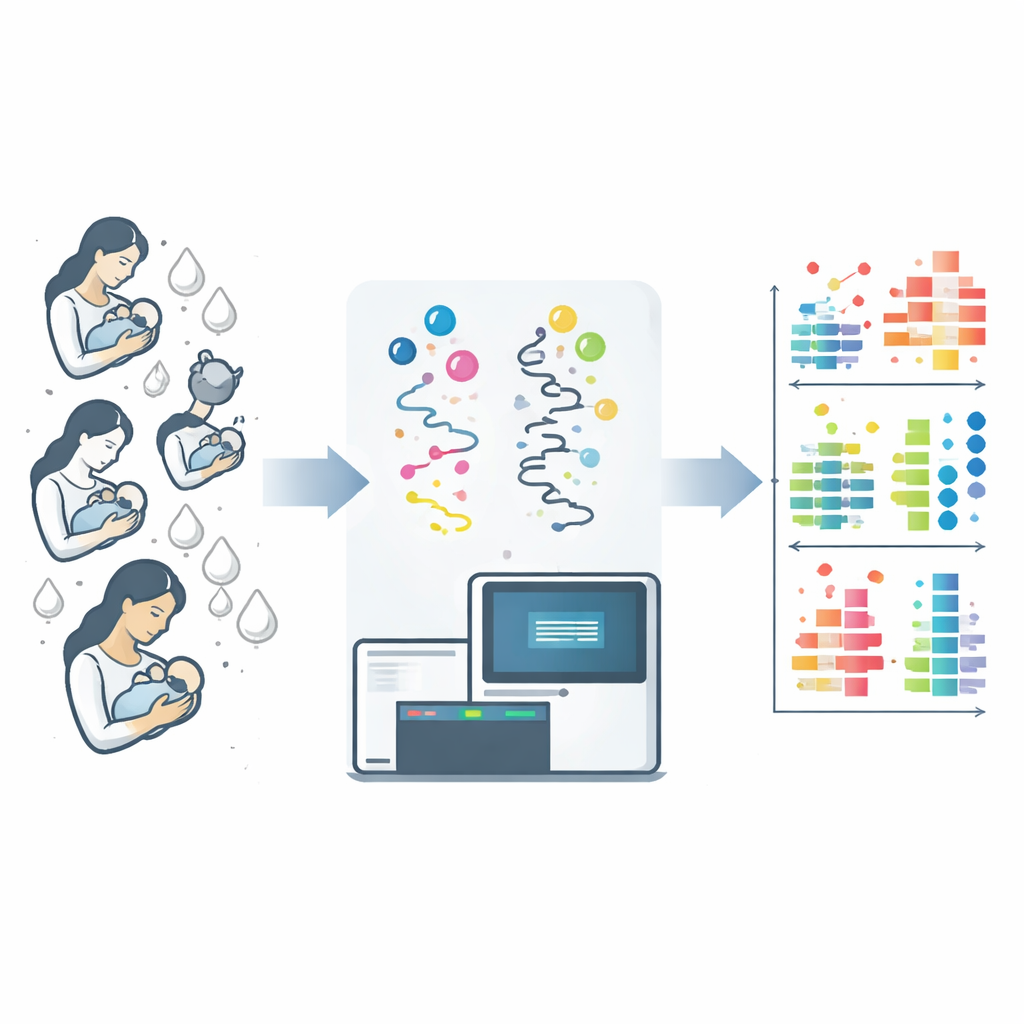
Instead of trying to measure every protein directly, the researchers used a clever shortcut based on RNA molecules, called aptamers, that stick to specific proteins like keys fitting into locks. Using a method named APTASHAPE, they first trained large libraries of chemically modified RNA strands to recognize the rich mix of proteins found in human milk collected at different times after birth. When these RNA libraries were exposed to individual milk samples, the patterns of which RNA strands stuck—and how strongly—served as a fingerprint of that sample’s protein composition. High-throughput sequencing then counted the RNA strands, turning complex protein mixtures into large, analyzable data tables.
Following Milk from Birth Through Early Months
The team studied 520 milk samples from Danish mothers, collected at four points: three days, one month, two months, and three months after birth. They split the samples into a discovery group and an independent validation group to make sure their findings were robust. Using statistical modeling, they examined how the RNA fingerprints related to factors such as time after birth, the mother’s pre-pregnancy body mass index (BMI), and whether she was a first-time or experienced mother. The strongest signal by far came from sampling time. Dozens of RNA sequences changed in abundance between early colostrum and later, more mature milk, reflecting the well-known shift from immune-focused early milk toward nutrition-focused milk as infants grow.
Links to Mother’s Weight and Birth History
Beyond timing, the study also detected subtler but consistent differences tied to maternal BMI and parity (whether this was the mother’s first child or not). A set of RNA fingerprints distinguished milk from mothers with higher BMI from that of mothers in the normal range, although the differences were modest. Another group of sequences differed between first-time and experienced mothers, with many of these signals showing relatively lower abundance in first-time mothers. These patterns suggest that a mother’s body weight and reproductive history may shape the fine details of milk protein composition, even if the overall nutrient content looks similar.
Putting Names to Key Proteins
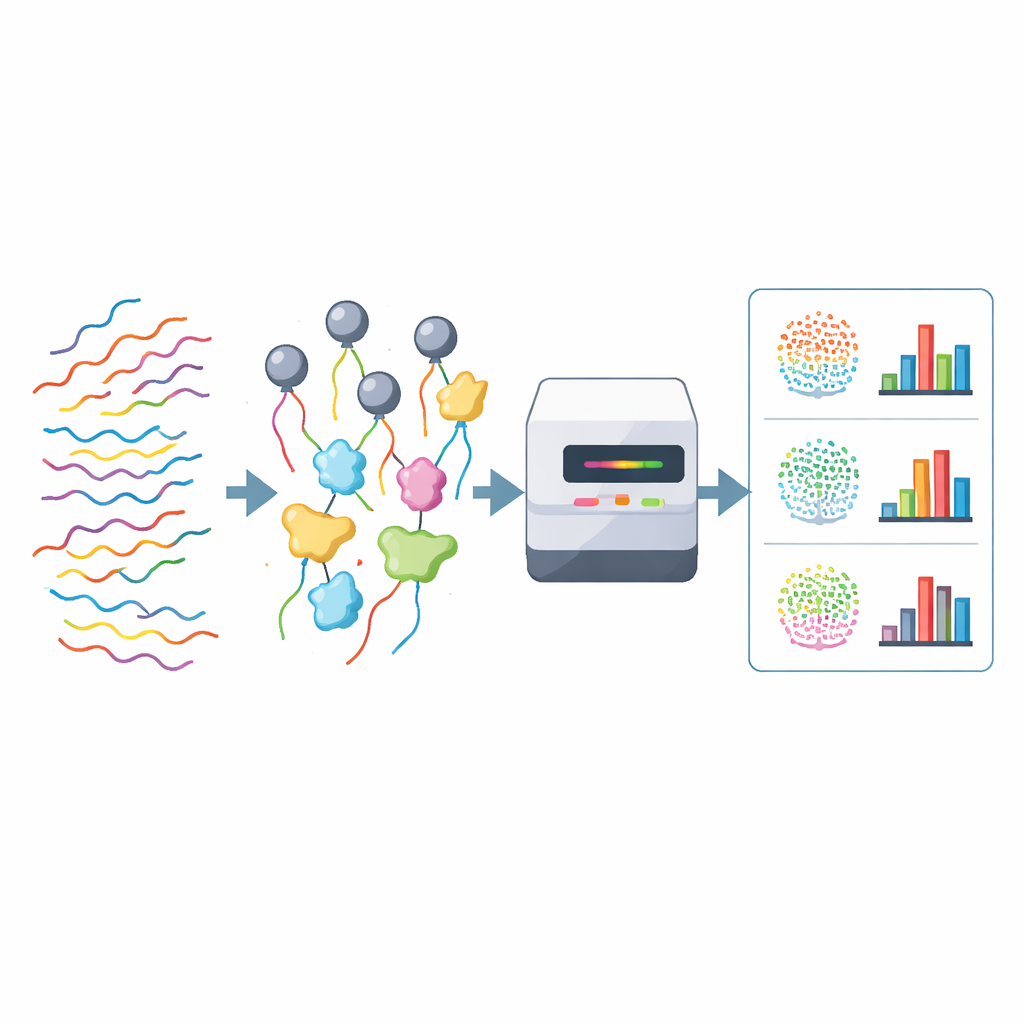
To connect the RNA fingerprints back to specific proteins, the researchers selected a subset of aptamers and used them as bait to pull down proteins from pooled milk samples, followed by mass spectrometry to identify what they captured. Among the many proteins present, two stood out: C4b-binding protein, part of the body’s innate immune defense system, and tenascin C, a structural protein involved in tissue repair and immune responses that has also been reported to help neutralize certain viruses in milk. These proteins were uniquely associated with differences in sampling time and maternal BMI, hinting that immune-related components of milk may shift not only as infants age but also with maternal body weight.
What This Means for Mothers and Babies
For a lay reader, the takeaway is that breast milk is not a fixed recipe but a living fluid that changes in tune with both the baby and the mother. This work shows that early milk is especially rich in distinctive proteins, likely tuned to protect vulnerable newborns, and that more subtle adjustments appear to occur depending on the mother’s weight and whether she has given birth before. The APTASHAPE method provides a powerful new lens to study these patterns on a large scale, opening the door to future research that could link detailed milk protein profiles to infant growth, immunity, and long-term health. While the study does not yet prescribe changes in clinical care, it strengthens the idea that supporting breastfeeding—and understanding how maternal health shapes milk—may have lasting benefits for children.
Citation: Astono, J., Jørgensen, A.G., Bus, C. et al. Global protein profiling of human milk using pre-enriched RNA-sequence libraries. Sci Rep 16, 11827 (2026). https://doi.org/10.1038/s41598-026-41374-w
Keywords: human milk proteome, breastfeeding and obesity, RNA aptamer profiling, infant immune development, maternal BMI and lactation