Clear Sky Science · en
Predictors for pediatric bronchitis obliterans in Mycoplasma pneumoniae pneumonia with bronchial casts
Why this matters to parents and caregivers
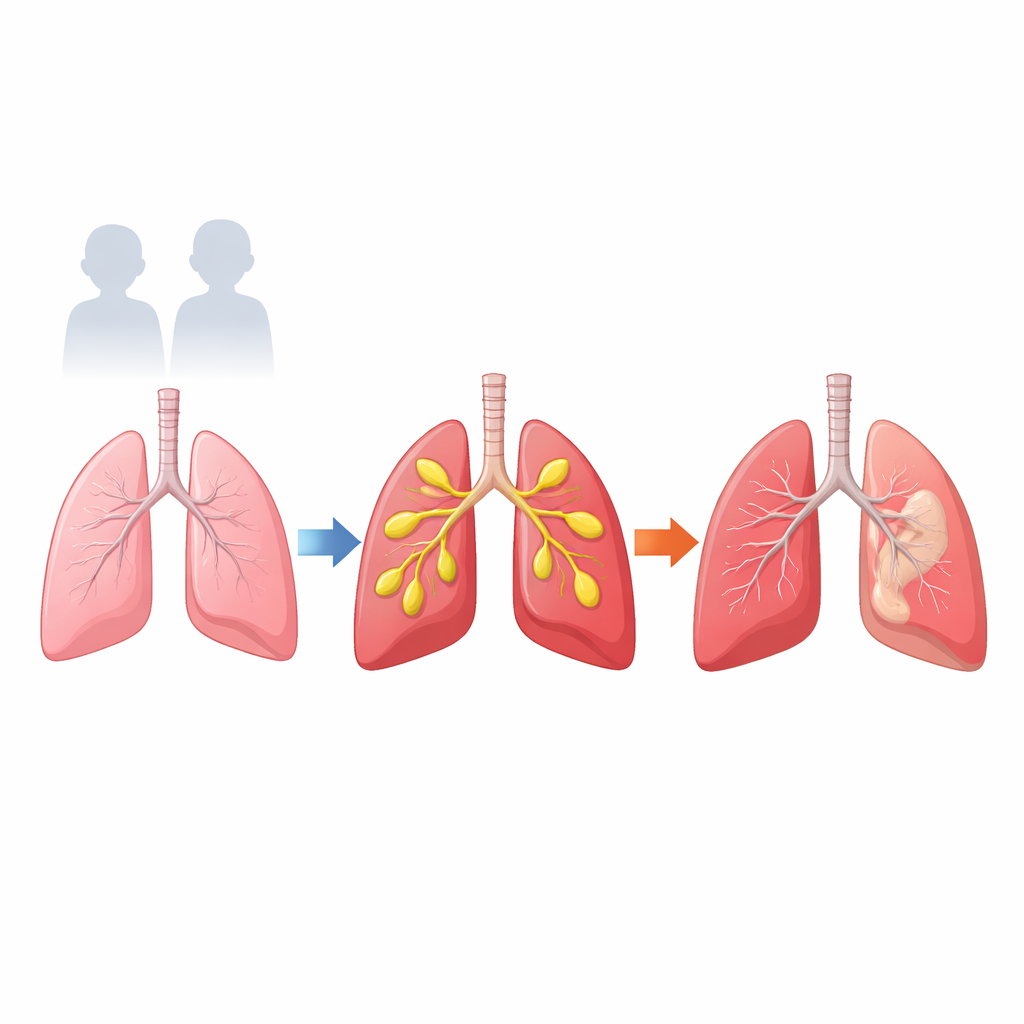
Severe “walking pneumonia” caused by Mycoplasma pneumoniae is common in school‑age children. Most recover fully, but a small number develop lasting damage to the larger breathing tubes in the lungs, a condition called bronchitis obliterans that can lead to chronic cough, wheeze, and reduced exercise tolerance. This study asks a practical question that matters to families and doctors alike: among children hospitalized with severe Mycoplasma pneumoniae pneumonia and thick plugs blocking their airways, which early warning signs signal a higher risk of this long‑term harm—and could earlier procedures help protect their lungs?
Who was studied and what the doctors looked at
Researchers at a children’s hospital in Hebei, China, reviewed records of 236 youngsters admitted over five years with Mycoplasma pneumoniae pneumonia in whom bronchoscopy—a small camera passed into the airways—showed firm mucus “casts” clogging the larger breathing tubes. After strict inclusion and exclusion checks, 197 children aged from about one month to under 15 years were analyzed. All had follow‑up chest CT scans at three and six months. Based on these scans and bronchoscopy findings, 49 children were judged to have developed bronchitis obliterans and 148 had not. The team then compared the two groups’ symptoms, timing of treatments and procedures, blood tests, and lung imaging to find patterns linked to long‑term damage.
Clues from scans and blood tests
Several differences stood out. Children who went on to bronchitis obliterans were more likely to have very large solid‑appearing patches on lung imaging, where more than two‑thirds of a lobe was filled with inflammatory material rather than air. They also more often had fluid around the lung (a pleural effusion), suggesting more severe illness. In blood work taken during the acute phase, markers of inflammation tended to be higher in the bronchitis‑obliterans group. White blood cell counts, C‑reactive protein, and a pneumonia‑related antibody (IgM) were all elevated, but one simple test—the erythrocyte sedimentation rate (ESR), which rises when the body’s inflammatory proteins are high—showed a particularly strong association, with average values clearly higher in children who later had lasting airway damage.
The importance of timing for airway cleaning
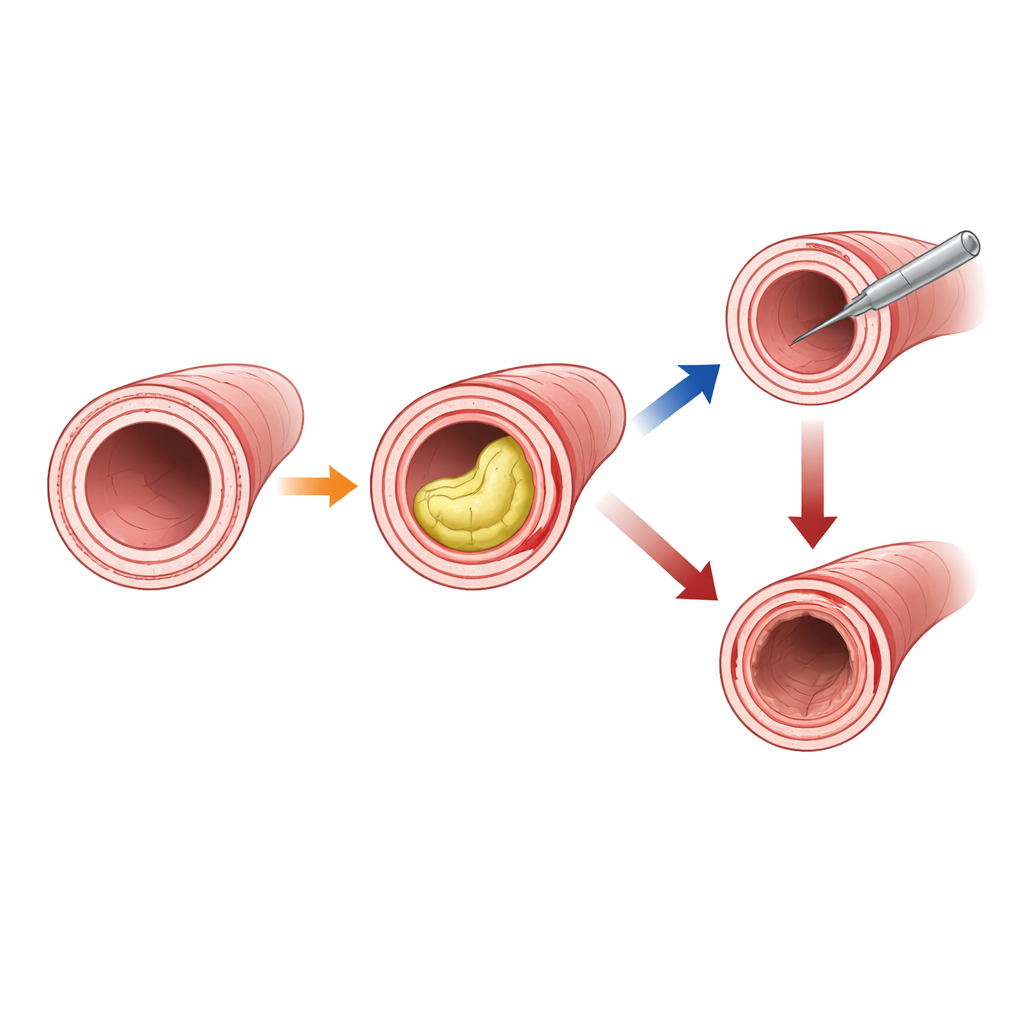
Beyond how sick the lungs looked, when the first bronchoscopy was performed turned out to be critical. Children who developed bronchitis obliterans tended to have their first bronchoscopic treatment later in the course of illness than those who recovered without permanent narrowing. Using statistical tools similar to those used in risk calculators, the researchers estimated that performing the first bronchoscopy more than about 13 and a half days after symptom onset was linked with a markedly higher chance of bronchitis obliterans. When they fed all candidate factors into a multivariable model, three remained independently linked to long‑term airway damage: delayed bronchoscopy beyond that time window, very extensive lung consolidation affecting more than two‑thirds of a lobe, and ESR above about 58 mm per hour.
What these warning signs may mean in practice
These three features—very inflamed, consolidated lobes on imaging, a strongly raised ESR, and a late start to bronchoscopic removal of airway casts—together formed a simple predictive combination. In this group of children, having all three raised a child’s risk of bronchitis obliterans, while their absence made long‑term damage less likely. The combined model correctly identified most children who would not go on to develop bronchitis obliterans (high specificity) but missed some who did (only moderate sensitivity), underscoring that it is a helpful warning system rather than a perfect crystal ball. Exploratory analysis of immune signaling molecules (cytokines) such as interleukin‑6 and interleukin‑17A suggested they might be involved in scarring of lung tissue, but after stricter adjustment these did not add clear predictive power in this relatively small sample.
Take‑home message for families and clinicians
For parents, the main message is that most children with Mycoplasma pneumoniae pneumonia, even those sick enough to need hospital care, recover without lasting airway damage. However, if imaging shows a whole‑lobe‑sized dense area, blood tests reveal very high general inflammation, and thick plugs are seen or suspected in the larger airways, closer monitoring is warranted. For clinicians, the study suggests that in such high‑risk children, not delaying therapeutic bronchoscopy to clear casts may reduce the odds of chronic narrowing of the bronchi. At the same time, the authors stress that their risk model is preliminary, based on one hospital’s experience, and is not yet ready to guide individual treatment decisions on its own. Larger, multi‑center studies will be needed to turn these early warning signs into robust tools for protecting children’s lungs over the long term.
Citation: Liu, J., Wang, L., Liu, J. et al. Predictors for pediatric bronchitis obliterans in Mycoplasma pneumoniae pneumonia with bronchial casts. Sci Rep 16, 13282 (2026). https://doi.org/10.1038/s41598-026-41362-0
Keywords: Mycoplasma pneumoniae, pediatric pneumonia, bronchitis obliterans, bronchoscopy, airway casts