Clear Sky Science · en
Enhancing low-cost sensor performance for THD monitoring in smart meters using AI algorithms
Why cheaper power meters matter
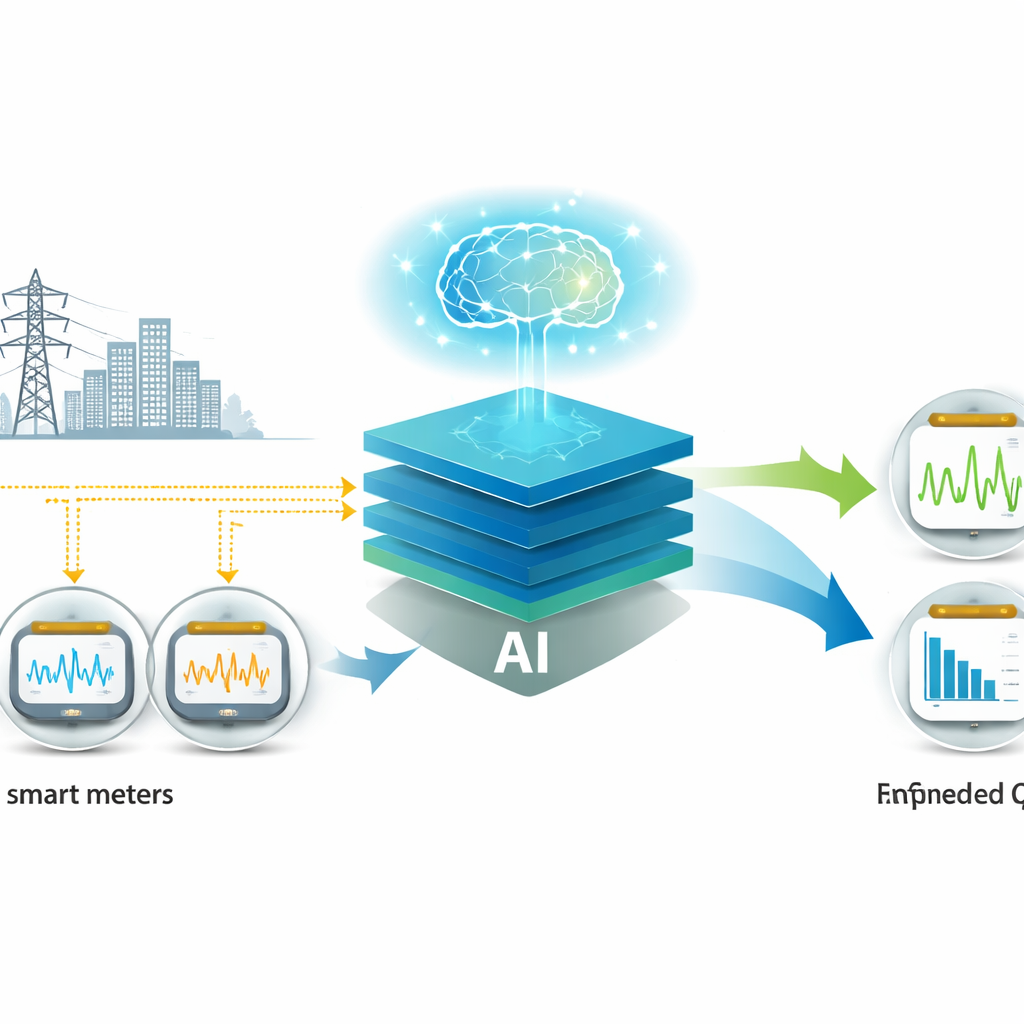
Most homes and businesses now rely on smart meters to track how electricity is used. Beyond counting kilowatt-hours, these meters can also check how “clean” the power is, which affects energy waste, equipment life, and even your bill. But the sensors inside affordable meters are often too basic to measure this power quality accurately. This study explores whether artificial intelligence (AI) can teach low‑cost sensors to behave like expensive, laboratory‑grade instruments when checking a key power quality indicator called total harmonic distortion, or THD.
Electricity that is not quite smooth
In an ideal world, the voltage and current in power lines would follow perfectly smooth wave shapes. In reality, modern devices such as LED lights, phone chargers, and variable‑speed drives chop up these waves and introduce small ripples known as harmonics. The amount of this unwanted “roughness” is summarized by THD. High THD can overheat equipment, shorten lifetimes, and disturb sensitive electronics. Today, THD is usually calculated using a mathematical tool called the Fast Fourier Transform (FFT). This works well if the sensor captures very clean and detailed data, but it quickly loses accuracy when the sensor is cheap, noisy, or low‑resolution the very type widely used in large rollouts of smart meters.
Turning simple sensors into smart ones
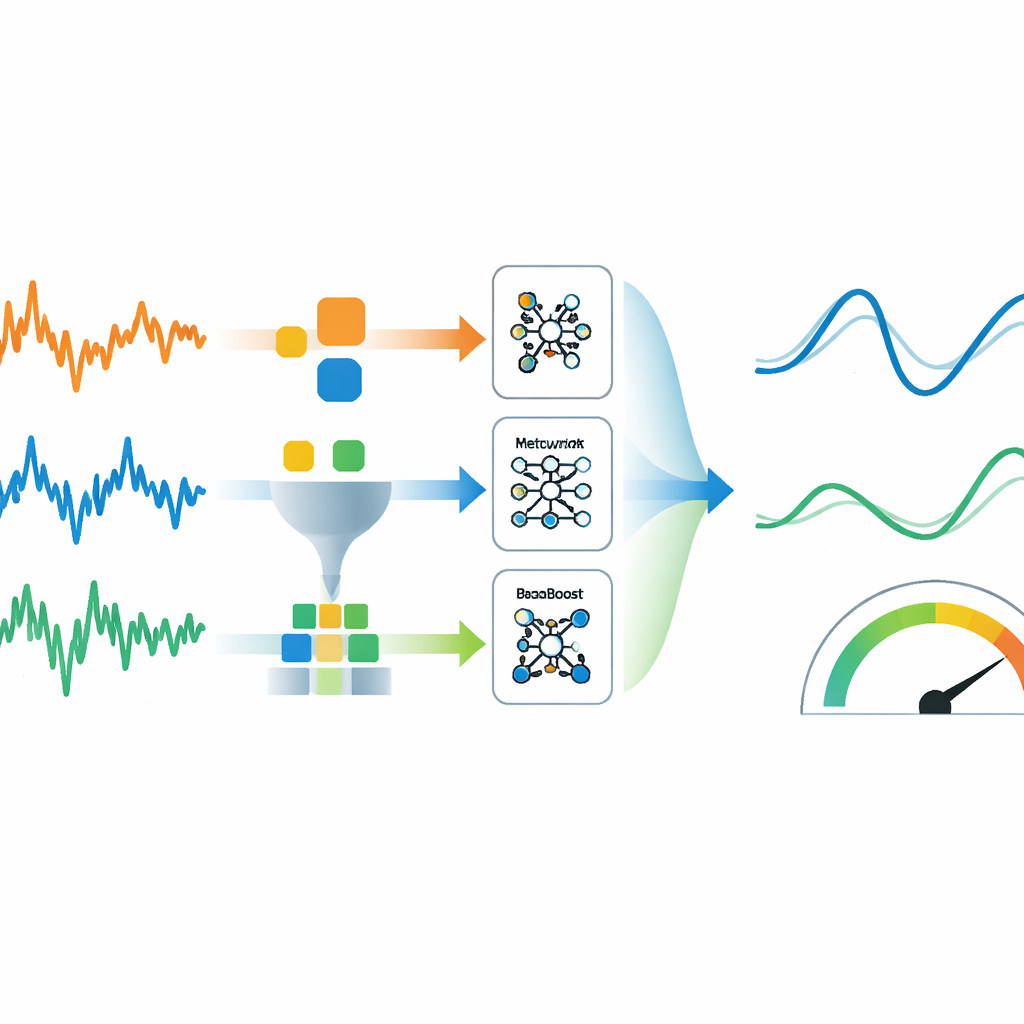
The researchers set up a framework in which a high‑precision sensor plays the role of a teacher and several low‑cost sensors act as students. First, they collected detailed electrical signals with the precise sensor and computed very accurate THD values using FFT, treating these as the ground truth. Then they artificially degraded these signals to mimic three classes of economic sensors, from relatively decent to very poor. For each low‑cost sensor, they extracted features from its signals using FFT and fed these into different AI models. The goal was to learn a direct mapping from what the cheap sensor sees to what the precise sensor would have reported under the same conditions.
How the AI learned to correct the errors
Several well‑known machine‑learning methods were tested: support vector machines, random forests, artificial neural networks, and an ensemble technique called AdaBoost. All were trained to predict the true THD values from low‑cost sensor features. The models were tuned carefully and evaluated with standard error measures that compare predicted values against the reference sensor. Across hundreds of synthetic test signals and later with real laboratory measurements under distorted load conditions, every AI method substantially outperformed the straightforward FFT calculation applied directly to the cheap sensors. The classic FFT approach showed large errors and very low agreement with the reference when sensor quality dropped, while the AI models largely preserved accuracy.
The standout role of one learning method
Among the tested approaches, AdaBoost gave the most impressive and consistent results. For the best of the economic sensors, its predictions were almost indistinguishable from the high‑precision reference, with errors so small that the statistical agreement was close to perfect. Even for the worst sensor, AdaBoost retained high accuracy, whereas the traditional FFT method nearly failed, showing very weak correlation with the true THD and extremely large errors. Other models such as random forests and support vector machines also performed well but tended to slip more as sensor quality degraded. Neural networks proved more sensitive to noisy, low‑resolution data, especially in the poorest sensor case.
What this means for everyday power use
The study shows that clever software can make up for modest hardware in power monitoring. By learning how low‑cost sensors typically distort and miss details, AI can effectively “translate” their rough readings into the kind of high‑quality THD estimates previously available only from expensive instruments. For utilities and regulators, this opens the door to deploying large numbers of affordable smart meters without giving up reliable power quality information. For consumers and industry, it means better protection of equipment, more accurate assessment of grid health, and smarter energy management all while keeping costs under control.
Citation: Nacima, O., Chouaib, L., Meneceur, R. et al. Enhancing low-cost sensor performance for THD monitoring in smart meters using AI algorithms. Sci Rep 16, 10298 (2026). https://doi.org/10.1038/s41598-026-41359-9
Keywords: smart meters, power quality, harmonic distortion, low-cost sensors, machine learning