Clear Sky Science · en
Early risk stratification of acute kidney injury severity in patients with acute myocardial infarction and diabetes using machine learning
Why This Matters for Patients and Families
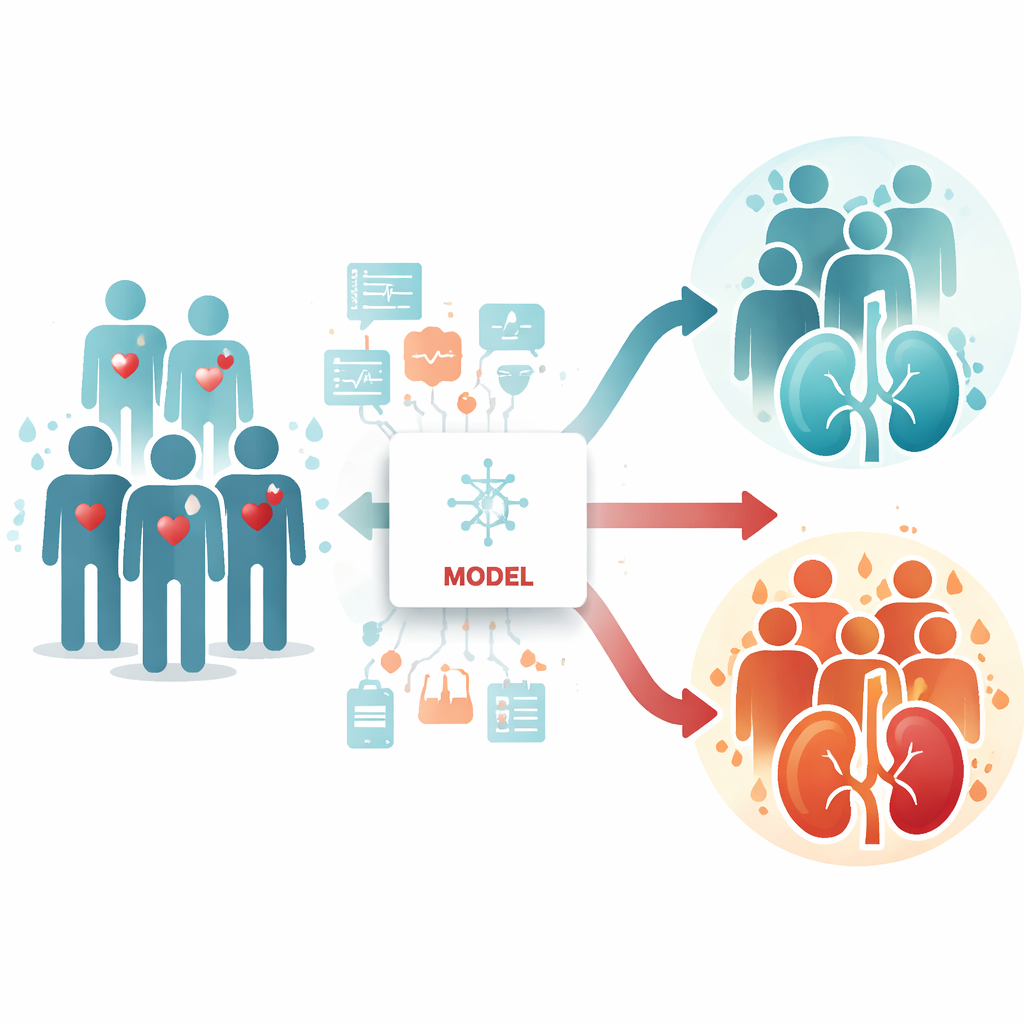
Heart attacks and diabetes are already frightening on their own, but together they greatly increase the risk that the kidneys may suddenly fail during a hospital stay. This study asks a very practical question: can we use information that doctors already collect in the first day of hospitalization to spot which patients are most likely to develop mild, moderate, or severe kidney damage, before it fully unfolds? By doing so, the team hopes to give doctors extra time to protect the kidneys and possibly improve survival.
Heart, Sugar, and Kidneys in a Delicate Balance
When someone with diabetes suffers a heart attack, their kidneys are under special strain. Long-term high blood sugar can damage the smallest blood vessels and reduce the kidneys’ reserve. A heart attack, in turn, can lower blood flow and oxygen to these already vulnerable organs. The result is acute kidney injury, a sudden drop in kidney function that is linked to longer hospital stays, higher costs, and more deaths. Unfortunately, kidney injury is often only recognized after a blood test called creatinine has already risen, by which time some damage may be difficult to reverse.
Turning Routine Data into Early Warnings
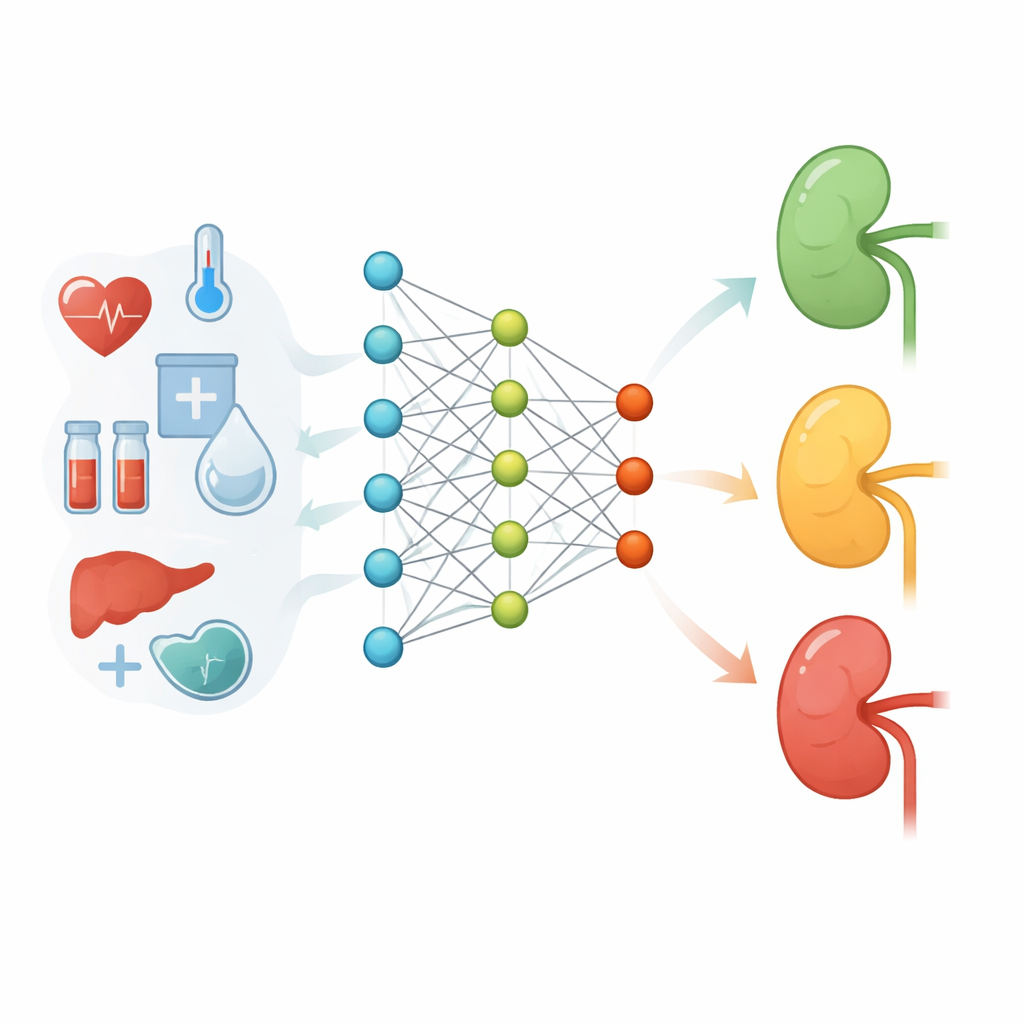
The researchers drew on three large hospital databases from the United States and China, covering 4,908 patients who had both a heart attack and diabetes. Using only information from the first 24 hours after admission—such as age, blood pressure, blood counts, kidney-related lab tests, urine output, and illness severity scores—they trained a series of computer models to estimate the chance that each patient would develop different grades of kidney injury later in their stay. They compared ten common machine learning approaches, from simple logistic regression to more advanced tree-based methods like LightGBM and XGBoost, and rigorously tested these models on separate hospital groups to see how well they generalized.
How Well the Models Performed
Among nearly five thousand patients, almost four in ten went on to develop some level of kidney injury. Several models performed strongly, but two stood out. LightGBM was best at predicting whether patients would develop at least mild or at least moderate kidney injury, while XGBoost excelled for the most severe stage. In an external Chinese hospital, these models correctly distinguished higher-risk from lower-risk patients with high accuracy, as measured by the area under the curve (AUC) values around 0.85–0.88. Decision curve analyses suggested that using these predictions would offer more clinical benefit than simply treating everyone as high risk or ignoring risk altogether, across a wide range of decision thresholds chosen by clinicians.
What Drives the Risk Predictions
To move beyond a “black box,” the team used an explanation method called SHAP to show which inputs mattered most for the predictions. Early kidney-related measures—such as the highest creatinine level, estimated filtration rate, and urine output—were major contributors, reflecting both baseline vulnerability and early stress on the kidneys. Measures of overall illness severity, blood chemistry (including lactate and acid–base balance), blood pressure, and nutritional status (such as albumin levels) also played important roles. Importantly, all these variables are routinely collected and can be automatically pulled from electronic records, meaning the model could run in the background without extra work for bedside staff.
From Computer Scores to Bedside Decisions
The authors emphasize that their tool is meant to support, not replace, clinical judgment. They built a web-based interface where clinicians can enter or automatically import early hospital data and receive individualized risk estimates for mild, moderate, and severe kidney injury. High predicted risk might prompt closer monitoring, more cautious use of contrast dyes and other kidney-stressing treatments, or earlier consultation with kidney specialists and consideration of advanced therapies. Because hospital practices and patient populations differ, the team cautions that each institution would need to locally test and adjust the model before relying on it. Still, the study shows that with data already at hand, it is possible to identify vulnerable kidneys early—opening a window for more tailored and timely care.
Citation: Ruan, L., Qiao, Y., Li, X. et al. Early risk stratification of acute kidney injury severity in patients with acute myocardial infarction and diabetes using machine learning. Sci Rep 16, 12285 (2026). https://doi.org/10.1038/s41598-026-41356-y
Keywords: acute kidney injury, heart attack, diabetes, machine learning, risk prediction