Clear Sky Science · en
Sinensetin attenuates post-stroke depression via dual modulation of TLR4/NF-κB–NRF2/GPX4 pathways
Why a citrus compound could matter after a stroke
Many people who survive a stroke later develop deep, lingering depression that standard antidepressants do not always relieve. This study explores whether sinensetin, a natural substance found in citrus peels, can ease post-stroke depression in mice. By looking at blood flow in the brain, behavior, and microscopic changes in brain cells, the researchers ask a simple question with big implications: can a plant-derived compound calm brain inflammation and protect vulnerable nerve cells after stroke?
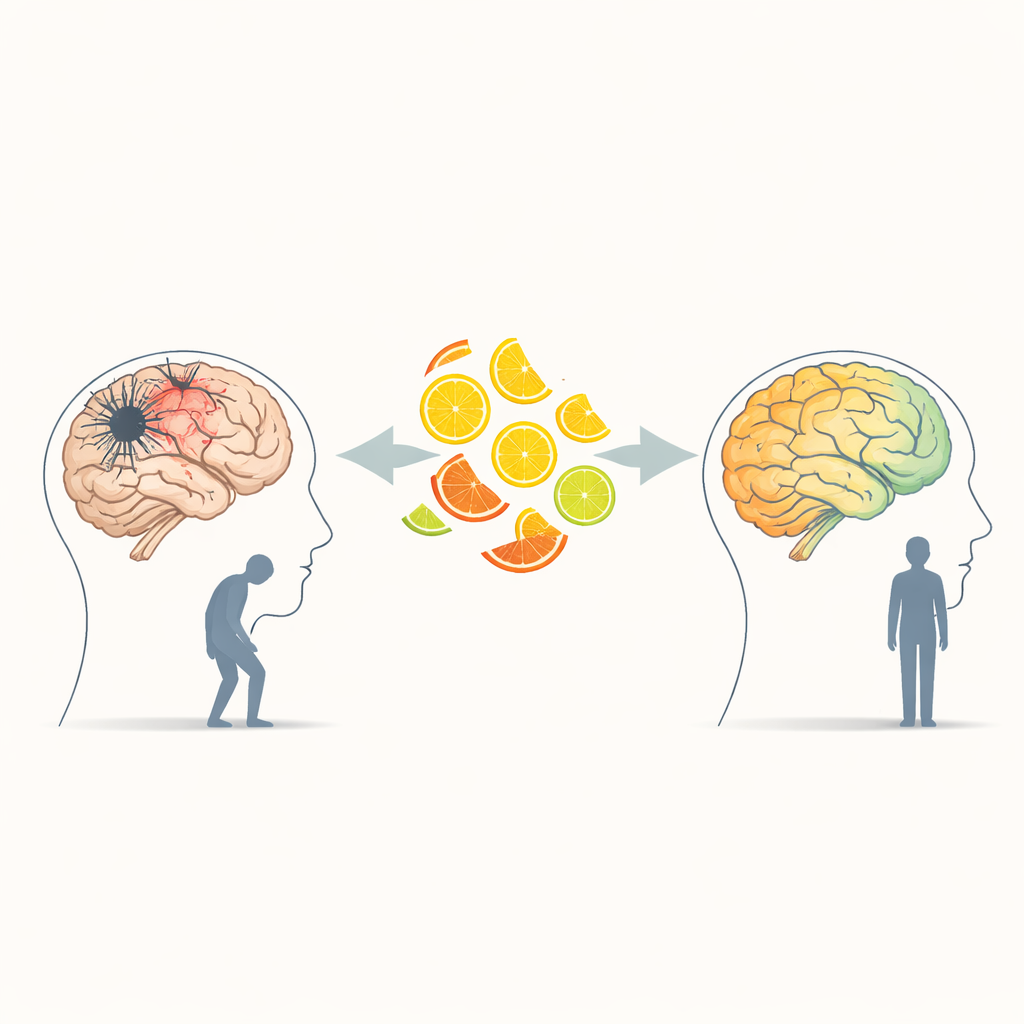
Stroke, low mood, and a brain caught in a vicious cycle
Post-stroke depression affects roughly one in three survivors and is closely tied to lasting injury in brain regions that control mood, such as the frontal cortex and hippocampus. After a stroke, immune cells in the brain switch on and release chemical signals that drive inflammation. At the same time, excess iron and unstable molecules damage brain cell membranes, a form of cell death known as ferroptosis. Together, these processes weaken nerve connections, reduce new cell growth in mood circuits, and foster anxiety- and depression-like behavior.
A citrus molecule put to the test in mice
Sinensetin is a type of flavonoid that dissolves easily in fats, allowing it to cross from the bloodstream into the brain. It has already been shown to reduce inflammation and oxidative damage in other disease models. To test its effects on post-stroke depression, the team induced small, well-defined strokes in the frontal brain area of mice and added a low dose of a bacterial component that mimics infection, a combination known to trigger strong inflammation and depressive-like behavior. Mice then received either no treatment, standard antidepressant fluoxetine, or low or high doses of sinensetin by mouth for two weeks. The animals were evaluated with common behavioral tests that measure pleasure seeking, despair-like immobility, and anxiety, while brain blood flow and tissue health were carefully measured.
Better blood flow, behavior, and healthier nerve cells
Compared with untreated post-stroke mice, those given high-dose sinensetin showed striking improvements. Imaging of the brain surface revealed that blood flow in the damaged region partially recovered to near-normal levels. In tests that mirror core features of depression, sinensetin-treated mice were more willing to drink sweetened water, struggled longer in situations that usually provoke giving up, and spent more time exploring the open center of a box instead of clinging to its edges. Microscopic examination of the hippocampus, a key mood and memory area, showed that sinensetin reduced loss of nerve cells and preserved their normal layered arrangement. Measures of antioxidant defenses improved, iron build-up lessened, and byproducts of fat damage fell, all pointing to reduced ferroptosis and oxidative stress.
Quieting inflammation while boosting the brain’s defenses
To understand how sinensetin produced these benefits, the researchers tracked two major signaling routes inside brain cells. One route, centered on the sensor TLR4 and the switch NF-κB, fuels inflammation and the release of cytokines—chemical messengers that can harm nerve cells. The other, governed by NRF2 and the protective enzyme GPX4, helps cells neutralize reactive molecules and resist ferroptosis. In post-stroke mice, the inflammatory route was overactive, while the protective route was weakened. Sinensetin dampened TLR4 and NF-κB activity, lowered levels of multiple inflammatory cytokines and chemokines, and reduced overactivation of microglia and astrocytes, the brain’s support and immune cells. At the same time, it restored NRF2 activity, raised GPX4 and other antioxidant enzymes, and shifted genes involved in iron and lipid handling toward a more resilient state. Computer-based docking and simulation further suggested that sinensetin can bind stably to several of these key proteins, supporting the idea that it acts on multiple targets at once.
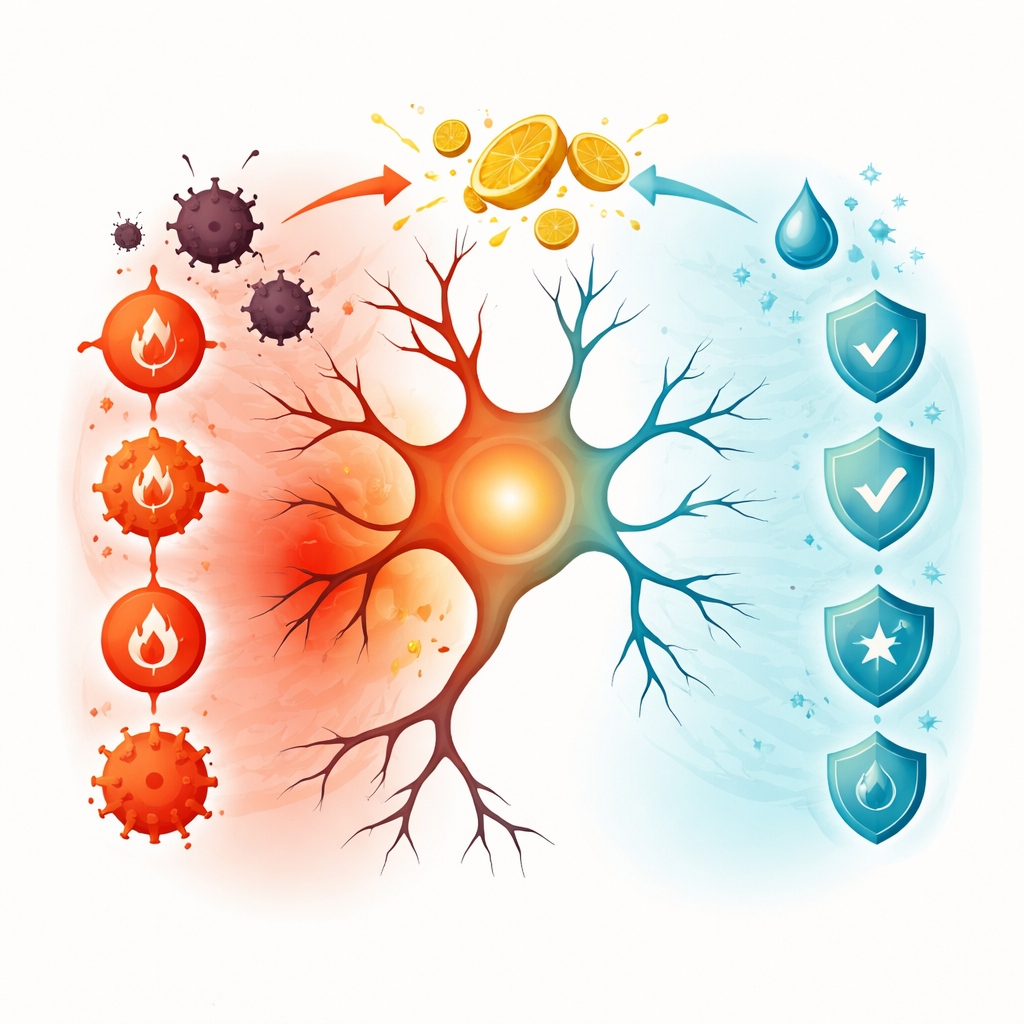
A natural multitasker for a complex brain disorder
Put simply, this study in mice suggests that sinensetin can break a harmful loop in post-stroke depression by simultaneously turning down brain inflammation and turning up the brain’s own defense systems against oxidative damage and ferroptotic cell death. While these findings are still preclinical and do not yet prove benefit in people, they highlight a promising strategy: using a safe, plant-derived compound to nudge several interconnected pathways back toward balance. If future work confirms these effects in humans, a flavonoid from ordinary citrus peels could one day help protect mood and cognition in the critical months after a stroke.
Citation: Fan, Q., Huang, R., Luo, K. et al. Sinensetin attenuates post-stroke depression via dual modulation of TLR4/NF-κB–NRF2/GPX4 pathways. Sci Rep 16, 10141 (2026). https://doi.org/10.1038/s41598-026-41351-3
Keywords: post-stroke depression, sinensetin, neuroinflammation, oxidative stress, citrus flavonoids