Clear Sky Science · en
Unsupervised cluster analysis identifies risk profiles driving heterogeneity and survival patterns in aortic aneurysm patients
Why this matters for people with hidden heart risks
Aortic aneurysms—dangerous bulges in the body’s main artery—often strike people who already live with common health problems like high blood pressure or heart disease. Doctors know these patients are a mixed crowd, but they usually sort them by where the bulge sits in the aorta, not by the broader state of their health. This study asks a simple but powerful question: if we let a computer sort thousands of aneurysm patients purely by their real‑world health profiles, which patterns emerge, and which people are at greatest risk of dying?
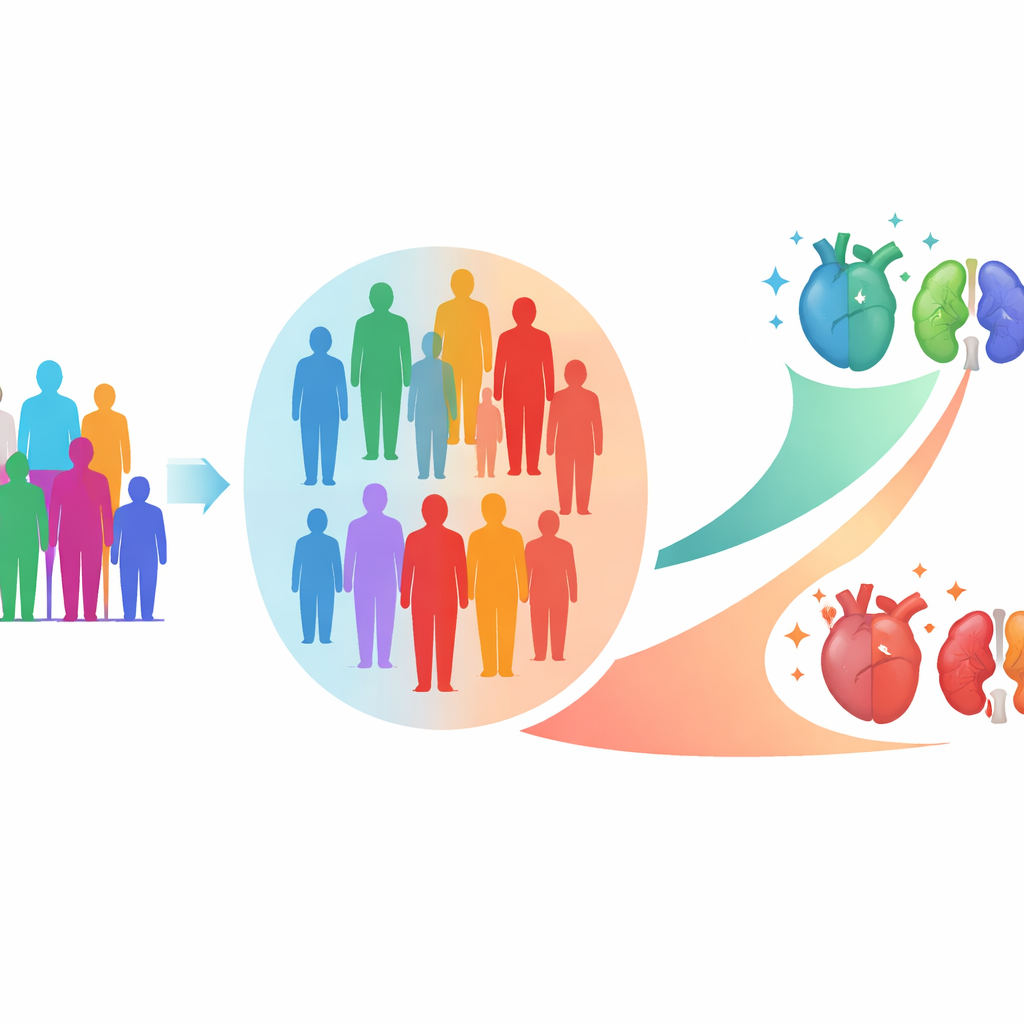
Looking beyond the bulge in the artery
The researchers used data from more than 4,600 participants in the UK Biobank who had an aortic aneurysm or related aortic disease. Instead of relying on traditional categories like “abdominal” or “thoracic” aneurysm, they fed information such as age, sex, smoking history, blood pressure, heart problems, kidney disease, and other conditions into an algorithm that groups similar patients together. This approach, called phenomapping, does not start with pre‑set boxes; it lets the data itself reveal natural clusters of patients who share similar health patterns.
Two main groups defined by overall heart and kidney health
When the computer clustered patients with abdominal aortic aneurysms, two major groups stood out. One group had relatively few additional heart and kidney problems. The other was packed with people who had coronary heart disease, heart failure, abnormal heart rhythms, and chronic kidney disease. Importantly, these groups were not separated by age, smoking, or how the aneurysm looked, but mainly by how burdened their hearts and kidneys were. People in the sicker group had noticeably worse overall survival, even though they were offered aneurysm repair at similar rates.
Checking the pattern in other types of aortic disease
To see if this was a fluke of abdominal aneurysms, the team repeated the analysis in patients with aneurysms in the chest, combined chest‑abdominal aneurysms, and aortic dissections. Again, the same story appeared: one cluster with heavy cardiovascular and kidney disease and another with fewer such problems. Ruptures—emergency breaks in the artery wall—were more common in the sicker group in these thoracic and dissection patients. When the researchers allowed three clusters instead of two, they saw special small groups emerge: one dominated by rupture cases in abdominal aneurysms, and one dominated by people with inherited connective tissue disorders such as Marfan or Ehlers–Danlos syndromes in the thoracic group.
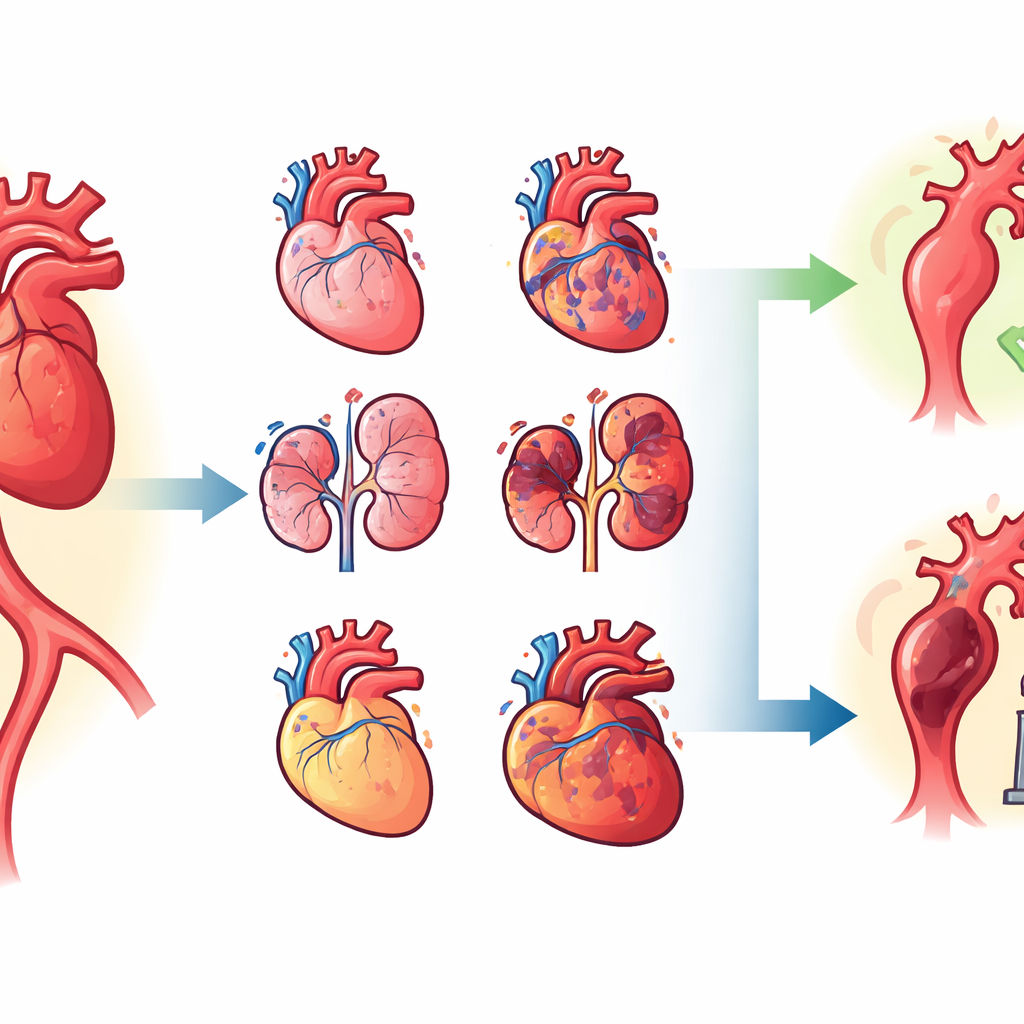
Turning many illnesses into a single risk score
Because heart and kidney problems kept driving the cluster differences, the authors combined them into a simple “cardiorenal” score that counts how many of these conditions each person has. They found a clear threshold: having more than two such conditions marked a shift toward the higher‑risk profile. Survival curves showed that people with very low scores lived similarly well to each other, while those with higher scores shared worse outcomes, regardless of where their aneurysm sat. Interestingly, once an aneurysm was successfully repaired, deaths were often due to other cardiovascular causes or cancer rather than the aneurysm itself, underlining how much these background diseases shape long‑term fate.
What this means for patients and their doctors
This work suggests that for people with an aortic aneurysm, the exact location of the bulge may matter less for long‑term survival than the overall burden of heart and kidney disease. Using computers to group patients by their full health picture highlights a simple lesson: treating the aneurysm alone is not enough. Patients with several heart and kidney problems may need especially aggressive prevention—better blood pressure control, smoking cessation, tailored heart failure therapy, and kidney protection—alongside careful decisions about when and how to repair the aneurysm. While these findings need to be tested in other groups, they point toward a future in which aneurysm care is guided not just by scans of the artery, but by a holistic map of each patient’s cardiovascular health.
Citation: Leinweber, M.E., Taher, F., Kliewer, M. et al. Unsupervised cluster analysis identifies risk profiles driving heterogeneity and survival patterns in aortic aneurysm patients. Sci Rep 16, 12092 (2026). https://doi.org/10.1038/s41598-026-41344-2
Keywords: aortic aneurysm, cardiovascular risk, multimorbidity, phenomapping, machine learning in medicine