Clear Sky Science · en
Association between the atherogenic index of plasma and cognitive impairment
Why blood fats and memory matter
As people live longer, many worry about staying mentally sharp in older age. This study looks at a simple blood measure, called the atherogenic index of plasma (AIP), that reflects the balance of certain fats in the bloodstream. By following thousands of Chinese adults over a decade, the researchers asked a practical question: can this single, low-cost marker help flag who is more likely to develop problems with memory and thinking, and is the relationship straightforward or more complicated than it seems?
A simple blood marker with a complex story
AIP is calculated from two common readings on a standard cholesterol test: triglycerides and “good” HDL cholesterol. Doctors already know that unhealthy blood fat patterns damage blood vessels and raise the risk of heart disease and stroke. Because the brain depends on a rich, healthy blood supply, long-term disturbances in blood fats are also suspected to play a role in dementia and milder forms of cognitive decline. Earlier research had mostly taken a snapshot approach, measuring AIP and thinking ability at one moment in time, which cannot easily reveal how changes in blood fats and brain health unfold together over many years.
Following brain health over ten years
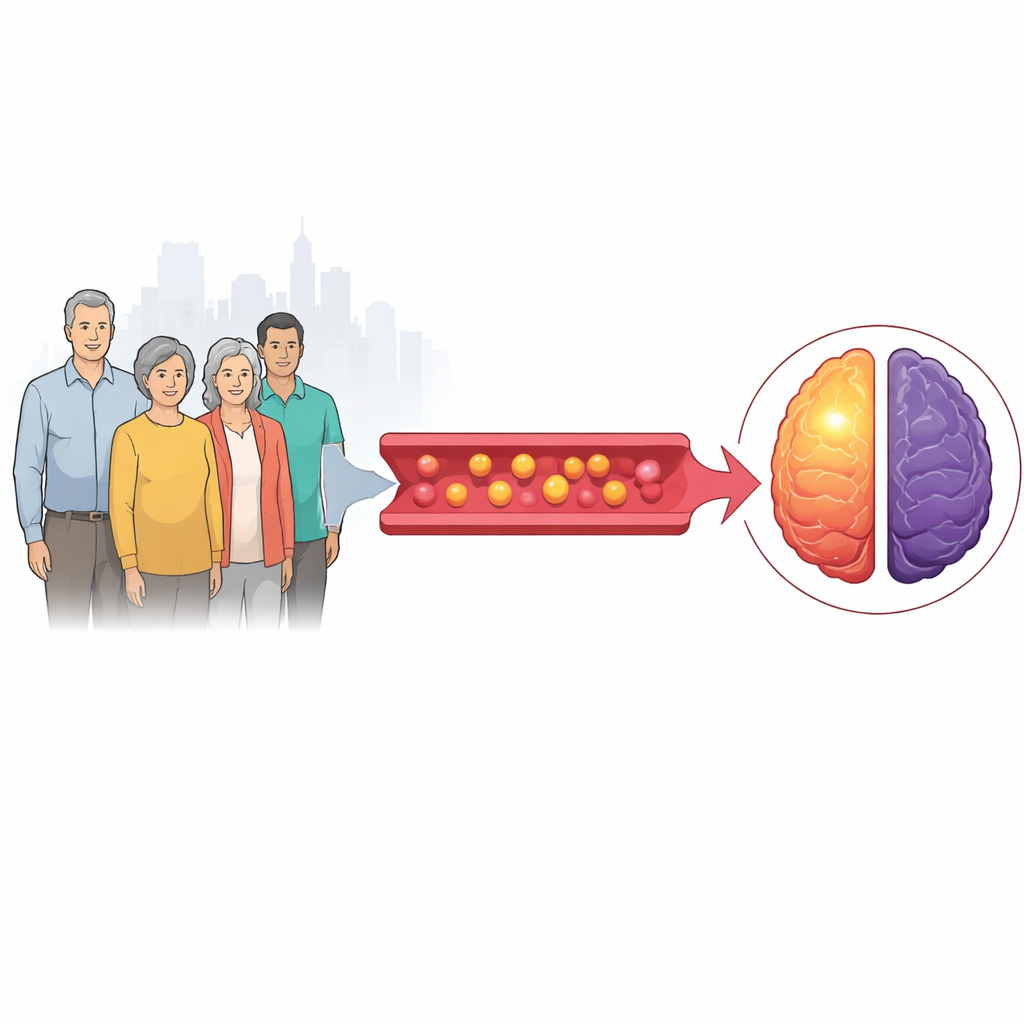
The team drew on data from the China Health and Retirement Longitudinal Study, which has tracked middle-aged and older adults across the country since 2011. They focused on 2,971 people aged 45 and older who had normal thinking abilities at the start and then checked their cognition every two years for up to a decade using a standard test that measures memory, orientation, attention, and language. At baseline, each participant’s AIP was calculated from their fasting blood sample. The researchers also recorded many other factors linked to brain health, including age, sex, education, drinking and smoking habits, body weight, and chronic illnesses, so they could tease apart the specific contribution of AIP.
A surprising curved risk pattern
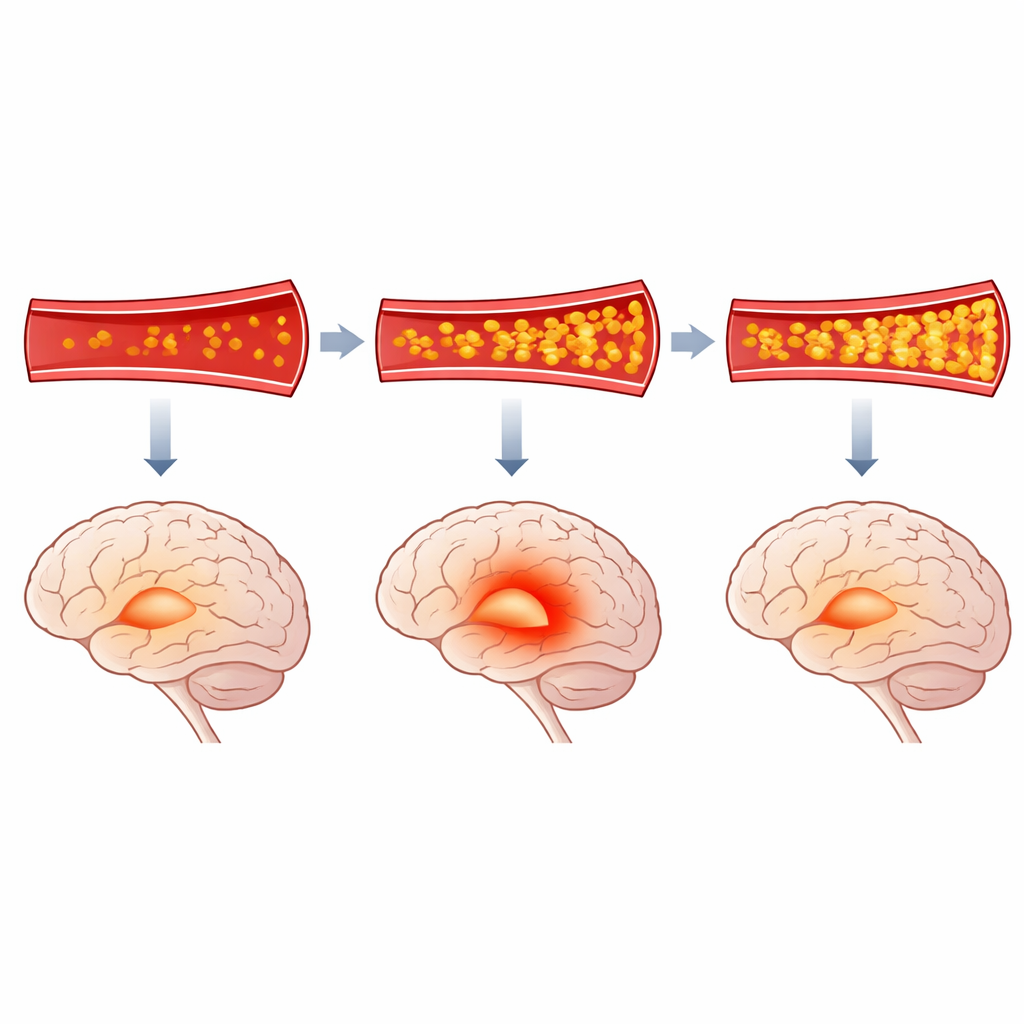
Over the follow-up period, about 40 percent of men and more than half of women developed measurable cognitive impairment. When the researchers compared groups by AIP level, they did not find a simple “the higher, the worse” pattern. Instead, risk followed an inverted U-shape. People with moderately raised AIP—roughly the middle half of the distribution—had the highest chance of later cognitive problems, even after adjusting for age, education, and other health factors. In contrast, those with very low AIP had a lower risk, as might be expected. Surprisingly, people in the highest AIP group again showed a reduced risk, lower than the middle group and even below some lower ranges, suggesting that extremely disturbed lipid patterns may be linked to different biological responses than modest disturbances.
Who is most at risk and why
The study also confirmed several broader patterns in brain aging. Older participants, women, and those who drank alcohol frequently were more likely to experience cognitive decline. By contrast, people with more years of education tended to maintain better thinking skills, supporting the idea of “cognitive reserve,” in which richer lifelong mental stimulation helps the brain cope with age-related changes. Interestingly, being underweight was linked to greater risk, whereas being in the normal to moderately overweight range appeared somewhat protective, echoing other studies that have found a complex relationship between body weight and late-life cognition. Across these different subgroups, however, the general inverted U-shaped link between AIP and cognitive impairment held steady.
What this means for prevention
To a lay reader, the main message is that the balance of blood fats is tied to brain health, but not in a straight line. In this large group of Chinese adults, people whose AIP fell in a moderate range, roughly between 0.205 and 0.423 on the scale used by researchers, were most likely to develop problems with memory and thinking over the next decade. Because AIP is inexpensive and easy to calculate from routine blood tests, tracking it could help doctors spot middle-aged and older adults who might benefit from early lifestyle changes or closer monitoring of their cognitive health. At the same time, the surprising drop in risk at very high AIP levels hints that brain–fat interactions are biologically complex, and that future work should probe how different types of blood fats may either harm or protect the aging brain.
Citation: Li, Y., Zhang, Y., Zhang, Y. et al. Association between the atherogenic index of plasma and cognitive impairment. Sci Rep 16, 10177 (2026). https://doi.org/10.1038/s41598-026-41335-3
Keywords: cognitive impairment, blood lipids, atherogenic index of plasma, dementia risk, older adults