Clear Sky Science · en
High-throughput sequencing-based virome analysis reveals genomic diversity and recombination of tomato-infecting viruses in Korea
Why tomato viruses matter to your dinner table
Tomatoes are a staple in kitchens worldwide, but the plants that bear them are under constant attack from invisible enemies: viruses. In Korea, as in many countries, tomato fields can look healthy until distorted leaves, yellowing, and poor fruit suddenly appear. This study uses cutting-edge genetic tools to take a panoramic look at the “virome” – the full community of viruses – infecting tomatoes in key Korean growing regions. Understanding which viruses are present and how they are changing helps farmers, breeders, and policy makers protect both harvests and prices in the long term. 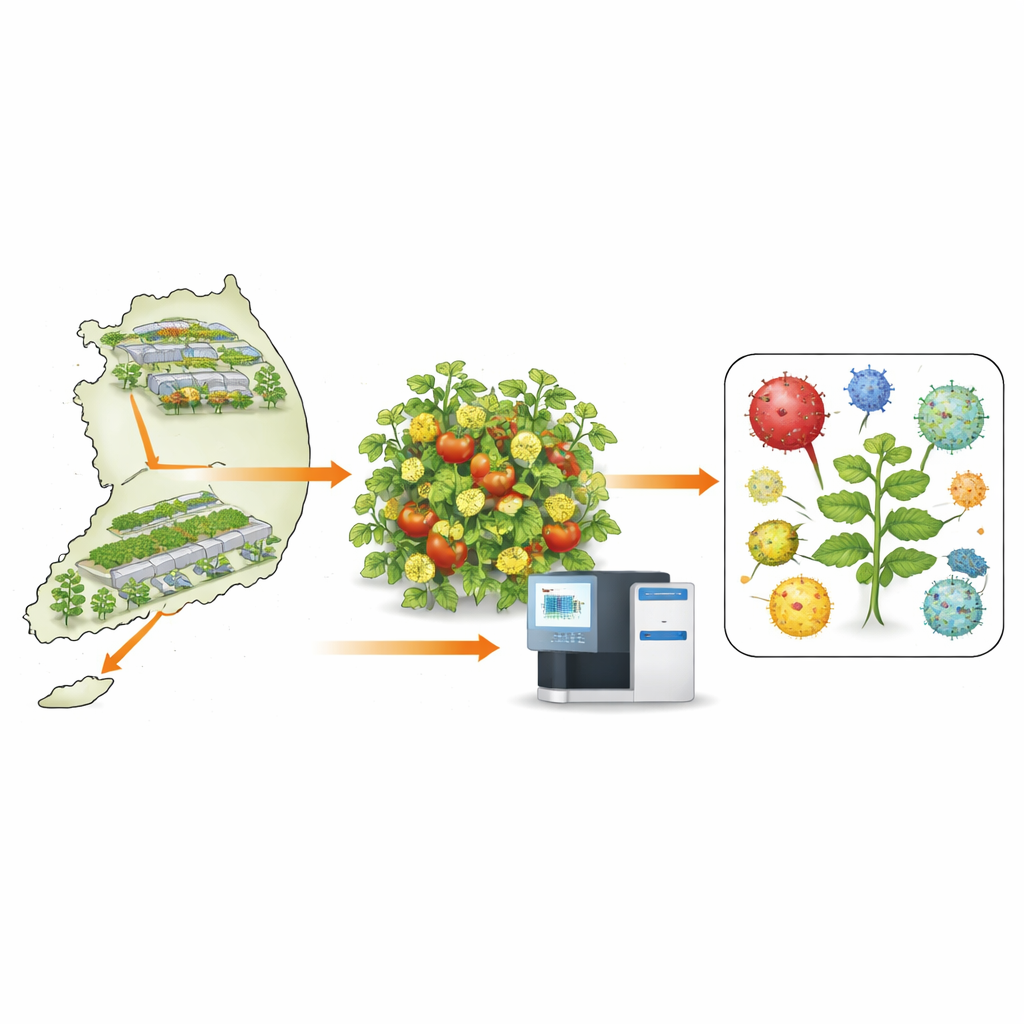
Looking inside sick tomato fields
The researchers collected 122 tomato leaf samples showing virus-like symptoms, such as stunted growth, curled leaves, and pale patches, from 12 major production areas in Korea. Instead of testing for one virus at a time, they pooled samples by region and used high-throughput sequencing, a technology that reads millions of tiny fragments of genetic material in parallel. By comparing these fragments with known virus databases, they could detect many different viruses at once, including those that might not have been suspected beforehand. This broad survey offers a more realistic picture of what is infecting tomatoes in real fields, where plants are often co-infected by several viruses at the same time.
Seven viral troublemakers, including new arrivals
The genomic scan revealed seven tomato-infecting viruses spread across the sampled regions. Two of them dominated: tomato yellow leaf curl virus (TYLCV) and tomato chlorosis virus (ToCV), which appeared in nearly all pooled samples. Several others were present at lower levels, including tomato spotted wilt orthotospovirus, Southern tomato virus, and pepper mild mottle virus. Most notably, the team detected two viruses never before reported from tomatoes in Korea: olive latent virus 1 and tobacco necrosis virus A. These newcomers currently seem to cause little direct damage on their own, but they can persist in soil or co-infect plants with other viruses, creating opportunities for new disease combinations and, potentially, future outbreaks.
Following viral family trees and hidden genome swaps
By assembling nearly complete genomes of the most abundant viruses, the scientists could place Korean strains onto global “family trees.” For ToCV, Korean isolates split into two clear groups, confirming earlier work and indicating that previously introduced strains continue to circulate and mix across regions. The story for TYLCV was even more complex. Most Korean TYLCV genomes fell into the widely distributed Israel strain group, but one belonged to a milder strain usually seen overseas, hinting that trade or plant movement had brought it into the country. Even more striking, a third group of TYLCV genomes showed signs of recombination – genetic shuffling – between TYLCV and related viruses such as honeysuckle yellow vein virus and tobacco leaf curl virus. 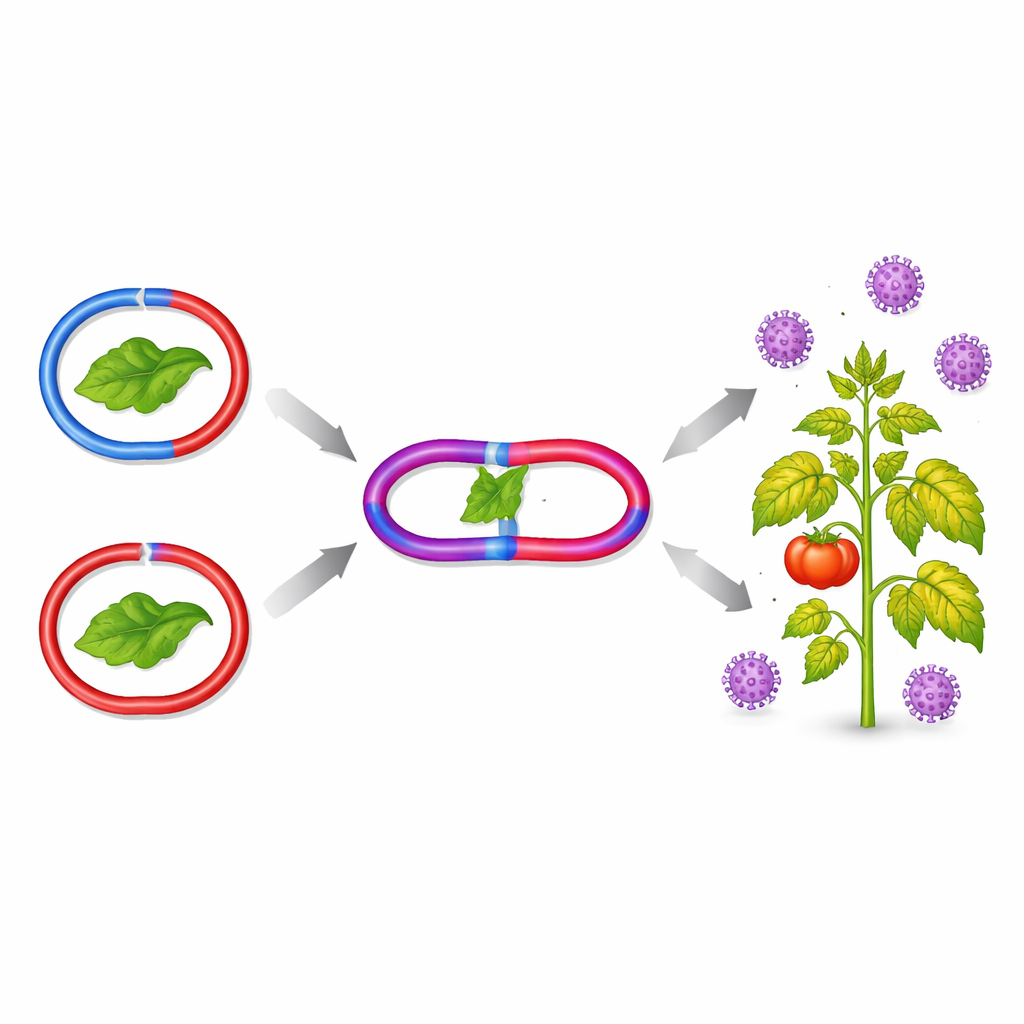
What recombination may mean for disease severity
Recombination allows viruses to swap whole genome segments in a single step, potentially gaining new abilities much faster than by slow mutation. In the recombinant TYLCV isolates, a key gene called C4, known to influence how strongly a virus damages plants and how it evades plant defenses, appears to have been exchanged. Detailed sequence analysis showed that the recombinant C4 protein has altered molecular “tags” that affect where it travels inside plant cells, likely changing how it interacts with the plant’s defense machinery. Almost all surveyed regions harbored these recombined viruses, suggesting they are not rare accidents but variants that have adapted well enough to persist and spread in commercial fields.
How this knowledge can help protect future harvests
For non-specialists, the main message is that tomato viruses in Korea are both diverse and evolving. The study shows that powerful sequencing tools can uncover not only which viruses are present but also how they are mixing and moving between regions and countries. While some newly detected viruses may not yet threaten yields, their presence in mixed infections opens the door to further recombination and the appearance of more damaging strains. By treating the tomato virome as a shifting ecosystem rather than a list of isolated pathogens, this work gives breeders, diagnostic labs, and extension services a stronger foundation for monitoring outbreaks, designing better tests, and developing tomato varieties that can withstand the next generation of viral challenges.
Citation: Kwak, M., Son, M., Bae, M. et al. High-throughput sequencing-based virome analysis reveals genomic diversity and recombination of tomato-infecting viruses in Korea. Sci Rep 16, 13217 (2026). https://doi.org/10.1038/s41598-026-41332-6
Keywords: tomato viruses, plant virome, high-throughput sequencing, viral recombination, crop disease surveillance