Clear Sky Science · en
Aetiology of acute respiratory infection in Vientiane, Lao PDR, from a case–control study
Why chest infections in Lao children matter
Chest infections such as pneumonia remain one of the top killers of young children around the world, especially in low- and middle-income countries. Yet doctors in these settings often lack clear, local evidence about which germs are most dangerous and which everyday conditions put children most at risk. This study from Vientiane, the capital of Laos, set out to answer a simple but crucial question: which viruses and bacteria are really driving serious breathing illnesses in Lao children, and what can families and health services do to prevent them?
Looking closely at sick and healthy children
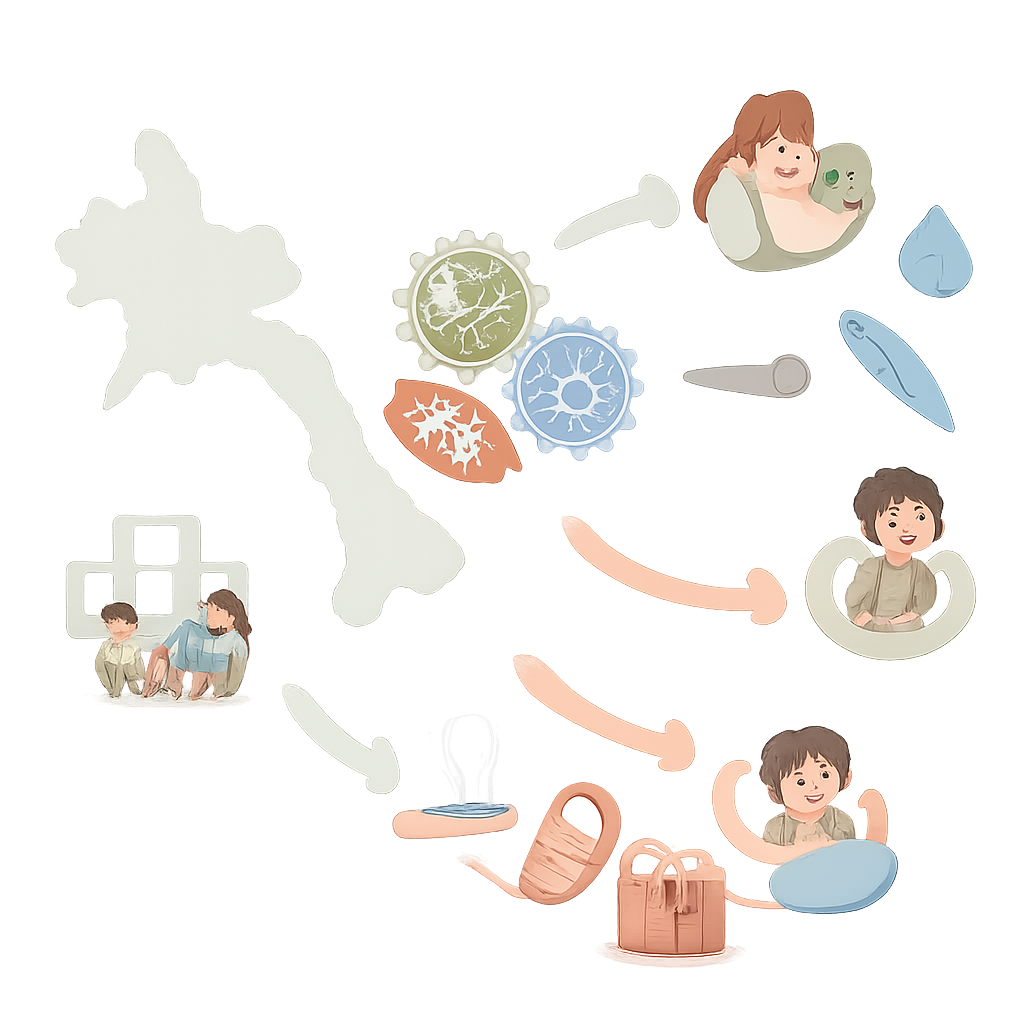
The researchers followed children under five years old who were admitted to a large hospital in Vientiane with acute respiratory infection—meaning they had symptoms like fever, cough or difficulty breathing that began within the past two weeks. For each of these 307 sick children, they recruited about two healthy children from the hospital’s vaccination clinic, matching them by age and sex. None of the healthy children had recent fever or breathing problems. From all participants, the team collected information on birth history, feeding, vaccinations, living conditions and exposure to smoke, and took throat swabs to test for seven important viruses and bacteria using sensitive molecular methods.
Which germs are to blame
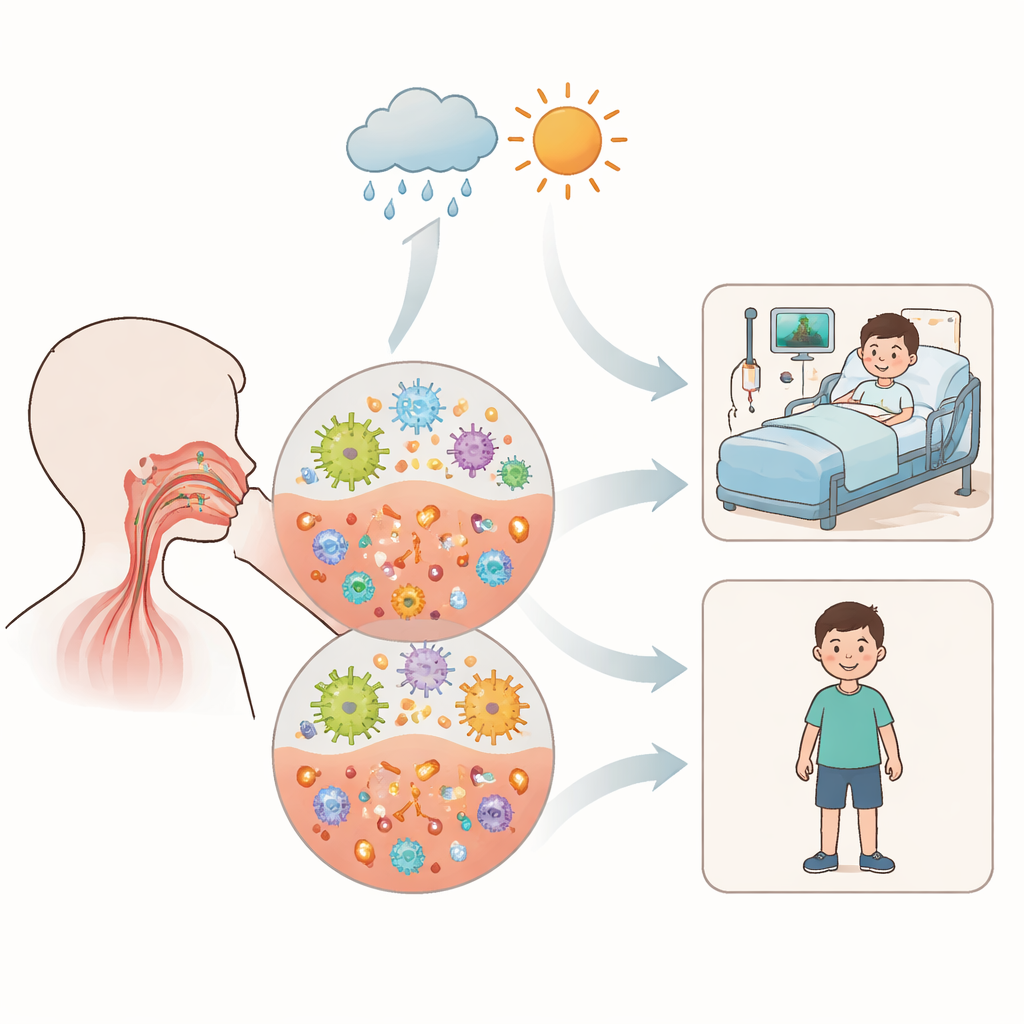
Germs were detected in nearly all of the hospitalised children but in only about three out of five healthy children. Respiratory syncytial virus (RSV) emerged as the leading viral culprit, linked to almost one in three serious infections. Influenza viruses came next, together accounting for just over one in ten cases, while other viruses such as rhinovirus, enterovirus and human metapneumovirus were less common. The bacterium Haemophilus influenzae was found in almost half of sick children, but also in one in ten healthy children, suggesting that it often lives harmlessly in the throat. By comparing how often each germ appeared in sick versus healthy children, the researchers estimated how many hospitalisations could truly be attributed to each one. Viruses, especially RSV and influenza, were very rarely seen in healthy children, so their presence was a strong sign that they were causing disease.
Seasons, smoke and other everyday risks
The timing of infections also mattered. RSV showed a striking pattern: it appeared far more often during the wet season than the dry season, making heavy rains a warning sign for surges in severe chest infections. Beyond germs and weather, the study highlighted familiar but powerful risk factors in children’s lives. Having a smoker in the household, being born with low birth weight, being underweight at the time of illness, and relying on unsafe drinking water were all linked to a much higher chance of ending up in hospital with a chest infection. These findings underline how nutrition, clean water and indoor air quality can either protect or endanger young lungs.
Everyday protection that works
Some simple, positive practices clearly reduced risk. Children who had been exclusively breastfed for at least three months were less likely to be hospitalised with a respiratory infection. Being up to date with the pneumococcal conjugate vaccine, which targets another major pneumonia-causing bacterium, also appeared protective, echoing earlier work from the same hospital. Interestingly, because the study used throat swabs, it showed that detecting a virus in the upper airway is a reliable clue that it is causing disease, while detecting H. influenzae is more ambiguous, since it frequently colonises healthy throats.
What this means for child health in Laos
In plain terms, the study shows that RSV and influenza are now the main viral drivers of serious chest infections in Lao children, and that H. influenzae remains an important bacterial player despite widespread vaccination against one of its forms. Because RSV peaks in the wet season, time-limited strategies such as seasonal RSV protection for infants and targeted influenza vaccination could prevent many hospitalisations. At the same time, reducing household smoke, improving water sources, supporting good nutrition and promoting breastfeeding are practical steps that can be taken now. Together, vaccines and better living conditions offer a powerful, locally tailored recipe for helping Lao children breathe more easily and survive their early years.
Citation: Hart, J.D., Dance, D.A.B., Vilivong, K. et al. Aetiology of acute respiratory infection in Vientiane, Lao PDR, from a case–control study. Sci Rep 16, 11492 (2026). https://doi.org/10.1038/s41598-026-41321-9
Keywords: acute respiratory infection, respiratory syncytial virus, child pneumonia, Laos, vaccine prevention